
London: In a landmark decision with major implications for transgender rights, the UK Supreme Court has ruled that under the 2010 Equality Act, the term “woman” legally refers only to individuals born biologically female — effectively excluding trans women from that definition. While the judges emphasised that transgender individuals remain protected from discrimination, the ruling could ease restrictions on barring trans women from women-only spaces, including shelters, hospital wards and sports, raising immediate concerns from LGBTQ+ advocates.
How the case reached the Supreme Court
The ruling was delivered in a case that originated from a 2018 Scottish law requiring gender parity on public boards. That legislation had counted trans women with a Gender Recognition Certificate as women. The NGO, For Women Scotland, challenged this, arguing that it redefined “woman” beyond what was intended by the Equality Act. Although initially unsuccessful in a Scottish court, the group was later granted permission to escalate the matter to the Supreme Court.
Justice Patrick Hodge, delivering the unanimous verdict on behalf of five judges, stated, “The terms woman and sex in the Equality Act refer to a biological woman.” The judgment added that the Equality Act “was always intended to mean” biological categories, and a broader interpretation would render the law “incoherent and unworkable”.
'Not an attack on transgenders '
The court clarified that its decision is not an attack on transgender individuals, nor does it remove existing protections against discrimination based on gender reassignment. However, the practical implications are uncertain — especially for trans women seeking access to gender-specific services or participating in female sports. The judgment signals that exclusions of trans women from women-only spaces may now be more legally defensible.
Spaces cited in the ruling include “rape or domestic violence counselling, domestic violence refuges, rape crisis centers, female-only hospital wards and changing rooms”. While exclusions were already legally permissible under specific circumstances, this ruling may widen their scope.
Celebration and backlash
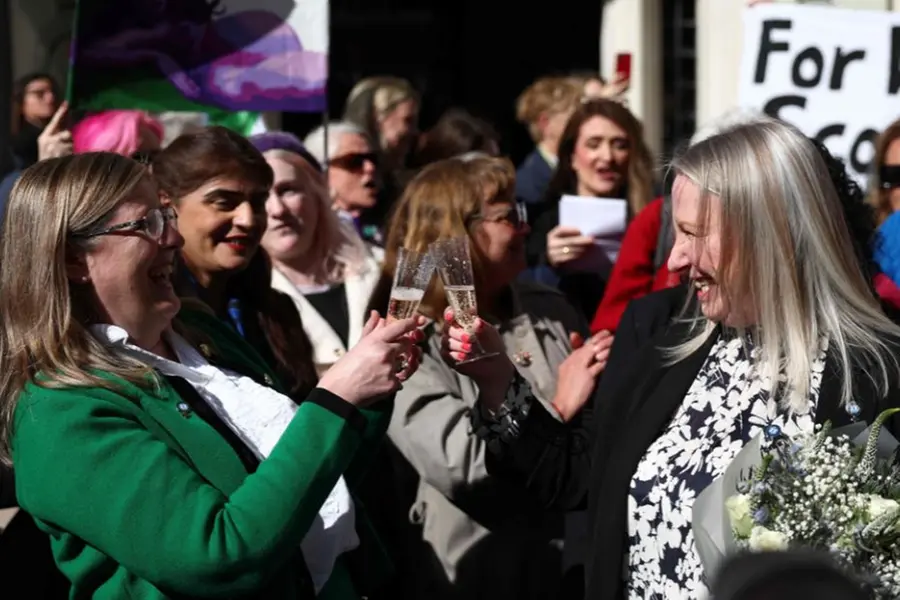
For Women Scotland hailed the ruling as a decisive win. “Absolutely jubilant,” they posted on social media. Author J K Rowling, a vocal supporter of sex-based rights, praised the verdict, saying it had “protected the rights of women and girls across the UK”.
In contrast, LGBTQ+ organisations expressed alarm. Vic Valentine of Scottish Trans said the ruling “seems to have totally missed what matters to trans people — that we are able to live our lives, and be recognised, in line with who we truly are”. Another group, Stonewall, warned of “deep concern” over how the judgment might affect trans women’s rights. Amnesty International UK called the ruling “disappointing”, but noted it reaffirmed anti-discrimination protections for trans people.
Legal experts also pointed to workplace implications. Hannah Ford, employment partner at Stevens & Bolton, told the BBC that creating inclusive environments for trans people may now be “an uphill battle”. Still, she added, “At least we have simplicity and clarity. So it is in one sense a triumph of sense over legal incoherency and legal fiction.”
AP
Published: 17 Apr 2025, 07:50 am IST
Related Topics
Disclaimer: Kindly avoid objectionable, derogatory, unlawful and lewd comments, while responding to reports. Such comments are punishable under cyber laws. Please keep away from personal attacks. The opinions expressed here are the personal opinions of readers and not that of Mathrubhumi.
