
The Jharkhand High Court's stay on recruitment cancellations has put the spotlight back on protesting students, who must now decide whether to wait for the legal process or intensify their campaign.
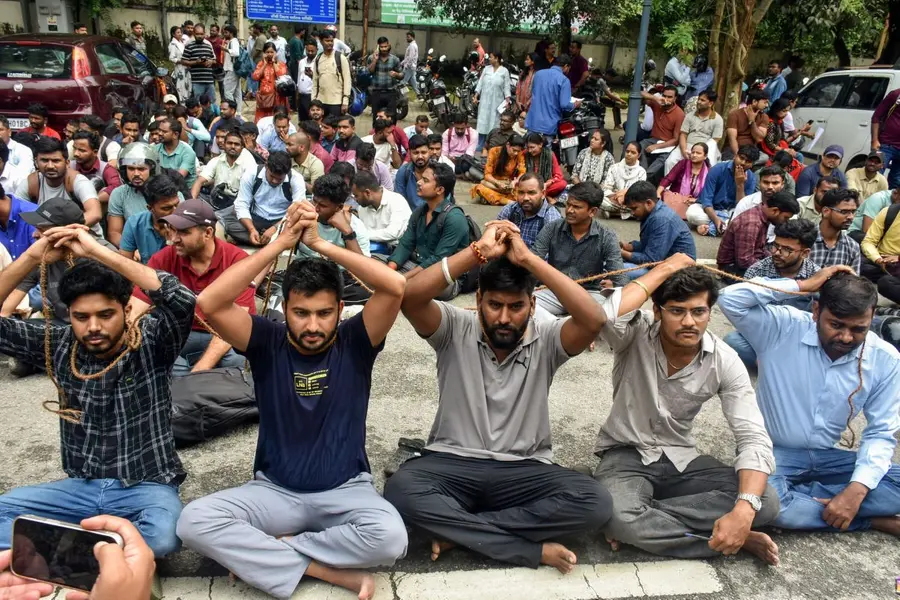
The Jharkhand High Court's decision to stay the state government's cancellation of appointments linked to the 11th, 12th and 13th Jharkhand Public Service Commission (JPSC) examinations has opened a new chapter in the state's prolonged recruitment controversy.
The order comes days after the Hemant Soren government announced a sweeping review of recruitment examinations following a 26-day student agitation over alleged irregularities in the state's competitive examination system.
For protesting students, however, the High Court's intervention presents a complicated situation.
Their agitation had focused on demands for action against alleged irregularities and the cancellation of examinations they believed had been compromised.
The government's August 18 decision to cancel 22 recruitment examinations and processes had been seen as a breakthrough for the protesters.
Now, with the court temporarily protecting appointments made through the affected JPSC examinations, students are likely to reassess their next course of action.
The immediate question is whether the student groups will accept the High Court's interim order and wait for the legal process, or push for further action from the state government.
The protesters had earlier maintained that their fight was not against candidates who had cleared examinations fairly, but against alleged malpractice and irregularities in the recruitment process.
This distinction could become particularly important after the court's intervention.
The government's August 18 notification had affected 45 recruitment processes in total.
Of these, 22 were cancelled, six were suspended pending investigation and 17 older JPSC recruitment processes were referred for a CID probe.
The JSSC Combined Graduate Level examination was among the recruitment processes at the centre of the controversy.
The examination had become one of the key demands during the student agitation, which continued for 26 days before the government accepted several of the protesters' demands.
The High Court's order could now shift the focus of the movement from simply demanding cancellations to seeking a transparent investigation into the alleged irregularities.
Students could also press the government to make the findings of the CID and other investigations public and establish accountability if wrongdoing is confirmed.
Another challenge for the protesters is the growing divide between candidates who demanded cancellation of allegedly compromised examinations and successful candidates whose appointments have been affected by the government's sweeping action.
Candidates recruited through the affected examinations have argued that genuine candidates should not be punished for alleged wrongdoing committed by others.
Some selected candidates had protested against the cancellation of their appointments, demanding protection of their jobs.
The High Court's interim intervention gives those candidates temporary relief while the larger legal dispute remains unresolved.
For the student groups, the situation therefore presents two competing priorities: ensuring that allegations of examination irregularities are properly investigated while also ensuring that genuine candidates are not unfairly deprived of their appointments.
The government, meanwhile, will have to respond to the High Court and explain the basis for cancelling the appointments and recruitment processes.
The court's interim order does not settle the allegations surrounding the examinations or permanently overturn the government's decisions.
The next phase could therefore depend heavily on the government's response and the findings of the investigations ordered into the recruitment processes.
The 26-day student agitation had already forced the Jharkhand government to take significant steps, including cancelling recruitment processes, ordering investigations and proposing measures aimed at strengthening the examination system.
With the High Court now stepping into the dispute, students face a crucial decision on how to take their campaign forward.
Rather than an immediate return to the streets, student groups may now seek clarity on the government's investigations, demand greater transparency and wait for the court proceedings before deciding whether to resume protests.
The recruitment controversy is therefore far from over. What began as a student movement against alleged irregularities has now expanded into a legal battle involving the government, successful candidates, investigating agencies and thousands of aspirants.
The coming weeks are likely to determine whether the dispute moves towards a negotiated resolution or triggers another round of protests across Jharkhand.
Published: 20 Aug 2026, 07:53 pm IST
ABOUT THE AUTHOR

Related Topics
Disclaimer: Kindly avoid objectionable, derogatory, unlawful and lewd comments, while responding to reports. Such comments are punishable under cyber laws. Please keep away from personal attacks. The opinions expressed here are the personal opinions of readers and not that of Mathrubhumi.