
Earthquake-generated tsunami impacts Severo-Kurilsk, Russia; Pacific coasts on high alert
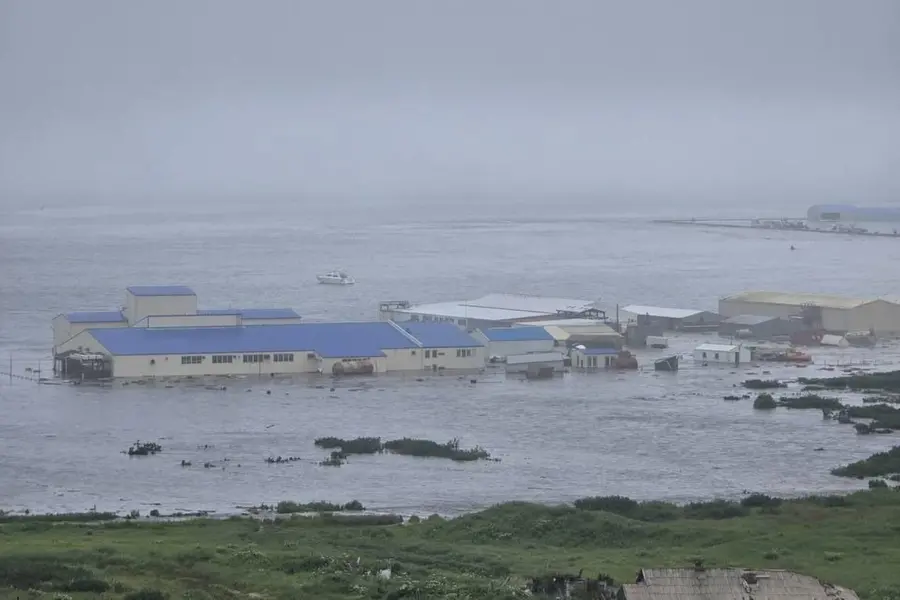
Severo-Kurilsk, Russia: The first tsunami waves have reportedly impacted the Russian coast near Severo-Kurilsk, following a powerful magnitude 8.8 earthquake that struck off Russia's Kamchatka Peninsula earlier Wednesday.
Videos circulating on social media platform X (formerly Twitter) show structures being overrun by the rising sea level, with some stills capturing the significant change in the area before and after the waves hit. While these visuals have emerged, their independent verification by Mathrubhumi is pending.
This region is known for its frequent volcanic and seismic activity, making it prone to both earthquakes and tsunamis.
Following the offshore earthquake, a tsunami watch remains in effect for parts of Japan and several US states, including California, Washington, Oregon, and Alaska. Meteorological agencies have issued advisories for tsunami waves between one and three meters high expected to hit the Japan and US coasts in the coming hours.
American authorities have specifically advised Alaska and Hawaii to prepare for waves up to three meters high, as reported by AFP. Japan's meteorological agency initially issued a one-meter advisory, which was later upgraded to three meters, urging residents, "Tsunamis will strike repeatedly. Do not enter the sea or approach the coast until the warning is lifted." As of now, no damage has been reported in Japan.
The earthquake's epicenter was approximately 136 km east of Petropavlovsk, on Russia's Kamchatka peninsula, occurring at a shallow depth of 19 km, about half an hour before midnight GMT. Shallow earthquakes are generally more likely to generate tsunamis. A University of Tokyo seismologist, Shinichi Sakai, noted to NHK that a distant, shallow earthquake can indeed cause a tsunami affecting Japan.
Published: 30 Jul 2025, 07:24 am IST
Related Topics
Disclaimer: Kindly avoid objectionable, derogatory, unlawful and lewd comments, while responding to reports. Such comments are punishable under cyber laws. Please keep away from personal attacks. The opinions expressed here are the personal opinions of readers and not that of Mathrubhumi.
