
South Sudan accepts U.S. deportees as Trump discusses third-country deals with West African leaders.
Dakar(Senegal): South Sudan has agreed to accept eight deportees from the United States, while Rwanda is in talks with the Trump administration over a similar agreement. Nigeria, however, has rejected what it describes as pressure to participate in such a programme.
The initiatives reflect an expansion of U.S. efforts to deport individuals to countries other than their own. While the U.S. has previously relocated hundreds of Venezuelans and others to Costa Rica, El Salvador and Panama, no major deals have yet been announced with countries in Africa, Asia or Europe.
Proponents claim the programmes deter high levels of migration, but human rights groups warn against sending people to unfamiliar nations or those with questionable rights records. Last year, the U.K. Supreme Court ruled a similar deportation plan involving Rwanda to be illegal.
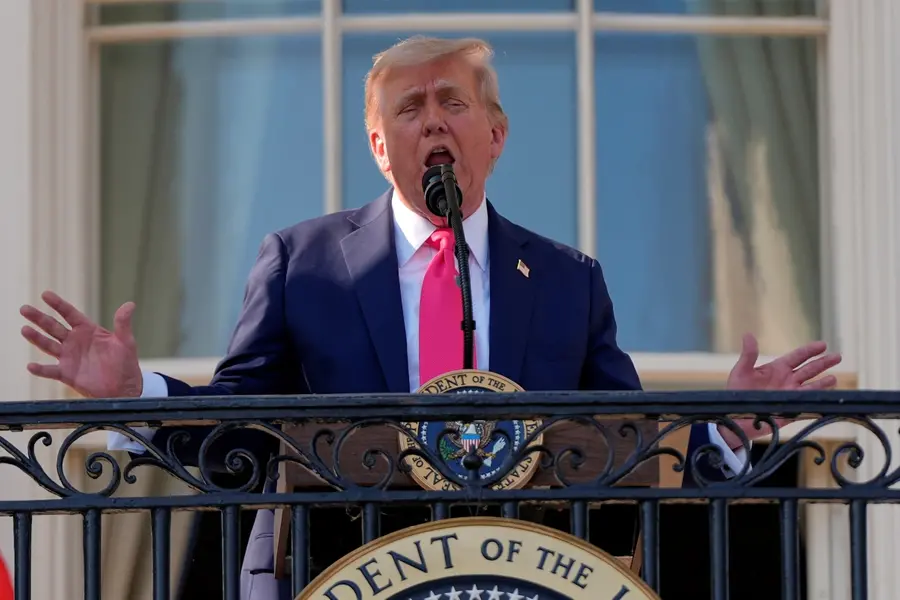
Earlier in the week, President Donald Trump held a summit with leaders of Liberia, Senegal, Guinea-Bissau, Mauritania and Gabon at the White House. The discussions focused on the return of nationals without legal status in the U.S., as well as the possibility of accepting deported individuals from third countries.
U.S. border tsar Tom Homan told the media on Friday that the Trump administration is seeking agreements with “many countries” to accept deported migrants.
“If there is a significant public threat or national security threat — there's one thing for sure — they're not walking the streets of this country. We'll find a third, safe nation to send them to, and we're doing it,” he said.
Reactions from African governments
Liberian President Joseph Boakai confirmed that the summit included discussions on third-country deportations, but said there was no direct request to Liberia.
“They're not forcing anybody, but they want us to know that this is the concern they have, and they are asking how can we contribute, how can we help?” he said.
Guinea-Bissau President Umaro Sissoco Embaló also confirmed that the topic was discussed, but said Trump did not specifically ask African nations to accept deportees. Other governments did not respond to requests for comment.
Nigeria’s Foreign Minister Yussuf Tuggar confirmed that talks are ongoing between the U.S. and several African countries but declined to provide details.
He said on Thursday that Nigeria would not agree to take third-country deportees, stating the country already has sufficient internal challenges.
What’s at stake for African countries
Experts suggest that African governments may consider cooperation in hopes of gaining favourable terms in U.S. negotiations related to tariffs, visa restrictions, or aid cuts.
Beverly Ochieng, a security analyst at Control Risks, said some countries may wish to pursue a migrant deal to preserve ties with the U.S.
“They may want to reach a migrant deal to avoid a situation where they lose access to the U.S. economy or economic initiatives and bilateral relations,” she said.
Ochieng added that this is especially relevant “in light of the withdrawal of developmental aid.”
South Sudan’s agreement and concerns
South Sudan is the only African country that has so far accepted third-country deportees from the U.S. The eight individuals deported had criminal convictions; only one of them was South Sudanese.
Details of the deal remain undisclosed, and South Sudan’s Foreign Ministry has not answered questions.
Alan Boswell, Horn of Africa programme director at the International Crisis Group, said South Sudan may have several motivations.
“South Sudan would have a number of reasons to want to placate a Trump administration, be that avoiding visa bans, warding off more sanctions against its elite, or generally trying to curry favor.”
The decision has been criticised within South Sudan.
“South Sudan is not a dumping ground for criminals,” said Edmund Yakani, a prominent civil society leader.
Legal uncertainty and Rwanda’s position
Homan said Friday he did not know the current status of the eight deported individuals.
Michelle Mittelstadt, spokesperson for the Migration Policy Institute, expressed concern over the legal ambiguity.
“There's a lot of confusion and lack of clarity over who actually has control of these individuals when they're deported to a third country,” she said.
Rwanda’s foreign minister told the Associated Press last month that talks were in progress with the U.S. to host deported migrants, without providing further detail. The U.S. State Department has declined to comment.
Rights groups have long raised alarm over Rwanda’s human rights record, including deaths in custody of individuals perceived as government critics.
The United Kingdom had struck a deal with Rwanda in 2022 to send migrants arriving illegally for asylum processing. That plan was stalled due to legal challenges and criticism from human rights advocates.
Published: 13 Jul 2025, 06:25 am IST
Related Topics
Disclaimer: Kindly avoid objectionable, derogatory, unlawful and lewd comments, while responding to reports. Such comments are punishable under cyber laws. Please keep away from personal attacks. The opinions expressed here are the personal opinions of readers and not that of Mathrubhumi.
