
US President Donald Trump has announced that tariffs on cars and trucks imported from the European Union will be raised to 25% from next week, citing alleged non-compliance with a trade agreement.
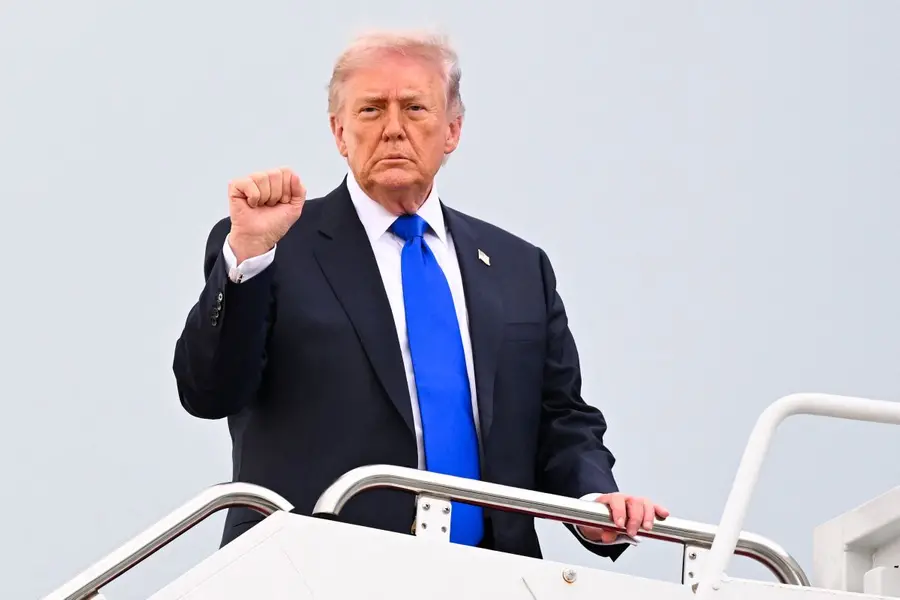
Washington DC: US President Donald Trump has announced a sharp increase in tariffs on cars and trucks imported from the European Union, raising the rate to 25% from next week, citing what he described as non-compliance by the bloc with an existing trade agreement.
In a post on Truth Social, Trump said the move was based on the EU’s alleged failure to comply with a previously agreed trade deal. “I am pleased to announce that, based on the fact the European Union is not complying with our fully agreed to Trade Deal, next week I will be increasing Tariffs charged to the European Union for Cars and Trucks coming into the United States. The Tariff will be increased to 25 per cent,” he wrote.
Also Read

He added that vehicles manufactured within the United States would not be subject to tariffs, encouraging companies to expand domestic production instead.
“It is fully understood and agreed that, if they produce Cars and Trucks in U.S.A. Plants, there will be NO TARIFF,” the post stated, highlighting ongoing investment in American manufacturing facilities.
Trump also claimed that new automobile and truck plants were being built across the US, backed by over $100 billion in investment. He said these developments would create jobs and strengthen the domestic manufacturing base.
“These plants, staffed with American workers, will be opening soon — there has never been anything like what is happening in America today,” he added.
Background to US–EU trade agreement
The announcement follows a trade deal reached in July 2025 between the US and the European Union, which includes 27 member states. The agreement had established a 15% tariff framework on certain European goods and outlined commitments from both sides to ease trade tensions.
As part of that deal, the EU also agreed to purchase $750 billion worth of energy from the United States.
Earlier developments have also shaped the broader debate over US tariff powers. In February, the US Supreme Court ruled that the 1977 International Emergency Economic Powers Act (IEEPA) does not grant the President authority to impose sweeping tariffs.
The 6–3 decision, authored by Chief Justice John Roberts, limited the scope of presidential power in trade actions, with three justices dissenting.
Trump’s latest announcement signals renewed friction between Washington and Brussels over trade policy, particularly in the automobile sector, which remains a key area of economic exchange between the two economies.
(With AP inputs)
Published: 01 May 2026, 10:34 pm IST
Related Topics
Disclaimer: Kindly avoid objectionable, derogatory, unlawful and lewd comments, while responding to reports. Such comments are punishable under cyber laws. Please keep away from personal attacks. The opinions expressed here are the personal opinions of readers and not that of Mathrubhumi.