
President Donald Trump used his 2026 State of the Union address to minimise the impact of the Supreme Court’s ruling against his global tariffs, calling it a setback
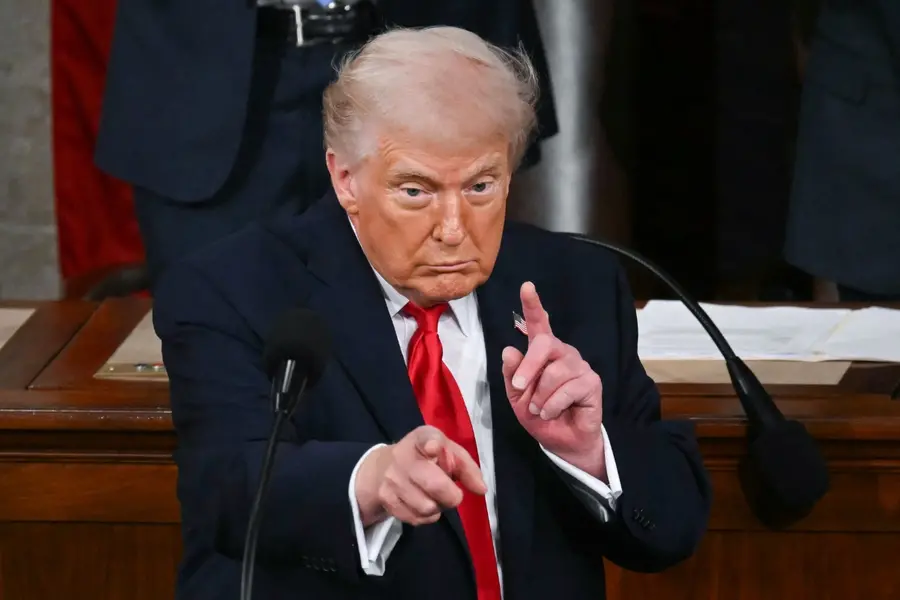
Washington DC: Addressing a joint session of Congress, US President Donald Trump presented what he described as a sweeping national turnaround, even as he confronted one of the most significant legal blows of his second term.
The Supreme Court of the United States recently struck down his broad global tariff regime. During the speech, Trump described the ruling as “unfortunate” and “totally wrong,” but stopped short of repeating the sharp personal attacks he had levelled at specific justices in previous public remarks.
Also Read

Rather than retreat, Trump framed the decision as a temporary obstacle. He pledged to pursue alternative pathways to sustain his tariff policy, signalling that congressional cooperation may be required. The 15% tariffs imposed following the ruling are set to expire in 150 days unless Congress acts to extend them.
Tariffs and income tax claim
Trump argued that continuing the tariff strategy could eliminate the need for income tax, telling lawmakers that the policy could effectively “abolish the income tax.” The suggestion drew applause from Republican members in the chamber.
Economic analysts have noted that tariffs function as a regressive tax on imports and would mathematically struggle to replace federal income tax revenues. Congressional action would also be required to formalise such a structural shift.
Market performance and economic claims
The president referenced the S&P 500 reaching 7,000 nineteen days earlier, celebrating the milestone. However, the index subsequently fell below that level and has not returned to it.
On drug pricing, Trump repeated his statement that he reduced prices by “300, 400, 500 600 percent and more.” A 100% reduction would imply a price of zero. Pharmaceutical companies, including those that have publicly negotiated with the administration, have continued to raise prices on several prescription medicines.
Border security and immigration
Trump declared:
“After four years, in which millions and millions of illegal aliens poured across our borders totally unvetted and unchecked, we now have the strongest and most secure border in American history by far. In the past nine months, zero illegal aliens have been admitted to the United States. But we will always allow people to come in legally. People that will love our country and will work hard to maintain our country.”
Official Customs and Border Protection data shows illegal crossings have declined sharply compared with previous years, though they have not reached zero.
Tone in the chamber
When tariffs were first mentioned, the reaction among Republican lawmakers was muted compared with earlier sections of the speech. Applause increased when Trump linked tariffs to the potential elimination of income tax.
Democratic members largely remained restrained, with some walking out during portions of the address. Trump briefly referenced the 2020 election, saying, “Should be my third term, strange things happen.”
Political stakes
Television audiences for State of the Union addresses typically peak within the first 30 minutes, and Trump delivered his core economic and trade messaging during that window.
With tariffs central to his economic platform and midterm elections approaching, Trump’s response to the Supreme Court ruling signals that trade policy will remain a defining battleground between the White House, Congress and the judiciary in the months ahead.
Published: 25 Feb 2026, 08:34 am IST
Related Topics
Disclaimer: Kindly avoid objectionable, derogatory, unlawful and lewd comments, while responding to reports. Such comments are punishable under cyber laws. Please keep away from personal attacks. The opinions expressed here are the personal opinions of readers and not that of Mathrubhumi.