
US President Donald Trump has branded Federal Reserve Chair Jerome Powell a "fool" following the Fed's decision to pause interest rate cuts
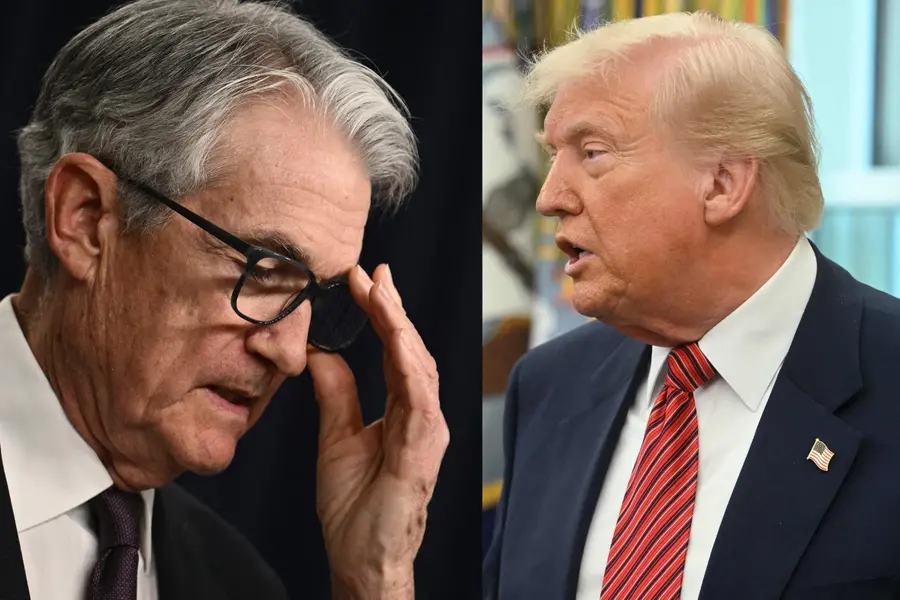
Washington DC: US President Donald Trump has once again targeted Federal Reserve Chair Jerome Powell, calling him a "fool" after the central bank announced a pause in interest rate cuts on Thursday.
This marks another sharp attack on the Fed head, who has faced continuous criticism from Trump for his approach to managing the US economy, especially amid the president's contentious economic policies, including ongoing tariff disputes.
In his latest post on Truth Social, Trump's remarks were pointed: "Too Late" Jerome Powell is a FOOL, who doesn't have a clue," he wrote, doubling down on his stance that the Federal Reserve should be reducing interest rates to stimulate economic growth.
Trump has long advocated for lower rates to boost spending, investment, and growth, particularly as he navigates his complex and often fluctuating trade policies, including the imposition of tariffs on China.
The Federal Reserve, in a unanimous decision, chose to keep the key lending rate unchanged at between 4.25 percent and 4.50 percent. This pause follows several rate hikes in the previous months and is a part of the Fed's strategy to curb inflation. However, inflation concerns remain persistent, and the Fed has expressed caution about the risks of inflation not easing as expected.
Jerome Powell addressed the decision in a press conference, stating that there is still "a great deal of uncertainty" surrounding the impact of the Trump administration's trade policies, particularly the tariffs imposed on China. Powell acknowledged that these tariffs could potentially push inflation higher and hurt employment in the short term. Despite these concerns, he reiterated that the Fed's primary responsibility was to ensure long-term economic stability by targeting price stability and full employment.
Trump, however, remains adamant in his belief that inflation is not an issue. In his Truth Social post, he claimed there was "virtually NO INFLATION" and that "almost all costs" were down, although these assertions are at odds with the broader economic data. US inflation remains a concern, and while it has slowed from the highs of 2022, it is still above the Fed's 2% target.
The president's frustration with Powell's decisions is not new. He has previously called Powell a "major loser" for not implementing more aggressive rate cuts, suggesting that he could remove the Fed chair from his position. Trump even floated the idea of seeking Powell's dismissal but later walked back on those statements. Trump's open criticism of Powell, however, does little to influence the independent Fed's decision-making process.
Powell, on his part, remains unfazed by the personal attacks, asserting that the Federal Reserve's mandate is to act independently of political pressures. At a Wednesday news conference, Powell remarked, "We are always going to consider only the economic data, the outlook, the balance of risks, and that's it," reinforcing the Fed's stance of focusing on long-term economic health rather than short-term political pressures.
The Federal Reserve has a dual mandate to manage inflation and employment. To achieve this, it adjusts interest rates — increasing them to tackle inflation and lowering them to stimulate growth. The Fed’s current approach appears focused on striking a balance between supporting growth and managing inflation risks, given the broader uncertainties surrounding global trade, economic growth, and the post-pandemic recovery.
Despite Trump's calls for action, Powell's leadership of the Federal Reserve remains a critical part of the central bank's independent operations. The Fed’s decisions are based on economic indicators, not political considerations. The central bank’s actions are expected to continue shaping the trajectory of the US economy as it navigates the complex landscape of trade, inflation, and growth challenges.
The ongoing debate between Trump and Powell underscores the tension between political objectives and the independent monetary policy-making role of the Federal Reserve. As the US continues to face economic uncertainties, the decisions made by the central bank will play a pivotal role in determining the country’s economic future.
Published: 08 May 2025, 05:34 pm IST
Related Topics
Disclaimer: Kindly avoid objectionable, derogatory, unlawful and lewd comments, while responding to reports. Such comments are punishable under cyber laws. Please keep away from personal attacks. The opinions expressed here are the personal opinions of readers and not that of Mathrubhumi.
