
A new report claims Pentagon officials warned Pope Leo XIV’s envoy that the Catholic Church ‘had better take America’s side,’ prompting the pope to cancel a US visit.
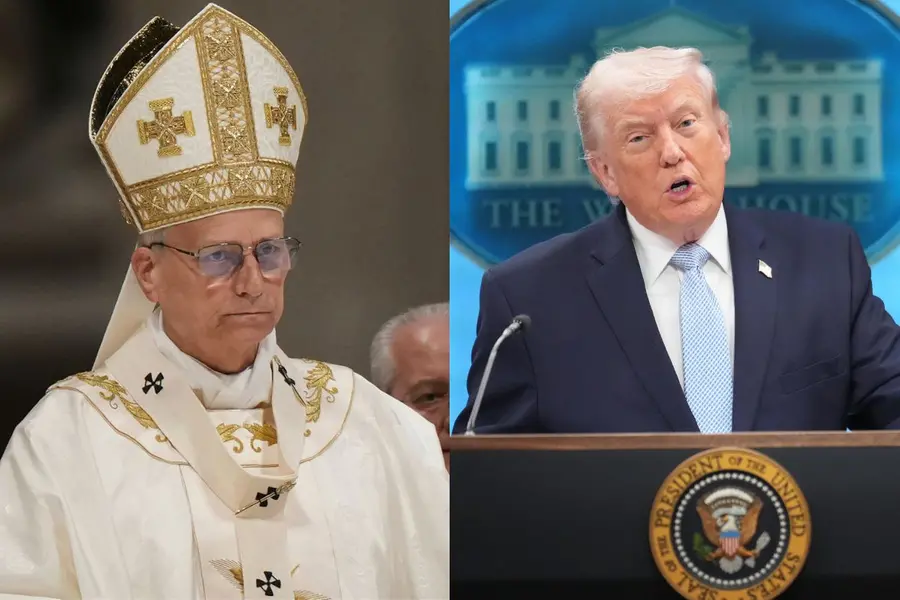
Senior Pentagon leaders allegedly issued a stark warning to the Vatican during a private January 2026 meeting, deepening an already fraught relationship between President Donald Trump and Pope Leo XIV, the first American-born pontiff. Reports from The Free Press and Letters from Leo suggest that the confrontation, sparked by the pope’s forceful criticism of militarism, played a major role in derailing plans for a papal visit during the United States’ 250th anniversary celebrations.
According to the accounts, US Under Secretary of Defense for Policy Elbridge Colby and other senior officials summoned Cardinal Christophe Pierre shortly after the pope’s “State of the World” address, where Leo condemned rising global aggression and rejected “diplomacy based on force”. The Pentagon viewed the remarks as a pointed rebuke of Trump’s foreign policy.
During the meeting, officials allegedly told Pierre, "America has the military power to do whatever it wants in the world. The Catholic Church had better take its side." The exchange reportedly stunned Vatican representatives and prompted what insiders describe as one of the sharpest ruptures between Washington and the Holy See in decades.
Tensions rise after Pope’s criticism of US militarism
Pope Leo XIV’s annual address on 9 January drew immediate anger from senior Trump administration figures. In his speech, the pontiff warned that “a diplomacy that promotes dialogue and seeks consensus among all parties is being replaced by a diplomacy based on force,” adding that “war is back in vogue, and a zeal for war is spreading.”
Pentagon officials, including Defence Secretary Pete Hegseth, were said to be particularly incensed. According to Vatican and US sources, they interpreted the remarks as a direct challenge to Trump’s foreign policy posture, including the so-called “Donroe Doctrine,” an updated approach to the Monroe Doctrine envisioning unchallenged US dominance in the Western Hemisphere.
The reported comments from Colby and other officials left Vatican diplomats “alarmed”, according to The Free Press. The alleged reference by one US official to the Avignon Papacy, a 14th-century period when French kings bent the papacy to their will, was considered especially threatening, with one Vatican insider saying many saw it as an insinuation of potential coercion.
Plans for US visit collapse amid strained relations
The fallout from the January meeting was immediate. Pope Leo XIV reportedly declined Trump’s invitation to attend the nation’s semiquincentennial events, abandoning plans for a highly anticipated US visit.
Instead, the pontiff chose to spend 4 July on the Italian island of Lampedusa, a symbolic decision given the island’s central role in Europe’s migration crisis. Vatican officials told The Free Press that the pope would not travel to the United States while Trump remained in office.
The confrontation highlighted an already deteriorating relationship. The pope has repeatedly criticised Trump’s approach to immigration and the escalating conflict with Iran. After the president posted a threat on Truth Social vowing to wipe out Iran’s civilisation, Leo condemned the rhetoric outright, calling it “truly unacceptable.”
“There were certainly issues of international law here, but even more, it is a moral question concerning the good of the people as a whole, in its entirety,” he told reporters in Italy.
Pope Leo calls for peace
In recent weeks, the pope has intensified his appeals for dialogue amid rising tensions in the Middle East. Speaking after Trump warned that “a whole civilisation will die tonight,” Leo urged people to contact their elected representatives to advocate for peace.
“We have a worldwide economic crisis, an energy crisis, (a) situation in the Middle East of great instability, which is only provoking more hatred throughout the world,” he said. He encouraged leaders to “come back to the table” and to “remember especially the innocent children, the elderly, sick”.
The pope welcomed the announcement of a two-week ceasefire between the US and Iran, calling it a “moment of relief” after days of heightened danger.
Clashing visions of faith and power
Leo XIV has also publicly rejected Hegseth’s attempts to frame US military action in explicitly Christian terms. In March, the defence secretary urged Americans to pray for US victory in Iran “in the name of Jesus Christ,” prompting a pointed response from the pope, who said that Jesus “does not listen to the prayers of those who wage war, but rejects them.”
On Easter Sunday, the pontiff again appealed for global peace: “let us abandon every desire for conflict, domination, and power”. Hours later, Trump issued a profanity-laden threat towards Iran: “There will be nothing like it!!! Open the F****** Strait, you crazy bastards, or you’ll be living in Hell — JUST WATCH! Praise be to Allah.”
Published: 09 Apr 2026, 08:04 am IST
Related Topics
Disclaimer: Kindly avoid objectionable, derogatory, unlawful and lewd comments, while responding to reports. Such comments are punishable under cyber laws. Please keep away from personal attacks. The opinions expressed here are the personal opinions of readers and not that of Mathrubhumi.
