
US President Donald Trump has announced a temporary pause in “Project Freedom” even as the naval blockade on Iran continues, signalling a possible diplomatic opening.
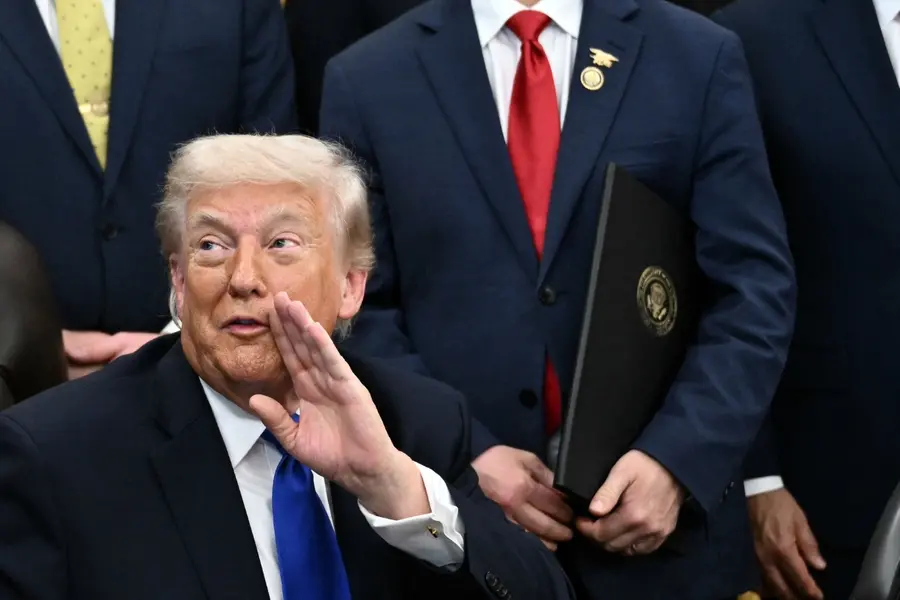
Washington DC: US President Donald Trump has announced a temporary pause in “Project Freedom”, a US-led maritime operation designed to escort commercial ships through the Strait of Hormuz, even as the naval blockade targeting Iran remains fully operational.
The move comes at a critical moment in escalating tensions in the Gulf, where global shipping routes have faced disruptions due to military activity and geopolitical uncertainty. Trump said the decision to pause the operation was taken following requests from Pakistan and other nations that are reportedly engaged in mediation efforts between Washington and Tehran.
Also Read

Pause signals possible diplomatic opening
According to Trump, the temporary halt is intended to create space for finalising a potential agreement between the United States and Iran. He indicated that “significant progress” has already been made in ongoing discussions with Iranian representatives, raising hopes of a diplomatic breakthrough after weeks of heightened tensions.
The US President also pointed to what he described as “tremendous military success” during recent operations linked to Iran. While he did not provide operational details, the statement suggests Washington believes it has strengthened its strategic position ahead of negotiations.
The pause, therefore, appears to be both a diplomatic signal and a tactical decision—aimed at testing whether ongoing backchannel talks can lead to a formal agreement.
Naval blockade on Iran remains unchanged
Despite the suspension of Project Freedom, Trump made it clear that the broader US strategy towards Iran remains firm. The naval blockade, which restricts Iranian maritime activity and port access, will continue without any relaxation.
This means that while commercial vessels may no longer receive direct US military escort under the paused operation, pressure on Iran through maritime restrictions remains intact. The continuation of the blockade indicates that Washington is maintaining leverage even as it explores diplomatic options.
What is Project Freedom and why it matters
“Project Freedom” was launched just days ago as a rapid response to growing concerns over the safety of commercial shipping in the Strait of Hormuz. The waterway is one of the most critical global trade routes, handling a significant share of the world’s oil and energy supplies.
The operation was led by United States Central Command (CENTCOM), which deployed a large-scale military presence to secure the corridor. This included guided-missile destroyers, more than 100 aircraft, unmanned systems across multiple domains, and around 15,000 personnel.
Its primary objective was to ensure freedom of navigation for merchant vessels and prevent disruptions that could have far-reaching economic consequences worldwide.
Global implications and uncertainty ahead
The decision to pause the operation introduces a new phase in the unfolding crisis. On one hand, it signals a possible de-escalation and opens the door for negotiations. On the other, it creates uncertainty for global shipping companies that had relied on US protection to navigate the volatile region.
If talks between Washington and Tehran succeed, the pause could mark the beginning of a broader easing of tensions. However, if negotiations fail, there is a strong possibility that military operations like Project Freedom could resume, potentially with greater intensity.
For now, the situation remains fluid, with diplomacy and military strategy unfolding side by side in one of the world’s most sensitive geopolitical flashpoints.
Published: 06 May 2026, 06:31 am IST
Disclaimer: Kindly avoid objectionable, derogatory, unlawful and lewd comments, while responding to reports. Such comments are punishable under cyber laws. Please keep away from personal attacks. The opinions expressed here are the personal opinions of readers and not that of Mathrubhumi.