
Trump-Netanyahu call, intelligence inputs, and strategic push led to Iran strike killing Khamenei, report says.
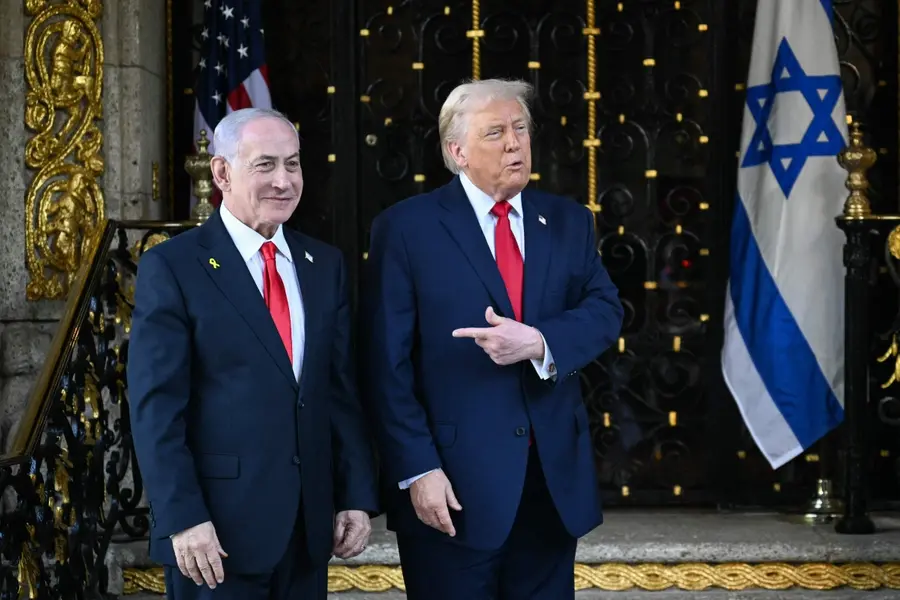
United States President Donald Trump is said to have signalled approval for joint US-Israeli strikes on Iran following a crucial phone conversation with Israeli Prime Minister Benjamin Netanyahu. According to a report by Reuters, the call took place less than 48 hours before the operation began.
During the discussion, Netanyahu—who had long advocated for such action—reportedly argued that the moment presented a rare opportunity to eliminate Iran’s Supreme Leader Ayatollah Ali Khamenei.
Intelligence shaped timing of the strike
Sources cited in the report indicated that both leaders had access to intelligence suggesting Khamenei would soon meet senior officials at his Tehran compound. This gathering was viewed as a potential target for a “decapitation strike”, aimed at removing top leadership figures.
Fresh intelligence reportedly brought forward the timing of the meeting from Saturday night to Saturday morning, prompting urgency. The phone call between Trump and Netanyahu followed this development, according to individuals familiar with the matter.
Although Trump had already authorised military action in principle, key details—such as timing and the extent of US involvement—were still under consideration.
Also Read | ‘Ayatollah and I could control Hormuz together': Trump’s explosive claim
Netanyahu’s pitch and strategic arguments
During the call, Netanyahu is said to have pressed the case strongly, telling Trump that such an opportunity might not arise again. He also linked the move to alleged past Iranian efforts to target Trump, including a 2024 plot involving a Pakistani national accused by the US Justice Department of attempting to recruit operatives inside the country. The plan was reportedly in retaliation for the US killing of the Islamic Revolutionary Guard Corps' top commander, Qassem Soleimani.
Netanyahu further suggested that removing Iran’s leadership could shift the regional balance and even trigger domestic unrest within Iran, potentially weakening the ruling system established after the Iranian Revolution.
Military build-up and final approval
In the weeks leading up to the call, the United States had been strengthening its military presence in the Middle East, fuelling expectations within the administration that a strike was imminent. A previously considered launch date had reportedly been delayed due to adverse weather conditions, according to Reuters.
According to at least three people briefed on the call, Netanyahu’s arguments—combined with intelligence indicating a narrowing window of opportunity—helped shape Trump’s final decision. On February 27, Trump ordered the military to proceed with “Operation Epic Fury”.
The first strikes were carried out early on February 28. Later that evening, Trump announced that Khamenei had been killed.
Also Read | Massive escalation: Iran launches 78th wave of missile strikes on Israel, US bases | VIDEO
Objectives of the operation
White House spokeswoman Anna Kelly told Reuters that the mission was aimed to "destroy the Iranian regime's ballistic missile and production capacity, annihilate the Iranian regime's Navy, end their ability to arm proxies, and guarantee that Iran can never obtain a nuclear weapon."
Israel rejects claims of influencing US decision
Netanyahu later dismissed claims that Israel had drawn the United States into the conflict, calling such suggestions “fake news”. He maintained that Trump made the decision independently, a view the US President has also publicly supported.
However, the report suggests Netanyahu’s framing of the situation—particularly highlighting both strategic and personal stakes—may have played a persuasive role.
US Defence Secretary Pete Hegseth hinted that retaliation was a factor, noting that "Iran tried to kill President Trump, and President Trump got the last laugh."
Background: Tensions leading to the conflict
During his 2024 campaign, Trump had emphasised avoiding war with Iran, favouring diplomatic engagement. However, stalled negotiations over Tehran’s nuclear programme appear to have shifted that stance.
Earlier, in June, Israel launched strikes on Iranian nuclear and missile facilities, killing several senior figures. The US later joined the operation, which lasted 12 days. Trump subsequently claimed the attacks had “obliterated” Iran’s nuclear capabilities.
In the months that followed, discussions resumed between Washington and Tel Aviv about further action, particularly targeting remaining missile infrastructure.
Also Read | ‘All a bluff’: Iran mocks Trump’s five‑day strike pause, says no talks happening
Renewed plans and strategic considerations
Israel had also set its sights on eliminating Ali Khamenei, viewing him as a long-standing strategic adversary. He had been linked to repeated missile exchanges with Israel and to backing a network of heavily armed regional proxies surrounding the country. Among them were Hamas, which carried out the October 7, 2023 assault from Gaza, and Hezbollah, the Iran-aligned force operating out of Lebanon.
Israeli officials had initially prepared for a unilateral operation. However, during a December meeting at Trump’s Mar-a-Lago residence, Netanyahu expressed dissatisfaction with the earlier campaign’s outcomes, Reuters reported, citing two sources.
Trump indicated openness to further military action while also pursuing diplomatic channels.
As per the report, two key developments reportedly pushed Trump closer to authorising another strike. One was a US operation on January 3 targeting Venezuelan President Nicolas Maduro, which demonstrated the feasibility of complex missions with minimal US casualties.
The second trigger was a sweeping wave of anti-government protests across Iran, which drew a harsh crackdown from the Islamic Revolutionary Guard Corps, leaving thousands dead. In response, Trump voiced support for the demonstrators, though he took no immediate public action to back them.
Also Read | When history is edited: Rethinking Iran’s story
Final build-up to conflict
Coordination between Israeli forces and the US military’s Middle East command, known as CENTCOM, deepened through a series of discreet planning meetings, according to two Israeli officials who spoke on condition of anonymity. During a February visit to Washington, Netanyahu is understood to have flagged concerns over Iran’s expanding missile programme, cautioning that its capabilities could eventually pose a threat to US territory, according to three people familiar with the private talks.
The White House declined to comment on queries regarding Trump’s meetings with Netanyahu in December and February.
By late February, a number of officials had come to view military action as increasingly likely. Trump was presented with detailed briefings highlighting the potential strategic gains of a strike, according to Reuters, citing two individuals familiar with the discussions.
US Secretary of State Marco Rubio also warned congressional leaders that Israel might proceed with an attack regardless of US involvement, and that Iran would likely retaliate.
The military action has since led to Iranian counterstrikes targeting US assets, resulting in the deaths of more than 2,300 civilians in Iran and at least 13 American service members. The escalation has also extended to attacks on US-aligned Gulf states, disruption of a key global shipping corridor, and a sharp surge in oil prices now affecting consumers worldwide.
Trump is also reportedly said to have considered the possibility—however limited—that removing Iran’s top leadership could pave the way for a government in Tehran more open to negotiations with Washington. The prospect of regime change had been among the arguments put forward by Benjamin Netanyahu in the conversation before the strike was authorised.
However, this assessment was not shared by the Central Intelligence Agency, which had concluded in the preceding weeks that Khamenei would likely be succeeded by a more hardline figure from within the existing system, as previously reported by Reuters.
In the aftermath of Khamenei’s killing, Trump publicly urged Iranians to rise up against their leadership. Yet, with the conflict now in its fourth week, Iran’s Revolutionary Guards continue to maintain a strong presence on the streets, while millions of civilians remain indoors amid the ongoing turmoil.
Khamenei’s son, Mojtaba Khamenei—widely regarded as holding more hardline anti-American views—has since been appointed as Iran’s new supreme leader.
Published: 24 Mar 2026, 11:32 am IST
Related Topics
Disclaimer: Kindly avoid objectionable, derogatory, unlawful and lewd comments, while responding to reports. Such comments are punishable under cyber laws. Please keep away from personal attacks. The opinions expressed here are the personal opinions of readers and not that of Mathrubhumi.
