
Donald Trump accuses Iran of violating ceasefire terms by restricting shipping through the Strait of Hormuz, triggering fresh global concerns.
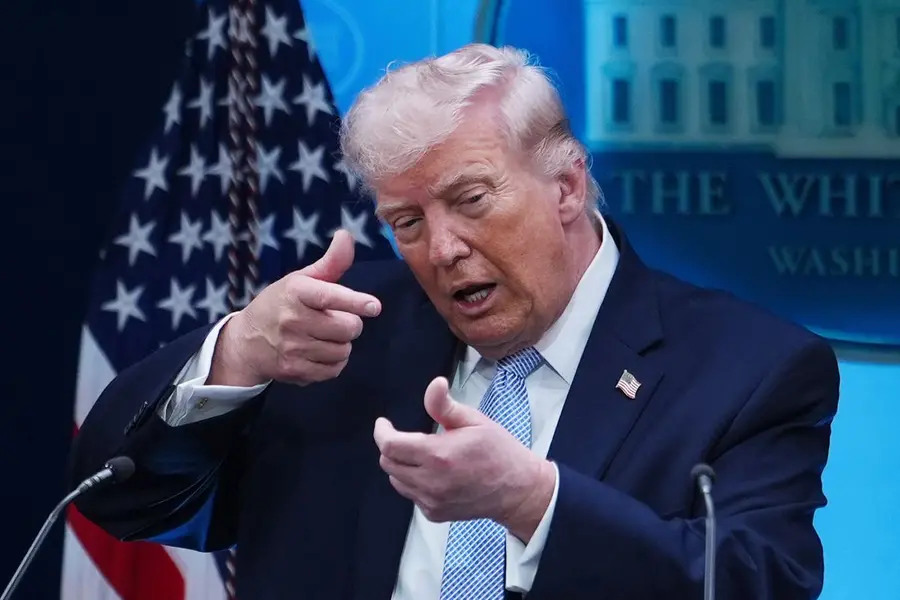
Tensions surrounding the Strait of Hormuz have resurfaced despite a fragile ceasefire between the United States and Iran, with US President Donald Trump sharply criticising Tehran’s handling of one of the world’s most critical oil transit routes.
Speaking amid volatile global markets, Trump accused Iran of violating the terms of the recently brokered agreement, saying its management of shipping through the strait was “not the agreement we have.”
He further warned Tehran against imposing any charges on vessels passing through the narrow waterway, adding that Iran “better not be” interfering with free navigation.
The Strait of Hormuz, through which nearly 20 per cent of the world’s oil supply flows, has remained at the centre of geopolitical tensions following weeks of conflict involving US and Israeli strikes on Iranian targets.
Although Iran had agreed to reopen the passage as part of a ceasefire deal brokered by Pakistan, shipping activity has remained severely restricted.
Tracking data indicates that only a handful of vessels have passed through the strait in recent days, including just one oil tanker. Reports linked to Iran’s Revolutionary Guards suggest that access may be deliberately limited, with some officials indicating that only around 15 ships per day would be allowed through, far below the typical daily average of over 130 vessels during peacetime.
Adding to concerns, maps circulated by Iranian media appear to show sections of the strait potentially mined, forcing ships into narrower, riskier channels closer to Iran’s coastline.
Such developments have heightened fears of supply disruptions and contributed to sharp swings in oil prices, which briefly surged above $100 per barrel before easing later in trading.
Despite the tensions, there are signs that parts of the ceasefire are holding. No fresh airstrikes have been reported across Iran or neighbouring Gulf states in recent days, offering a degree of cautious optimism ahead of planned diplomatic talks.
High-level negotiations between Washington and Tehran are scheduled to take place in Islamabad, with US Vice President JD Vance leading the American delegation.
The talks are expected to include senior figures such as special envoy Steve Witkoff and Jared Kushner, while Iran will be represented by Parliamentary Speaker Mohammad Bagher Ghalibaf.
However, the broader regional situation remains complex. Iran’s leadership has struck a defiant tone, with a statement attributed to Supreme Leader Ayatollah Mojtaba Khamenei vowing accountability for what it described as “criminal aggression” during the recent conflict.
The statement also hinted at a “new phase” in managing the Strait of Hormuz, raising further uncertainty about future access.
Meanwhile, tensions continue to simmer on another front. Iran has condemned Israel’s intensified military operations against Hezbollah in Lebanon, calling them a violation of the ceasefire and warning that continued attacks would render peace efforts “meaningless.”
Israeli Prime Minister Benjamin Netanyahu has indicated a willingness to open negotiations with Lebanon, stating that discussions would focus on disarming Hezbollah and establishing more stable relations.
However, the situation remains fragile, particularly after Israel carried out one of its deadliest bombing campaigns in Lebanon following the ceasefire announcement.
Trump has also sought to rally international support, urging NATO allies to contribute more actively to securing the Strait of Hormuz.
He expressed frustration at what he described as a lack of urgency among allies, while NATO officials acknowledged growing pressure from Washington for concrete commitments to ensure freedom of navigation.
The US has maintained a strong military presence in the region, with Trump warning that any breach of the agreement could trigger a significantly escalated response.
As diplomatic efforts continue, the situation in the Strait of Hormuz remains a critical flashpoint, with global energy security and regional stability hanging in the balance.
Published: 10 Apr 2026, 06:03 am IST
Related Topics
Disclaimer: Kindly avoid objectionable, derogatory, unlawful and lewd comments, while responding to reports. Such comments are punishable under cyber laws. Please keep away from personal attacks. The opinions expressed here are the personal opinions of readers and not that of Mathrubhumi.
