
President Donald Trump has endorsed a bipartisan Russia sanctions bill that proposes raising US tariffs on Russian imports to at least 500 percent.
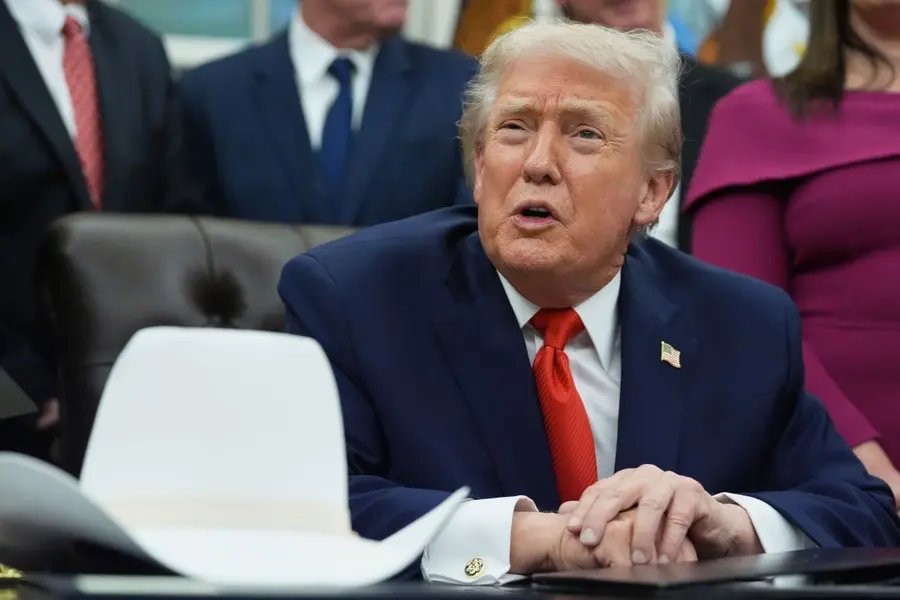
US President Donald Trump has endorsed a sweeping bipartisan sanctions bill aimed at penalising countries that continue to buy discounted Russian crude, a move that could significantly raise economic pressure on India, China and Brazil. The legislation – formally titled the ‘Sanctioning of Russia Act 2025’ – proposes stringent punitive measures, including increasing US tariffs on all Russian goods and services to at least 500 percent of their value.
The development comes as Washington seeks additional leverage amid ongoing negotiations connected to the Russia–Ukraine conflict, with lawmakers arguing that nations sustaining Russian oil revenues are helping fund Moscow’s invasion.
Graham says Trump ‘greenlit’ the bill
Senator Lindsey Graham announced the president’s support in a post on X on Wednesday, revealing that Trump had approved the legislation after discussions covering multiple foreign policy issues.
Graham wrote, "After a very productive meeting today with President Trump on a variety of issues, he greenlit the bipartisan Russia sanctions bill that I have been working on for months with Senator Blumenthal and many others."
The senator said the timing was critical as Ukraine seeks “concessions for peace” while Russia continues its offensive. He added that the bill would empower the White House to penalise nations purchasing Russian crude at discounted rates.
“This bill will allow President Trump to punish those countries who buy cheap Russian oil fueling Putin’s war machine,” he said, adding that the legislation would give Trump “tremendous leverage” over India, China and Brazil.
Graham suggested the bill could reach the Senate floor as early as next week, expressing confidence that it will attract wide cross-party backing. He described the measure as an essential diplomatic instrument during fragile peace discussions.
What the ‘Sanctioning of Russia Act 2025’ proposes
According to the US Congress website, the bill imposes expansive sanctions targeting individuals, firms and entities tied to Russia. One of its most consequential provisions mandates raising duties on all Russian imports to the US to a minimum of 500 percent of their assessed value – a dramatic escalation designed to cripple Moscow’s export revenues.
Other proposed measures cover penalties for entities facilitating Russian trade or aiding its military actions.
Ukraine diplomacy and recent meetings
The legislative push follows a 7 January meeting between Ukrainian President Volodymyr Zelenskyy and a visiting US delegation that included Steve Witkoff and Jared Kushner. Both sides reportedly discussed potential diplomatic pathways to ending the conflict, which has entered its third year.
Trump’s earlier comments on tariffs against India
The renewed pressure comes amid Trump’s repeated criticisms of India’s oil purchases from Russia. At a recent House GOP retreat, he said that Prime Minister Narendra Modi was displeased with the steep tariffs Washington imposed on New Delhi.
Trump said, "I have a very good relationship with PM Modi, but he is not happy with me as India is paying high tariffs. But now they have reduced it very substantially, buying oil from Russia."
He noted that a 50% tariff had been imposed due to India’s large-scale buying of Russian crude, arguing that such imports support Russia’s economy during wartime.
Trump added that he was prepared to escalate tariffs further if India did not address US concerns, "They wanted to make me happy, basically. Modi is a very good man; he is a good guy. He knew I was not happy, and it was important to make me happy," he said.
India, however, has firmly denied that Modi ever promised Trump a halt to Russian oil purchases, stating no such assurance or discussion occurred.
(With ANI inputs)
Published: 08 Jan 2026, 08:34 am IST
Related Topics
Disclaimer: Kindly avoid objectionable, derogatory, unlawful and lewd comments, while responding to reports. Such comments are punishable under cyber laws. Please keep away from personal attacks. The opinions expressed here are the personal opinions of readers and not that of Mathrubhumi.
