
The US Coast Guard report blames OceanGate`s disregard for safety, regulatory evasion, and design flaws for the Titan submersible tragedy.
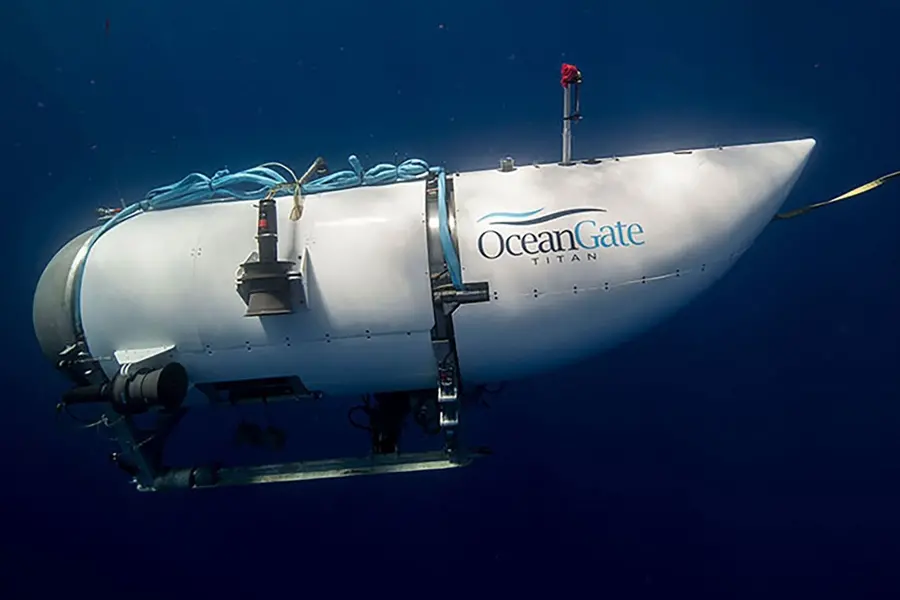
The catastrophic implosion of the Titan submersible that claimed five lives in 2023 could have been avoided, a damning report by the US Coast Guard has concluded. The report, released Tuesday, found that OceanGate, the company behind the doomed expedition, employed intimidation to suppress safety concerns, while maintaining deeply inadequate safety protocols that failed to meet industry standards.
The incident, which unfolded during a descent to the wreck of the Titanic in the North Atlantic, resulted in the instantaneous deaths of OceanGate CEO Stockton Rush and four passengers aboard the Titan sub. The Coast Guard has placed primary responsibility on Rush, citing his disregard for repeated safety warnings and questionable operational decisions that, had he lived, might have led to criminal prosecution.
Escalating disregard for safety
The Marine Board of Investigation stated that Rush demonstrated an “escalating disregard for established safety protocols.” The report also detailed a pattern of ignoring red flags, manipulating regulatory loopholes, and misleading both authorities and passengers in a bid to push forward with under-regulated deep-sea missions.
A critical revelation from the report was OceanGate’s internal culture, described as toxic, where dissent was stifled through the firing of senior staff and the threat of job loss. According to investigators, this hostile environment discouraged employees and contractors from speaking out about potential dangers.
The board noted that if Rush had survived, the case would have been referred to the U.S. Department of Justice for possible criminal charges.
Legal grey areas and regulatory evasion
OceanGate reclassified passengers as “mission specialists,” a move designed to sidestep existing regulations on small passenger vessels and instead frame their operations as scientific research missions. But according to the report, many participants were merely seeking an adventurous dive experience rather than engaging in actual research.
In one instance detailed in the investigation, a Coast Guard Reserve officer employed by OceanGate warned Rush in 2017 that the planned dive to the Titanic was illegal. Rush reportedly replied that “he would buy a congressman” if challenged by authorities.
By 2021, deception had become a regular tactic. A company attorney falsely claimed in a U.S. federal court that the Titan was registered in the Bahamas — it was not. To obtain necessary credentials, Rush allegedly submitted a fraudulent sea service letter to the Coast Guard’s National Maritime Center, misrepresenting his experience and the vessel’s specifications.
Design flaws and financial shortcuts
The submersible’s design and certification process were found to be severely lacking. Titan’s use of a carbon fibre hull — an unconventional material in deep-sea exploration — introduced structural weaknesses. Investigators said these design decisions “weakened the overall structural integrity” of the vessel.
Compounding the risks, OceanGate stored the Titan outdoors during a harsh Canadian winter in early 2023. The report cited fluctuating temperatures as a factor that may have further compromised the hull.
Financial strain in the months leading up to the disaster reportedly played a role in these cost-cutting decisions.
Global fallout and legal action
The disaster drew global attention after a multi-day search mission off the coast of Newfoundland failed to locate any survivors. The sub lost contact with its support ship roughly two hours into its final dive on 18 June 2023. Wreckage was later discovered approximately 300 metres from the Titanic’s bow.
Among those killed were French underwater explorer Paul-Henri Nargeolet — often referred to as “Mr. Titanic” — British billionaire Hamish Harding, and Pakistani businessman Shahzada Dawood and his teenage son Suleman.
The family of Nargeolet has filed a $50 million lawsuit against OceanGate, alleging gross negligence and claiming the crew endured “terror and mental anguish” in the moments leading up to the implosion.
Jason Neubauer of the Marine Board of Investigation said in a statement that the findings are intended to prevent future tragedies: “There is a need for stronger oversight and clear options for operators who are exploring new concepts outside of the existing regulatory framework.”
OceanGate suspended operations in July 2023. Christian Hammond, a company spokesperson, said OceanGate had fully cooperated with the investigation and extended condolences to the victims’ families and others affected by the tragedy.
The Coast Guard concluded that OceanGate's safety practices were “critically flawed,” and that its attempts to boost credibility involved downplaying, ignoring and at times falsifying safety concerns.
(With inputs from AP)
Published: 06 Aug 2025, 12:15 pm IST
Related Topics
Disclaimer: Kindly avoid objectionable, derogatory, unlawful and lewd comments, while responding to reports. Such comments are punishable under cyber laws. Please keep away from personal attacks. The opinions expressed here are the personal opinions of readers and not that of Mathrubhumi.
