
In Taliban-controlled Afghanistan, only close male relatives—a father, brother, husband, or son—can touch a woman
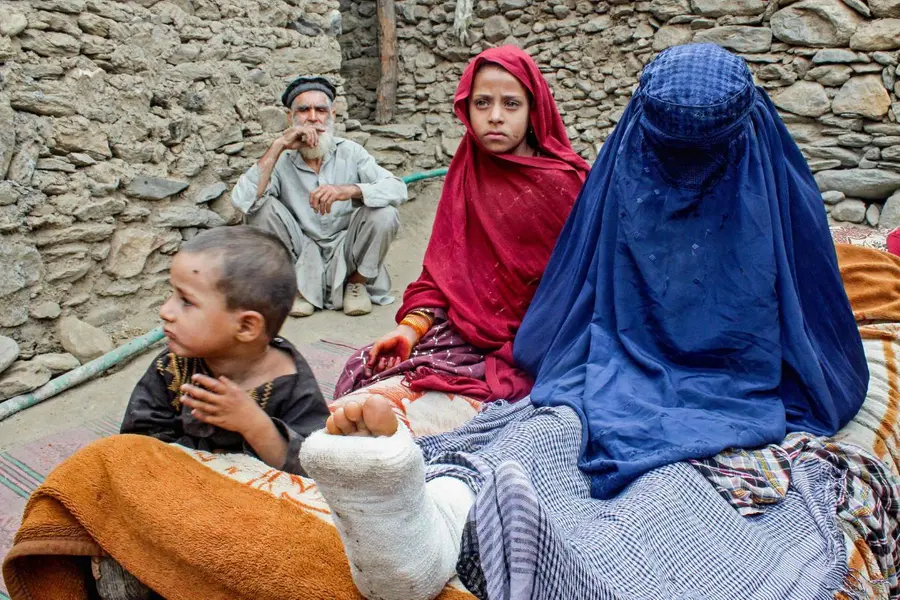
Kunar Province, Afghanistan: In the devastating aftermath of the August 31 earthquake that killed over 2,200 people and injured 3,600, Afghan women and girls have been left without critical aid due to Taliban-imposed gender restrictions, according to a New York Times report.
Strict cultural norms, reinforced by Taliban policies, bar male rescuers from making physical contact with women outside their families—even in life-or-death situations. As a result, many injured and trapped women were left untreated or ignored, sometimes for more than 36 hours after the quake struck.
“They gathered us in one corner and forgot about us,” said Aysha, a 19-year-old survivor from Andarluckak in Kunar Province.
“Some of them bleeding, were pushed aside,” she added, describing how women were left behind while men and children were treated first.
The Taliban’s ban on women studying medicine or working in public roles has led to a critical shortage of female healthcare workers, especially in rural areas—making it nearly impossible to provide timely medical care to women in disaster zones.
“It felt like women were invisible,” said Tahzeebullah Muhazeb, a 33-year-old male volunteer in Mazar Dara, also in Kunar.
“The men and children were treated first, but the women were sitting apart, waiting for care.”
Muhazeb said the all-male medical team was reluctant to pull women from the rubble, even those who were injured or dying, due to Taliban rules. In cases where no male relative was present, rescue workers reportedly dragged dead women out by their clothing to avoid skin contact.
“If no male relative was present, rescue workers dragged dead women out by their clothes, so as not to make skin contact,” he said.
The earthquake flattened entire villages, yet in many areas, female survivors remained trapped under debris, relying on help from strangers in nearby villages, since only women could rescue other women under Taliban restrictions.
Humanitarian organisations and the United Nations have condemned the gender-based restrictions that worsened the crisis for Afghan women.
“Women and girls will again bear the brunt of this disaster, so we must ensure their needs are at the heart of the response and recovery,” said Susan Ferguson, UN Women’s Special Representative in Afghanistan.
The Taliban’s gender policies have not only isolated women but also obstructed effective disaster response, aid workers and doctors say. In interviews with more than half a dozen survivors, medical professionals, and rescuers, the consistent message was clear: women are suffering in silence, with little hope for urgent care.
No official gender breakdown of the casualties has been released by the Taliban. However, reports from the ground suggest women and girls are disproportionately affected—not only by the earthquake but by the systemic discrimination that governs their daily lives.
"The response to the quake on Sunday has epitomised the dual standards that women and girls face in Afghanistan," aid groups stated, noting that many were trapped "both under the rubble and the weight of gender discrimination."
Last year, the Taliban banned women from enrolling in medical education, exacerbating the long-standing shortage of female doctors and rescue workers—a crisis that has now been tragically exposed in the wake of this natural disaster.
In Taliban-controlled Afghanistan, only close male relatives—a father, brother, husband, or son—can touch a woman. The same applies in reverse. Women rescuers cannot assist unrelated men, and male rescuers are not permitted to touch or treat unrelated women. While a woman may help another woman, the ban on female emergency personnel has made this rare or impossible in many quake-affected areas.
Published: 07 Sept 2025, 12:13 pm IST
Related Topics
Disclaimer: Kindly avoid objectionable, derogatory, unlawful and lewd comments, while responding to reports. Such comments are punishable under cyber laws. Please keep away from personal attacks. The opinions expressed here are the personal opinions of readers and not that of Mathrubhumi.
