
Taiwan’s President Lai Ching-te has announced a US$40 billion supplementary defence budget featuring major new US arms purchases
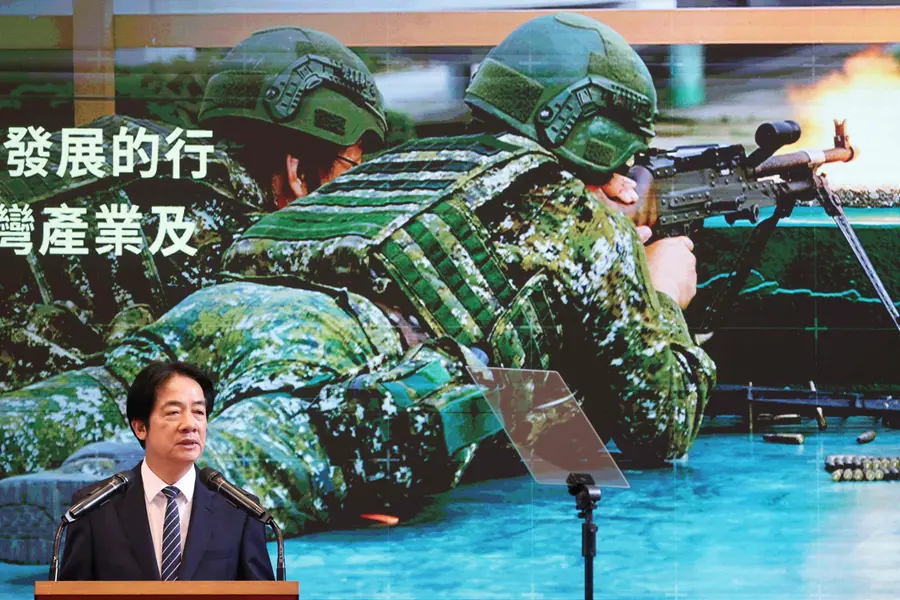
Taipei City: Taiwan will introduce a supplementary defence budget of US$40 billion as part of a broader effort to reinforce its military capabilities amid sustained pressure from China. President Lai Ching-te revealed the move in an opinion piece published in the Washington Post, stating that the package aims to underline Taiwan’s determination to defend itself while raising the cost of any potential use of force by Beijing.
According to the details shared, the landmark package includes substantial new arms acquisitions from the United States and is designed to “vastly enhance” Taiwan’s asymmetric warfare capabilities. Lai said the goal is to strengthen deterrence by increasing the strategic risks for China, which claims Taiwan as its territory — a stance rejected by Taipei.
Taiwan’s wider defence spending for 2026 is set to reach NT$949.5 billion, or roughly US$30 billion. This represents 3.32 per cent of GDP, crossing the 3 per cent threshold for the first time since 2009. The president has previously expressed hopes of raising defence expenditure to 5 per cent of GDP by 2030, responding to both regional security concerns and calls from Washington for Taiwan to invest more in its own defence.
The supplementary package follows years of increased military and political pressure from Beijing, including regular People’s Liberation Army activities around Taiwan. Although the United States maintains no formal diplomatic ties with Taiwan, it is legally required to provide the island with defensive support. Since Donald Trump took office, his administration has approved one major arms package to Taiwan — a US$330 million sale of aircraft and fighter jet parts announced earlier in November.
Lai reiterated that Taiwan remains open to dialogue with China but stressed that its democracy and freedoms are “non-negotiable.” He also stated that efforts for talks would continue, though Beijing has dismissed his outreach and labelled him a separatist.
The government is expected to present the new spending proposal formally, with the plan marking one of Taiwan’s largest single defence investments as the island seeks to modernise its military and strengthen resilience in the face of escalating cross-strait tensions.
Published: 26 Nov 2025, 10:50 am IST
Disclaimer: Kindly avoid objectionable, derogatory, unlawful and lewd comments, while responding to reports. Such comments are punishable under cyber laws. Please keep away from personal attacks. The opinions expressed here are the personal opinions of readers and not that of Mathrubhumi.
