
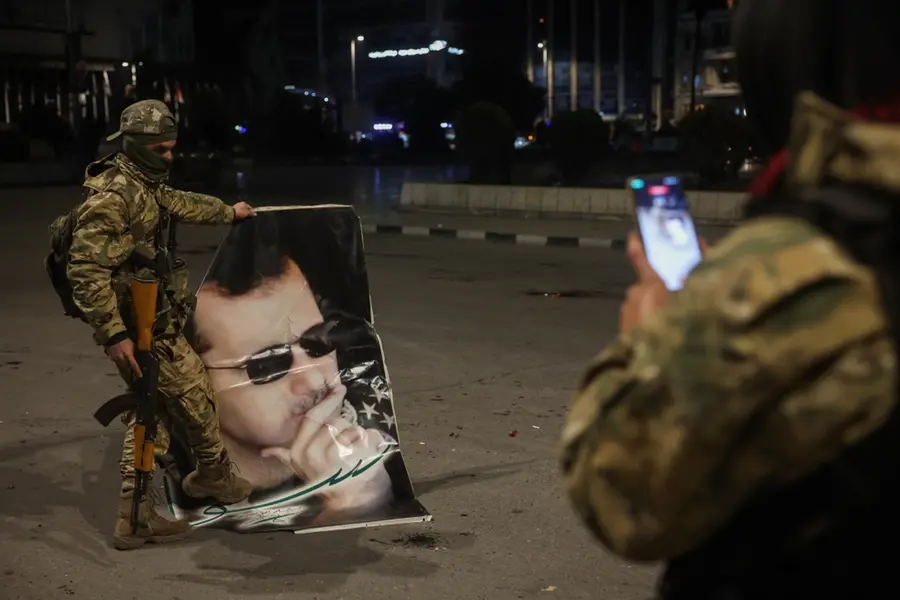
The unexpected downfall and departure of Syrian President Bashar Al Assad have sparked both celebration and concern across the Middle East and beyond. His exit not only ends over six decades of Ba'ath Party rule in Syria but also reshapes the region's political and strategic dynamics.
Here’s a breakdown of the situation and its implications.
Assad’s exit: A quick fall amid challenges
Reports suggest that Assad negotiated a deal with the rebels for a safe exit, having moved family members out of Syria beforehand. The ongoing fragmentation and impoverishment of the country, coupled with reduced support from allies like Russia and Iran, played a role in his decision.
Russia, preoccupied with the war in Ukraine, and Iran, weakened by regional conflicts, appear to have prioritised building relationships with the new rulers rather than extending substantial support to Assad. Both nations have received assurances about their interests in Syria: Russia's military bases remain intact, and Iran is likely biding its time to navigate the new power structure.
A complex mix of power players
Assad’s departure leaves Syria in the hands of various groups, each with competing interests:
- Hayat Tahrir al-Sham: An Al Qaeda-linked group.
- Syrian National Army: Backed by Turkey.
- Syrian Democratic Forces (SDF): Supported by the US, predominantly Kurdish.
The presence of these diverse factions highlights the potential for conflict among them. For example, Turkey views the Kurdish population as a threat, raising questions about future interactions between Turkey and the SDF.
Syria’s ethnic and religious diversity further complicates the situation. The Sunni majority coexists with Alawites (a Shia sub-sect, to which the Assad family belongs), Kurds, Druze, Shias, and Arab Christians. This mix could lead to further tensions as power dynamics shift.
Syria’s turbulent history
Syria has a history of political instability. Since gaining independence from France in 1946, the country experienced eight military coups in its first 25 years, along with a short-lived union with Egypt.
Hafez Al Assad, Bashar’s father, seized power in 1970, establishing a period of relative stability, albeit under authoritarian rule. His death in 2000 saw Bashar succeed him, ruling without significant challenge until the Arab Spring in 2011 sparked the Syrian Civil War. Russian and Iranian intervention helped Assad maintain power for over a decade, but the resurgence of rebel forces in late 2024 ultimately ended his rule.
Learning from history: Comparisons with Iraq and Libya
The fall of Assad draws comparisons to the removal of other Middle Eastern leaders, such as Saddam Hussein in Iraq (2003) and Muammar Gaddafi in Libya (2011). In both cases, the aftermath was marked by chaos and unintended consequences:
Iraq: The removal of Saddam Hussein led to a Shia-majority government aligning with Iran and a Sunni insurgency, which later gave rise to the Islamic State. The resulting instability took years to address and remains a concern.
Libya: Gaddafi’s ouster plunged the country into prolonged conflict and division. It also triggered a wave of refugees heading to Europe, creating social and political tensions, particularly in countries like Italy, Greece, and the UK.
The Syrian scenario could face similar challenges, with extremist groups like Al Qaeda or the Islamic State potentially regaining strength.
Regional and global implications
The fall of Assad reshapes relationships and power dynamics in the region:
Israel: While it may celebrate Assad’s removal, it is likely to face blowback as instability grows in its neighborhood.
Turkey: Increased Turkish influence in Syria could escalate tensions with Israel, especially amid ongoing disagreements over Gaza.
Europe: A destabilised Syria might lead to refugee flows, straining European nations and fueling populist movements.
What lies ahead for Syria?
While Assad’s rule has ended, the future of Syria remains uncertain. Managing a nation with deep-seated ethnic and religious divisions, diverse rebel factions, and weakened institutions will be a massive challenge for the new leadership. As history shows, the removal of authoritarian rulers often leads to unforeseen complexities, rather than immediate peace or stability.
(Agency inputs)
Published: 11 Dec 2024, 12:37 pm IST
Related Topics
Disclaimer: Kindly avoid objectionable, derogatory, unlawful and lewd comments, while responding to reports. Such comments are punishable under cyber laws. Please keep away from personal attacks. The opinions expressed here are the personal opinions of readers and not that of Mathrubhumi.
