
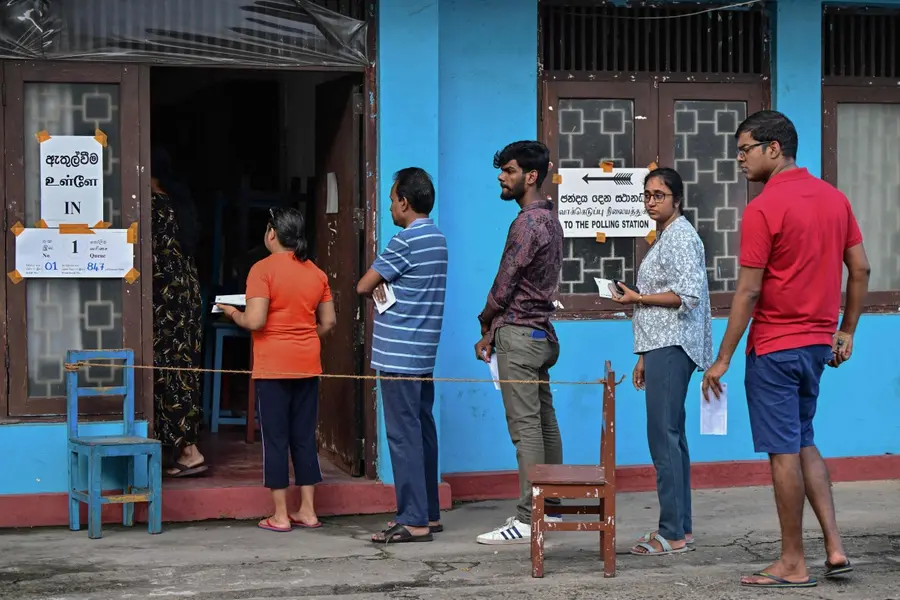
Colombo: Sri Lankans are casting their votes in a parliamentary election on Thursday that is crucial for the newly elected Marxist-leaning president, Anura Kumara Dissanayake, who aims to consolidate his party’s power and drive forward promises of economic revival. Election results are expected on Friday.
Dissanayake secured victory in the presidential election held on September 21, a win that signalled public discontent with the island’s traditional political parties, which have dominated governance since Sri Lanka’s independence from British rule in 1948.
However, Dissanayake's failure to secure more than 50 per cent of the votes has fuelled concerns over his party's outlook in Thursday's election.
His National People's Power party must increase its votes significantly — from the 42 per cent it won in the presidential election — if it is to acquire a minimum of 113 seats to take control of the 225-member Parliament.
New faces vs. established parties
The biggest challenge for the NPP — which was founded in 2019 and is a relative newcomer on Sri Lanka's political scene — is that many of its candidates are new faces in politics running against well-established politicians from the country's traditional parties.
Of the 225 parliament seats, 196 are up for grabs under Sri Lanka's proportional representative electoral system, which allocates seats in each district among the parties according to the proportion of the votes they get.
The remaining 29 seats — called the national list seats — are allocated to parties and independent groups according to the proportion of the total votes they receive countrywide.
There are a total 8,821 candidates from political parties and independent groups vying for the 196 seats for elected members of Parliament.
Main competition for the NPP
Sajith Premadasa, who came in second in the presidential election and his Samagi Jana Balawegaya or United People's Power party, is NPP's main competition.
Election amid economic crisis
The election comes at a decisive time for Sri Lankans, as the island nation is struggling to emerge from its worst economic crisis, having declared bankruptcy after defaulting on its external debt in 2022.
AP
Published: 14 Nov 2024, 08:07 am IST
Related Topics
Disclaimer: Kindly avoid objectionable, derogatory, unlawful and lewd comments, while responding to reports. Such comments are punishable under cyber laws. Please keep away from personal attacks. The opinions expressed here are the personal opinions of readers and not that of Mathrubhumi.
