
South Korean President Lee Jae Myung calls for neutrality in Japan-China Taiwan tensions. Also discusses challenges of building nuclear submarines with the US.
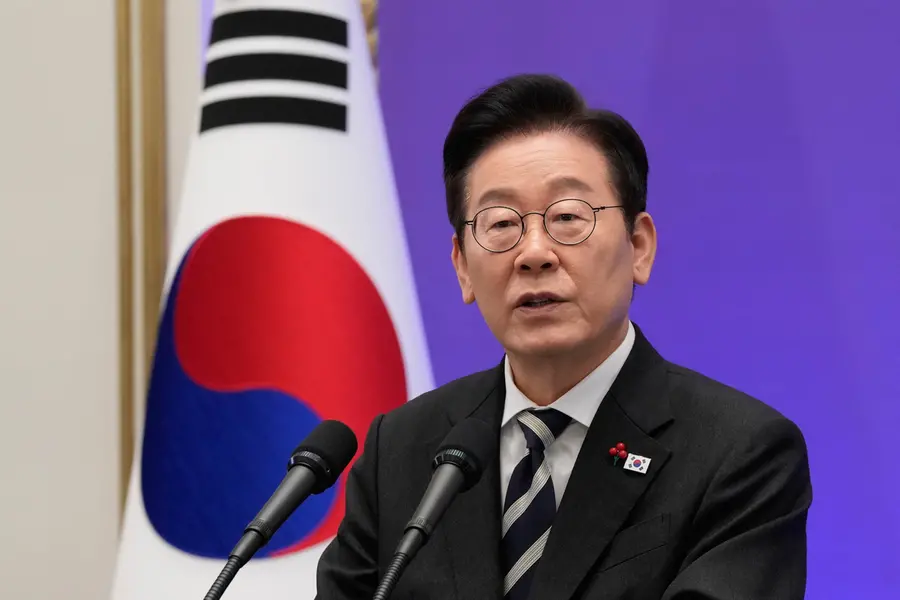
Seoul: South Korean President Lee Jae Myung has urged Seoul to remain neutral in the escalating dispute between Japan and China over Taiwan, and highlighted the difficulties of building nuclear-powered submarines in the United States under the bilateral defence deal.South Korea urges neutrality in Japan-China tensions
President Lee Jae Myung said on Wednesday that South Korea should avoid taking sides between Japan and China amid growing tensions over Taiwan. Speaking at a news conference in Seoul, he cited a Korean proverb: “Stop a fight, but help make a deal.”
Lee described northeast Asia as a highly dangerous region in terms of military security, stressing that taking sides in the dispute would only worsen tensions. He advocated coexistence, mutual respect, and maximum cooperation between nations.
The tensions have escalated after Japanese Prime Minister Sanae Takaichi suggested that Tokyo could intervene militarily should China invade Taiwan. This prompted a diplomatic backlash from Beijing, which urged its citizens to avoid travel to Japan and led to the cancellation of several cultural events, including a Japanese singer’s performance in Shanghai.
China regards Taiwan as part of its territory and has not ruled out the use of force to bring the island under its control.
Challenges in building nuclear-powered submarines in the US
President Lee also addressed South Korea’s plans to develop nuclear-powered submarines under a deal with the United States. While Seoul has received approval from Washington for the supply of restricted nuclear fuel, Lee said on 3 December that producing the submarines in the US would be extremely difficult.
US President Donald Trump had stated on Truth Social that the submarines would be built at the Philadelphia Shipyards. However, Lee clarified that the issue requires continued negotiation and emphasised that South Korea’s position is to build the submarines domestically using its own technology.
Lee underlined that South Korea’s request to the US was limited to the supply of nuclear fuel, not the transfer of construction technology. He described US nuclear submarine technology as one of the most sensitive and tightly guarded military secrets.
South Korea is expected to join a small group of countries operating nuclear-powered submarines, strengthening its maritime defence capabilities while maintaining domestic control over production.
Published: 03 Dec 2025, 09:11 am IST
Disclaimer: Kindly avoid objectionable, derogatory, unlawful and lewd comments, while responding to reports. Such comments are punishable under cyber laws. Please keep away from personal attacks. The opinions expressed here are the personal opinions of readers and not that of Mathrubhumi.
