
Armed attackers believed to be Somali pirates boarded a Malta-flagged tanker off the coast of Somalia after firing rocket-propelled grenades at it.
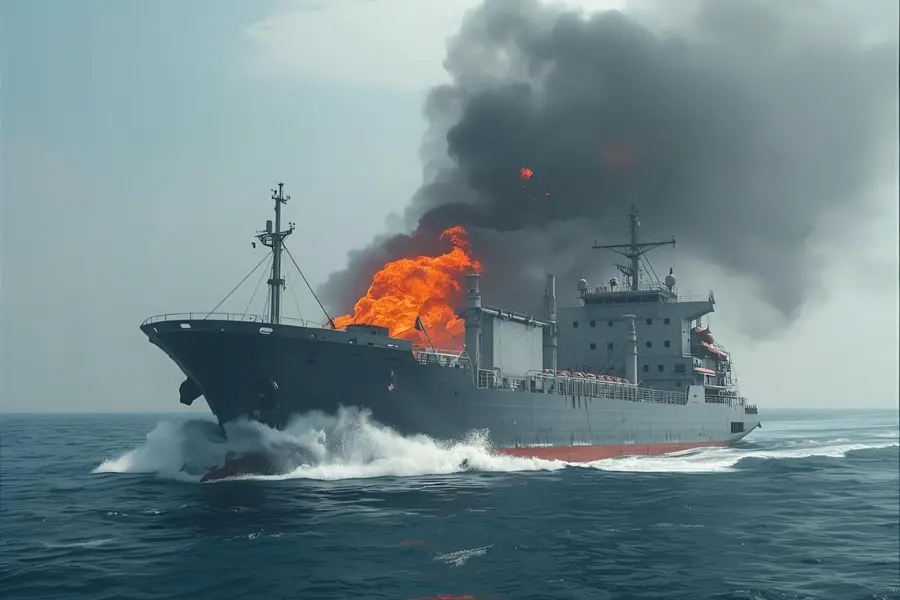
Armed men wielding machine guns and rocket-propelled grenades boarded a commercial vessel off the coast of Somalia on Thursday, British maritime authorities confirmed, in what appears to be another sign of resurgent piracy in the region.
The United Kingdom Maritime Trade Operations (UKMTO), a British military body that monitors sea lanes, issued an alert following the incident, urging ships transiting through the area to remain on high alert.
According to the private maritime security firm Ambrey, the targeted vessel was a Malta-flagged tanker travelling from Sikka, India, to Durban, South Africa. Preliminary assessments indicated that Somali pirates were responsible for the assault – one of several similar attacks reported in recent weeks.
Ambrey said the assailants were believed to be operating from an Iranian fishing vessel that had been seized and repurposed as a base for their operations. Iranian authorities have not commented on the reported hijacking.
“The pirates were reported to have approached on a skiff and opened fire on the tanker,” Ambrey said in a statement, adding that the attackers were using a hijacked Iranian-flagged dhow as a mothership.
Details of the attacked vessel correspond to the Hellas Aphrodite, which changed its track and slowed down at the time of the attack. The ship's owners and managers could not immediately be reached for comment.
The assault comes amid mounting concern over renewed pirate activity off the Horn of Africa – a region once synonymous with hijackings and ransom demands. Piracy there peaked in 2011, when 237 attacks were recorded, costing the global economy an estimated $7 billion, according to data from Oceans Beyond Piracy.
Years of coordinated international naval patrols, armed security onboard vessels, and improved governance in Somalia had largely brought the crisis under control. But maritime experts warn that the threat has returned, fuelled in part by growing instability in nearby waters.
Analysts have linked the uptick in incidents to the ongoing conflict in the Red Sea, where Yemen’s Houthi rebels have launched attacks on commercial vessels since late 2023 in solidarity with Palestinians amid the Israel–Hamas war. The unrest has diverted naval resources and forced some shipping routes to shift closer to Somali waters, creating new opportunities for pirate groups.
Earlier this week, a separate tanker came under fire off the coast of Mogadishu when armed assailants attempted to board it – the first suspected Somali piracy incident of its kind since 2024. Maritime security sources said the attack, along with several other approaches on fishing vessels, highlighted rising risks to one of the world’s most important trade corridors.
A Seychelles-flagged fishing boat was also chased by a speedboat, while an Iranian vessel was reportedly seized by unidentified attackers. In response, the European Union’s counter-piracy mission, Operation Atalanta, confirmed it had deployed a warship to Somali waters to monitor the situation.
British risk management group Vanguard said it was “highly likely” that the seized fishing vessel had been converted into a mothership for launching attacks at sea. Ambrey also assessed that “a Somali Pirate Action Group is at sea, and has been operating more than 300 nautical miles offshore Somalia.”
While Somali pirate gangs had been largely dormant for years, security analysts say the re-emergence of attacks could destabilise vital shipping lanes through the Gulf of Aden and Indian Ocean.
The Houthi militia, which has disrupted Red Sea trade routes since November 2023, has reportedly agreed to halt strikes on US-linked vessels, though many shipping firms continue to avoid the area.
(With inputs from AP)
Published: 06 Nov 2025, 02:41 pm IST
Related Topics
Disclaimer: Kindly avoid objectionable, derogatory, unlawful and lewd comments, while responding to reports. Such comments are punishable under cyber laws. Please keep away from personal attacks. The opinions expressed here are the personal opinions of readers and not that of Mathrubhumi.
