
Singapore ministers will get up to a 9% salary adjustment from October 15, while PM Lawrence Wong plans to donate his entire increase to charity for five years.
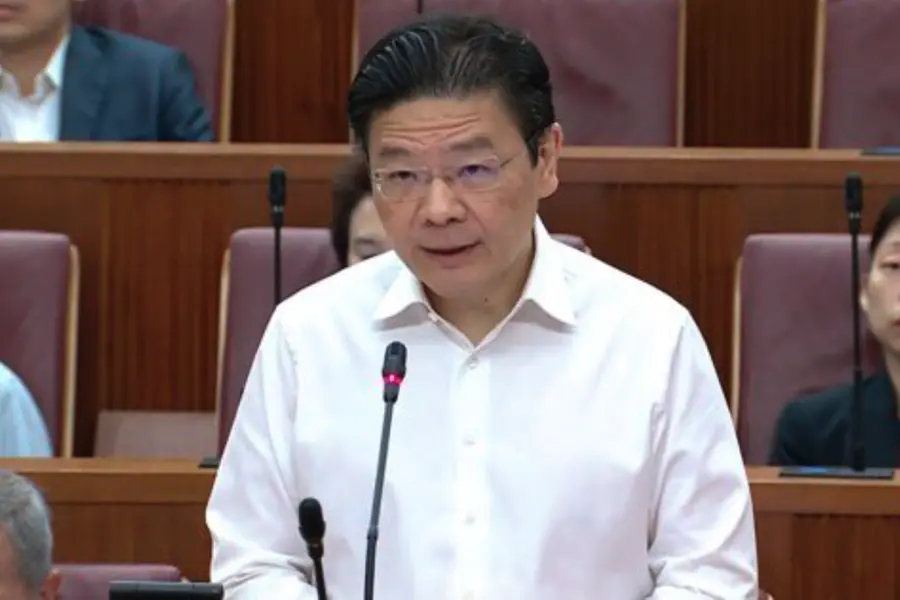
Kuala Lumpur: Singapore’s ministers, already among the highest-paid government officials in the world, will receive a salary increase for the first time in 15 years, Prime Minister Lawrence Wong announced in Parliament on Tuesday.
Wong said the revised salary framework is needed to ensure Singapore can continue attracting capable people from the private sector and public service into politics.
Also Read

Under the new framework, the benchmark annual salary for a minister at the lowest grade will increase to 1.8 million Singapore dollars ($1.42 million) from 1.1 million Singapore dollars ($868,330). The prime minister’s benchmark salary will rise to 3.6 million Singapore dollars ($2.8 million) from 2.2 million Singapore dollars ($1.7 million).
Ministers will not immediately receive the full benchmark
The new figures will not take effect in full immediately. Political officeholders will instead receive a one-time salary adjustment of up to 9% from October 15, with the increase determined by their performance and responsibilities.
Wong said most ministers at the lowest grade are expected to earn around 1.35 million Singapore dollars ($1.06 million) by the end of the current term. Their salaries will later vary according to performance and responsibilities rather than automatically reaching the new benchmark.
Wong did not disclose his own salary but said a 9% adjustment would raise it to about 2.4 million Singapore dollars ($1.89 million). He also announced that he would donate his entire salary increase to charity for the next five years.
Also read | UK travel chaos: Over 1000 flights cancelled following air traffic control system failure
Why is Singapore raising ministers’ salaries?
Political pay has long been a sensitive issue in Singapore, where ministers earn substantially more than most citizens.
The government has defended the high salaries as necessary to attract experienced and capable individuals into public service and to maintain clean and effective government.
Wong acknowledged that Singaporeans closely scrutinise ministers’ pay but said the issue could not be avoided simply because it was controversial. He argued that political salaries had increasingly fallen behind comparable earnings in the private sector and civil service.“Good government did not come naturally to Singapore,” Wong said, adding that it had been deliberately built over many years and required continued effort to sustain.
Also read | 'Gambling with our lives... could kill us all...': Anthropic researcher resigns over AI safety concerns
How will the new salary framework work?
The revised system uses the median income of Singapore’s top 1,000 citizen earners as a reference point. A 40% discount is then applied to account for the nature of political service.
Wong said the framework would give him and future prime ministers a better chance of persuading capable Singaporeans to enter politics and help build a strong government team.
The new framework will be reviewed every five years.
Singapore had earlier rejected a proposed pay adjustment
Singapore’s current political salary framework was introduced after a 2011 review and debated in Parliament in 2012. Salaries were cut by about 36% at the time amid public concerns over political pay.
A further review in 2017 recommended salary adjustments, but the government chose not to implement them. Another review scheduled for 2023 was later deferred.
The latest revision marks the first increase in ministers’ pay in 15 years.
Published: 09 Sept 2026, 10:32 am IST
ABOUT THE AUTHOR
Related Topics
Disclaimer: Kindly avoid objectionable, derogatory, unlawful and lewd comments, while responding to reports. Such comments are punishable under cyber laws. Please keep away from personal attacks. The opinions expressed here are the personal opinions of readers and not that of Mathrubhumi.