
In an escalation, Houthi forces launched multiple ballistic missiles and drones targeting Saudi airports, military bases, and oil facilities in retaliation for coalition airstrikes in Yemen.
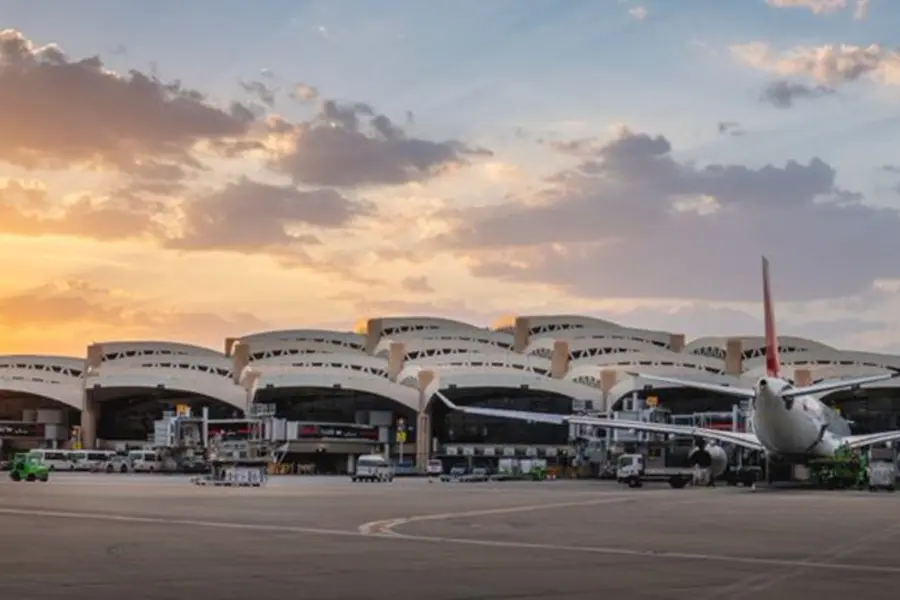
Riyadh: King Khalid International Airport in the Saudi capital partially resumed flight operations as Yemen's Houthi movement and the Saudi-led military coalition continued to exchange cross-border strikes, prompting Houthi officials to issue warnings advising airlines and passengers to avoid the facility.
The commercial hub had previously suspended operations following a wave of Houthi strikes that resulted in several fatalities and injuries.
On Sunday, Houthi representatives confirmed they launched dozens of ballistic missiles across three separate volleys directed at the kingdom, stating that the opening attack targeted King Khalid International Airport and "successfully achieved its objective."
Subsequent strikes targeted King Khalid Air Base situated in Khamis Mushait alongside a Saudi Border Guard naval facility in Jazan, according to a report by the Xinhua news agency.
Houthi military spokesman Yahya Sarea reiterated warnings to commercial airlines, personnel, and passengers against utilising King Khalid International Airport, designating the complex as "unsafe." He further issued a wider warning against traversing Saudi airspace, whilst granting exceptions for air routes over the holy cities of Mecca and Medina.
ALSO READ: Why are the Houthis targeting Saudi Arabia?
In a separate statement carried by the Houthi-aligned Saba news agency, a military source cautioned civilians and workers "not to approach Saudi oil facilities", whilst warning shareholders in state energy giant Saudi Aramco of impending "losses" should they retain their equity stakes.
The Saudi-led coalition stated on Sunday that air defence units intercepted and destroyed 12 incoming missiles alongside two unmanned aerial vehicles targeted at the kingdom, including a ballistic missile and two drones directed toward the broader Riyadh province.
Saudi Arabia's General Directorate of Civil Defence reported that a Saudi national and an Asian resident sustained injuries when falling shrapnel from two intercepted ballistic missiles landed across the Khamis Mushait and Ahad Rafidah governorates, causing structural damage to three residential properties and seven vehicles.
Houthi representatives stated that Sunday's barrages were executed in retaliation for what they characterised as "Saudi aggression" against Sanaa and other Houthi-administered regions a day prior, asserting that those strikes left "dozens of people killed or wounded, including women and children."
Earlier on Sunday, Sarea reported that Saudi forces conducted 56 air and missile strikes over a 24-hour period, hitting what he termed "civilian sites" across the provinces of Hajjah, Lahj, Amran, Saada, Al-Jawf, Taiz, and Ibb.
A local security official informed Xinhua that powerful explosions echoed later Sunday across the southern Yemeni port city of Aden, centred around the Salah al-Din zone within the Al-Buraiqa district—a strategic location hosting key installations for pro-government forces and the Saudi-led coalition.
No immediate casualties or structural losses were reported from Aden, and Houthi officials did not immediately claim responsibility for those detonations.
The latest escalation marks a severe intensification in hostilities between the Houthi movement and Yemeni government forces supported by the coalition, characterised by heavy ground combat alongside Saudi-led aerial bombardments on Houthi territories and insurgent missile strikes hitting government-controlled sectors.
ALSO READ: Riyadh Airport resumes terminal operations: What passengers need to know
Concurrently on Sunday, Arab League Secretary-General Nabil Fahmy met with UN Secretary-General Antonio Guterres in Cairo, stating that the regional bloc rejected attacks against Arab sovereign states while reiterating firm solidarity with Saudi Arabia and its right to safeguard its territorial integrity.
Yemen has remained locked in civil war since late 2014, when Houthi forces captured the capital, Sanaa, alongside large areas of northern Yemen. The Saudi-led coalition entered the conflict in 2015 to support the internationally recognised government.
IANS
Published: 26 Oct 2026, 07:19 am IST
ABOUT THE AUTHOR

Related Topics
Disclaimer: Kindly avoid objectionable, derogatory, unlawful and lewd comments, while responding to reports. Such comments are punishable under cyber laws. Please keep away from personal attacks. The opinions expressed here are the personal opinions of readers and not that of Mathrubhumi.