
Saudi Aramco’s Jizan oil hub has been hit again, just a month after an earlier strike disrupted production. The latest attack comes as fighting intensifies around Yemen’s Red Sea coast and global oil markets face growing shipping risks.
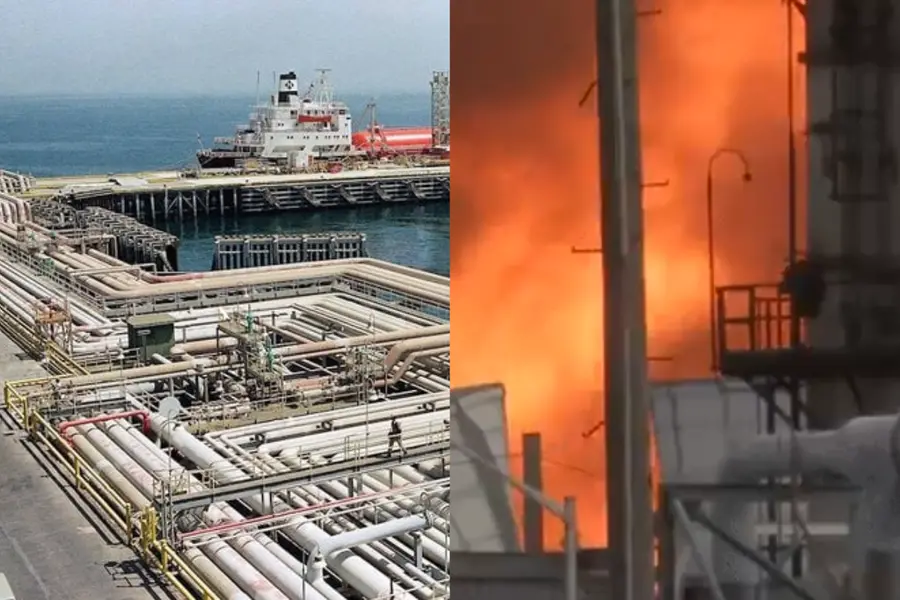
Saudi Aramco’s oil facilities in Jizan were hit in another attack on Monday, with the extent of the damage still being assessed, according to the Financial Times, raising fresh concerns over Saudi oil infrastructure and regional energy supplies.
Saudi Aramco’s oil facilities in Jizan were hit in a fresh attack on Monday, with the extent of the damage still being assessed, according to the Financial Times.
The incident comes about a month after another attack temporarily disrupted production at the Saudi energy company’s refinery in the same area. Jizan, located close to Saudi Arabia’s border with Yemen, has been targeted by Houthi forces in the past, although the Houthis have not claimed responsibility for Monday’s attack.
ALSO READ | Israeli airstrikes hit southern Lebanon, killing 9 including women and child
Jizan oil hub hit again
The Jizan complex includes a refinery capable of processing around 400,000 barrels of crude oil per day, along with processing plants and other energy infrastructure.
According to people familiar with the latest incident cited by the Financial Times, the attack was comparable in scale to last month’s strike. The full extent of the damage has not yet been established.
Saudi Aramco chief executive Amin Nasser said following the previous attack that there had been some disruption to oil production but no material impact on the company’s operations or finances.
The latest incident comes as fighting involving the Houthis has intensified around Yemen’s Red Sea coast.
The Houthis resumed attacks after announcing a blockade of Saudi ports on the Red Sea in July. The renewed attacks have included drones and missiles targeting energy infrastructure.
The escalation has also affected Jizan’s role as an export hub. According to Kpler data cited in the report, no oil products were shipped from Jizan in August after shipments increased earlier in the year amid disruption to Saudi exports from the Gulf.
ALSO READ | Pakistan’s ‘Fizaon K Pasbaan’ Video: Cheap animation, wild claims and a propaganda backfire
Fighting spreads along Yemen’s Red Sea coast
Saudi Arabia became directly involved in Yemen’s civil war in 2015, leading an Arab coalition against the Houthis after the group seized the capital, Sana’a.
Fighting declined significantly following a ceasefire in April 2022, but the latest escalation has reopened the Red Sea front.
Over the weekend, Houthi forces launched a ground offensive along Yemen’s Red Sea coast, with fighting reported around Mocha and Taiz. Thousands of Yemenis were reportedly forced to flee their homes.
The fighting has involved the Houthis and Saudi-backed forces aligned with Yemen’s internationally recognised government.
Bab al-Mandeb becomes more important
The renewed fighting is significant for energy markets because of the Bab al-Mandeb Strait, a major shipping route linking the Red Sea with the Gulf of Aden.
The Houthis have previously threatened the strategic waterway. Its importance has increased for Saudi energy exports following restrictions on shipping through the Strait of Hormuz amid the wider US-Iran conflict.
Any sustained disruption to shipping through either chokepoint could increase pressure on global oil supplies and transport costs.
Oil prices move towards $100
The latest attack has added to concerns in an already unsettled oil market.
Brent crude rose about 1.2% on Monday to around $97.40 a barrel after reaching its highest level since July 24. West Texas Intermediate also traded near six-week highs.
Oil prices have risen amid renewed US-Iran fighting and growing risks to commercial shipping. US forces reportedly struck three Iranian oil tankers on Saturday, while Iran’s Islamic Revolutionary Guard Corps said it had targeted three tankers travelling through unauthorised routes in the Strait of Hormuz.
Kpler data showed that an average of only about 10 commodity ships passed through the Strait of Hormuz each day during the previous 10 days, the lowest level since May.
Market analysts have warned that a further reduction in tanker traffic could create a larger supply shock. Goldman Sachs has also warned that oil prices could reach $120 a barrel if attacks on shipping intensify.
Why the Jizan attack matters
The latest incident places Saudi Arabia’s western energy infrastructure under renewed pressure at a time when several major shipping routes are already facing disruption.
The immediate impact will depend on the extent of damage to the Jizan facilities and whether production or exports are affected. For global oil markets, prolonged disruption would be more significant than a short-term incident because Jizan combines a major refinery with associated processing and export infrastructure.
The absence of a claim of responsibility from the Houthis also means the circumstances surrounding Monday’s attack remain unclear.
Why investors are watching Jizan: The complex is a major Saudi refining and energy facility. Any prolonged disruption could affect regional supplies and add pressure to global oil prices.
Why shipping matters: Jizan’s location makes the wider Red Sea and Bab al-Mandeb security situation important for energy exports. At the same time, restrictions around the Strait of Hormuz are already affecting tanker movements.
What could push oil higher: A sustained reduction in tanker traffic, damage to major energy facilities or further attacks on shipping could increase fears of a wider supply shortage.
What remains unclear: Monday’s attack has not been claimed by the Houthis, and the full extent of damage to the Jizan facilities is still being assessed.
Published: 07 Sept 2026, 06:46 pm IST
ABOUT THE AUTHOR

Related Topics
Disclaimer: Kindly avoid objectionable, derogatory, unlawful and lewd comments, while responding to reports. Such comments are punishable under cyber laws. Please keep away from personal attacks. The opinions expressed here are the personal opinions of readers and not that of Mathrubhumi.