
Putin tells Iran’s president he’s ready to help mediate Middle East peace as US–Iran talks collapse and Trump threatens a blockade of the Strait of Hormuz.
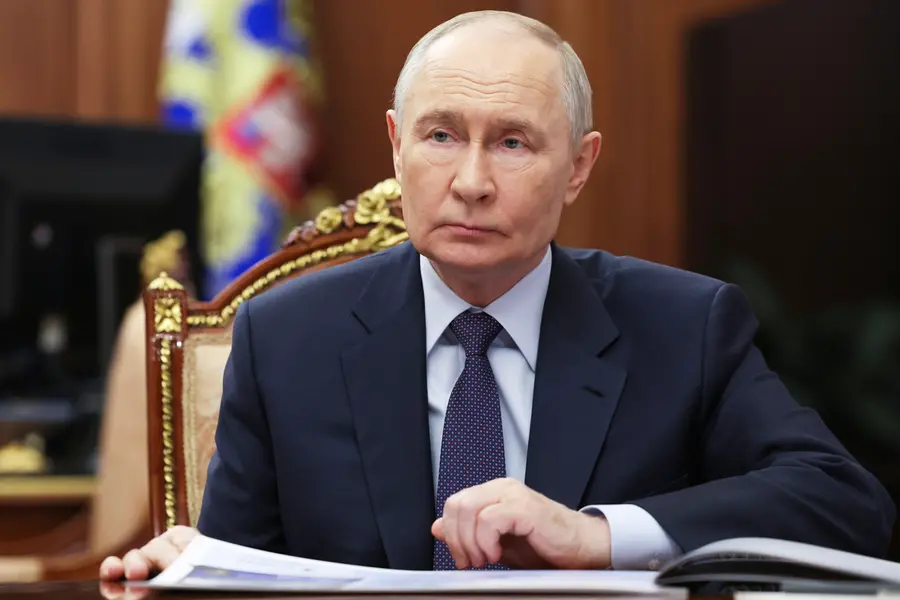
Moscow: Russian President Vladimir Putin told Iranian President Masoud Pezeshkian on Sunday that he was prepared to support mediation efforts aimed at easing the Middle East crisis, the Kremlin said, as stalled US-Iran ceasefire talks deepened uncertainty across the region.
In the Kremlin’s readout of the call, Putin “emphasised his readiness to further facilitate the search for a political and diplomatic settlement to the conflict, and to mediate efforts to achieve a just and lasting peace in the Middle East.”
The call came hours after US President Donald Trump announced that the US Navy would “immediately” begin a blockade around the Strait of Hormuz, following marathon ceasefire negotiations in Pakistan that ended without agreement or a roadmap for further diplomacy.
US blockade threat after talks collapse
In his first public remarks after 21 hours of discussions, Trump said he had ordered the Navy to prevent any vessel that had paid Iran’s maritime tolls from travelling through international waters, declaring: “It’s going to be all or none, and that’s the way it is.”
He warned that Tehran’s nuclear ambitions remained the central obstacle to ending the conflict and said the United States was prepared to “finish up” Iran at the “appropriate moment.”
The threat of a blockade, in a waterway that once carried a fifth of global oil shipments, raised fears of further shocks to global energy markets already rattled by months of fighting.
Vice President JD Vance, who led the US delegation, said Washington needed “an affirmative commitment that they will not seek a nuclear weapon, and they will not seek the tools that would enable them to quickly achieve a nuclear weapon.”
Iran blames US overreach
Iran’s team, headed by parliament speaker Mohammad Bagher Qalibaf, accused Washington of pushing beyond reasonable limits. He said it was up to the United States “to decide whether it can gain our trust or not.”
Iranian officials said differences remained over just “two or three key issues.” A senior Iranian diplomat, requesting anonymity, rejected suggestions that the talks collapsed over Iran’s nuclear programme, reiterating that Tehran was not seeking nuclear weapons but retained the right to pursue peaceful nuclear technology.
Despite the breakdown, Iran signalled willingness to continue engagements, according to the state-run IRNA news agency. Pakistan’s foreign minister Ishaq Dar said Islamabad would attempt to reconvene both sides in the coming days.
International push for diplomacy
The European Union urged both parties to sustain diplomatic efforts, while Oman’s foreign minister called for “painful concessions” to prevent further escalation.
The Kremlin also underscored Russia’s intent to play a constructive role, repeating that Putin had “emphasized his readiness” to assist in brokering a settlement during his call with Pezeshkian.
Regional toll mounts as ceasefire nears expiry
The war, launched by the US and Israel on 28 February, has killed at least 3,000 people in Iran, 2,020 in Lebanon, 23 in Israel and more than a dozen across Gulf Arab states. Vast damage to infrastructure has been reported in multiple countries, while Iran’s control over the Strait of Hormuz has badly disrupted global energy flows.
Inside Iran, months of economic and political turmoil have fuelled frustration. “We have never sought war. But if they try to win what they failed to win on the battlefield through talks, that’s absolutely unacceptable,” said 60-year-old Tehran resident Mohammad Bagher Karami.
Maritime tensions and conflicting claims
The US military reported that two destroyers transited the Strait of Hormuz ahead of mine-clearing work, the first such movement since the conflict began. Iran’s state media countered that its joint military command denied the passage.
Before talks opened, disagreements over the strait and Israel’s ongoing strikes on Hezbollah forces in Lebanon had already cast doubt on the ceasefire’s durability.
Iran’s 10-point plan sought a guaranteed end to the war, control of the Strait of Hormuz and a halt to Israeli attacks on its regional allies, explicitly naming Hezbollah.
Pakistan-based officials said the US 15-point proposal included demands for Iran to roll back elements of its nuclear programme and reopen the strait to global shipping.
The current ceasefire expires on 22 April, with no clarity on what may follow.
Lebanon braces as violence escalates
Lebanon has emerged as a major fault line. Israel insists the ceasefire terms do not apply there, though Iran and Pakistan argue otherwise.
Talks between Israel and Lebanon are set to begin Tuesday in Washington after an unexpected Israeli decision to pursue negotiations despite lacking formal ties.
The day the ceasefire was announced, Israeli airstrikes on Beirut killed more than 300 people, the deadliest day in Lebanon since the conflict started. Strikes on southern Lebanon have continued, including one on Sunday that killed six people in the village of Maaroub, according to Lebanon’s National News Agency.
(With inputs from agencies)
Published: 12 Apr 2026, 08:28 pm IST
Related Topics
Disclaimer: Kindly avoid objectionable, derogatory, unlawful and lewd comments, while responding to reports. Such comments are punishable under cyber laws. Please keep away from personal attacks. The opinions expressed here are the personal opinions of readers and not that of Mathrubhumi.
