
Russia says its scientists have developed a vaccine targeting a newly emerging Ebola strain, which may also protect against the rare Bundibugyo variant.
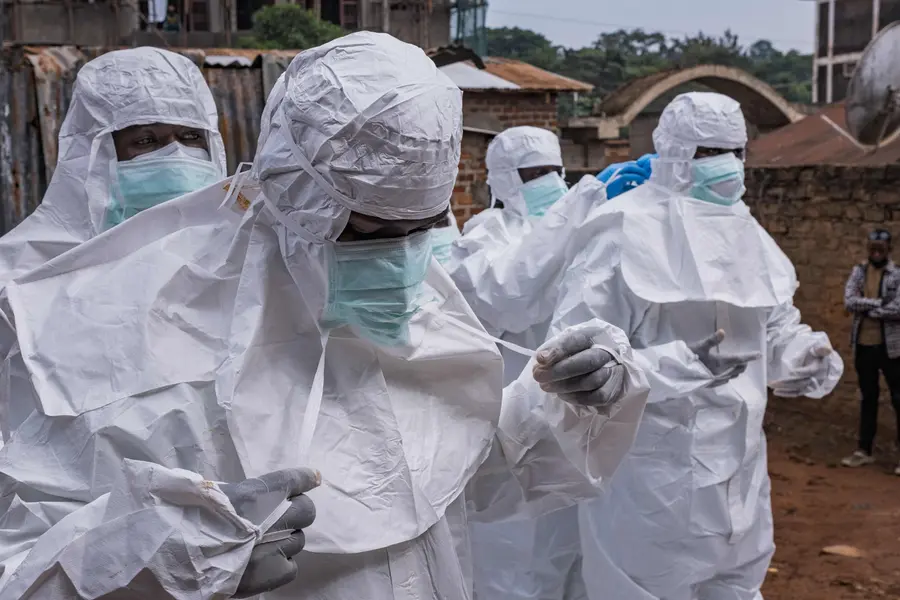
Moscow: Russia has announced that its scientists have developed a vaccine targeting a newly emerging strain of the Ebola virus, a significant claim made as Central Africa grapples with a widening outbreak of the rare Bundibugyo variant. The disclosure comes amid heightened global concern, with the World Health Organization (WHO) and African health authorities escalating their alerts over the deteriorating situation in the Democratic Republic of the Congo (DRC) and Uganda.
The Russian Embassy in South Africa stated that Russian Health Minister Mikhail Murashko had confirmed the development, asserting that the vaccine could also shield against the Bundibugyo ebolavirus, the strain behind current outbreaks. The embassy reiterated that “the Russian scientists have developed a vaccine against the new Ebola virus strain”.
Russia announces potential protection against Bundibugyo strain
According to the embassy, “the Russian Health Minister Mikhail Murashko have made the announcement”, claiming the candidate vaccine may also defend against the rare Bundibugyo strain linked to the Congo outbreak. Citing the same information, the embassy said “the vaccine may also protect against the rare Bundibugyo strain linked to the outbreak in Congo”.
The Bundibugyo ebolavirus is one of the lesser-known Ebola species but is considered highly dangerous, with no approved vaccines or targeted therapeutic options currently available. Unlike the more common Zaire strain, against which the licensed Ervebo vaccine is used,Bundibugyo infections have posed longstanding challenges for researchers.
WHO declares global emergency as outbreak expands
On 17 May, the WHO, operating under the International Health Regulations (IHR) 2005, formally classified the escalating situation as a Public Health Emergency of International Concern (PHEIC). This followed growing case numbers in the DRC and Uganda.
The Africa Centres for Disease Control and Prevention (Africa CDC) simultaneously declared the crisis a Public Health Emergency of Continental Security (PHECS), highlighting the high risk of transmission to bordering nations, including South Sudan.
Reinforcing containment measures, the WHO’s IHR Emergency Committee on 22 May urged member states to tighten monitoring at Points of Entry to “detect, assess, report and manage travellers with unexplained febrile illness arriving from areas with documented Bundibugyo virus detection” and to “discourag[e] travel to areas with documented Bundibugyo virus detection”.
Vaccine claim draws attention, but data still missing
Moscow’s announcement has sparked international interest, but experts warn that comprehensive evidence, clinical data, peer-reviewed research, and regulatory scrutiny, is critical before validating the vaccine’s safety and efficacy.
While Russia’s claim surfaced at a moment of heightened alarm, detailed human-trial results have not been released publicly. Health specialists note that Ebola vaccines generally require multilayered evaluation, including immune-response testing and real-world field assessments during outbreaks.
Global researchers have been racing to fill the vaccine gap for Bundibugyo ebolavirus. Experimental candidates from academic groups, including the University of Texas Medical Branch and the Oxford Vaccine Group, are reportedly still in evaluation phases.
Background: Why new Ebola vaccines are urgently needed
Ebola virus disease is a severe haemorrhagic illness with historically high mortality rates, ranging from 25% to over 90% depending on the strain and healthcare access. Current approved vaccines, including Ervebo, Zabdeno and Mvabea, are all designed against Zaire ebolavirus and are not confirmed to work against Bundibugyo.
Countries neighbouring the Democratic Republic of the Congo and Uganda, including South Sudan, face a heightened risk of Ebola transmission, according to the press release. The Bundibugyo strain of the Ebola virus causes a severe form of viral haemorrhagic fever with a high fatality rate. Health officials note that there are currently no authorised vaccines or targeted treatments for Ebola infections linked to the Bundibugyo variant.
Russia’s role in outbreak response
Alongside its vaccine claim, Russia has reportedly offered diagnostic assistance and medical support to nations battling the outbreak, including the DRC and Uganda. The Russian Embassy additionally noted on X that scientists had “successfully created a vaccine targeting the new Ebola strain,” though substantial validation is still awaited.
(With ANI inputs)
Published: 27 May 2026, 05:59 pm IST
Related Topics
Disclaimer: Kindly avoid objectionable, derogatory, unlawful and lewd comments, while responding to reports. Such comments are punishable under cyber laws. Please keep away from personal attacks. The opinions expressed here are the personal opinions of readers and not that of Mathrubhumi.
