
US Secretary of State Marco Rubio has said that Iran’s Supreme Leader remains alive and is continuing to play an active role in the country’s decision-making, even as tensions between Washington and Tehran remain high.
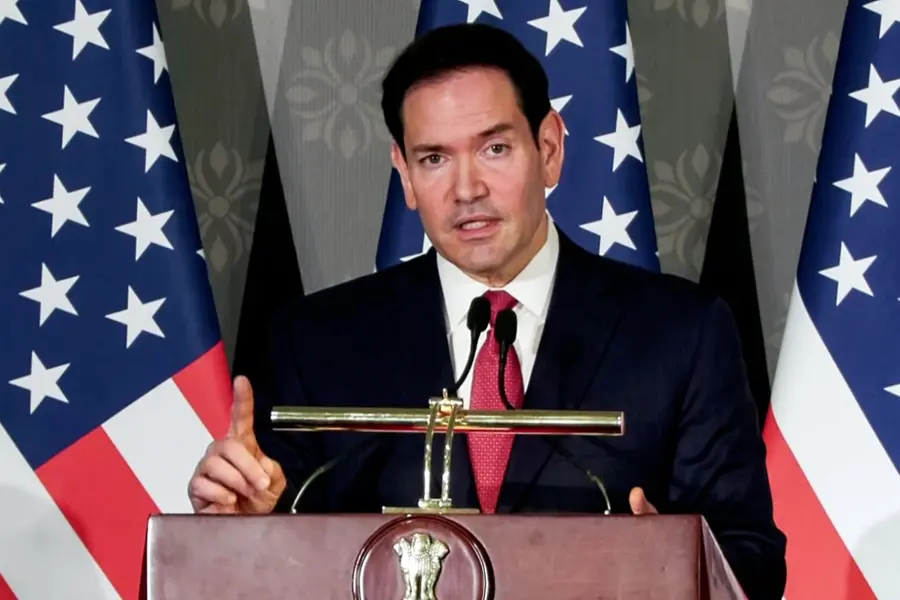
Washington DC: US Secretary of State Marco Rubio has stated that Iran’s leadership remains active and engaged, offering a rare public assessment during a congressional hearing on the State Department’s budget.
“I think there are indications out there that he is increasingly engaging at some level,” Rubio told lawmakers, referring to Iran’s Supreme Leader and his reported role in ongoing decision-making.
Also Read

Rubio’s comments come amid sustained geopolitical tension between Washington and Tehran, particularly over Iran’s nuclear programme, regional influence, and maritime security concerns in the Gulf.
He emphasised that Iran’s leadership structure continues to function, suggesting continuity in governance despite external pressure and internal regional instability.
Addressing sanctions policy, Rubio rejected any suggestion that the United States is considering relief in exchange for reopening the Strait of Hormuz, a critical global oil shipping route.
“That’s not been discussed, that’s not been offered,” he said, dismissing speculation about a possible trade-off involving sanctions easing and maritime access.
Rubio further clarified that any future sanctions relief would be strictly conditional on Iran meeting specific nuclear-related requirements.
“Any sanctions relief is condition-based,” he said, adding that it would depend on Tehran giving up enriched uranium and complying with broader international expectations.
The Strait of Hormuz remains a key geopolitical flashpoint, with any disruption to the route historically impacting global energy markets and triggering economic concerns.
Rubio also indicated that diplomatic discussions with Iran may be evolving, suggesting that recent engagements could include topics previously avoided by Tehran.
However, he cautioned that ongoing talks do not guarantee a breakthrough agreement, stressing that any potential deal must meet US strategic objectives.
On military developments, Rubio defended the Trump administration’s actions against Iran, describing them as highly effective in achieving their intended objectives.
“Operation Epic Fury… was highly successful in achieving its military objectives,” Rubio said, referring to the campaign’s impact on Iran’s defence-industrial infrastructure.
He also claimed Iran’s naval capability had been significantly degraded during the conflict, asserting that its operational presence had been neutralised.
“Today, there is no Iranian navy. There is no such thing. It lies at the bottom of the ocean,” he added.
The hearing reflected ongoing US policy strategy combining sanctions pressure, military deterrence, and limited diplomatic engagement with Iran. While Washington maintains strict conditions for any sanctions relief, Iran continues to insist its nuclear programme is peaceful.
Experts note that both sides have left limited space for negotiation, though indirect diplomatic channels remain open amid rising regional instability.
Published: 02 Jun 2026, 09:19 pm IST
Disclaimer: Kindly avoid objectionable, derogatory, unlawful and lewd comments, while responding to reports. Such comments are punishable under cyber laws. Please keep away from personal attacks. The opinions expressed here are the personal opinions of readers and not that of Mathrubhumi.