
As Israel’s strikes dismantle Iran’s traditional leadership, power appears to be shifting from the clerical elite to the Revolutionary Guard amid a clouded succession.
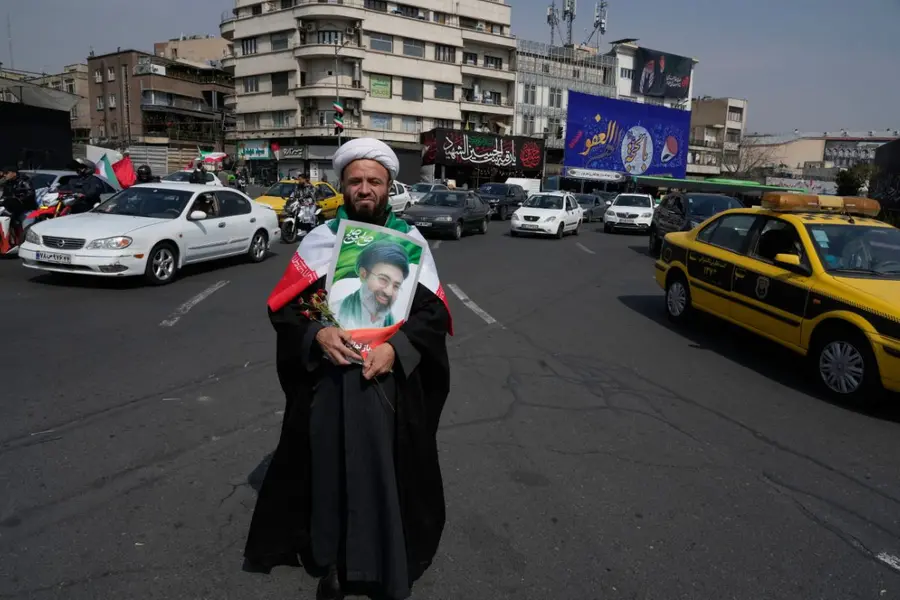
Athens: Following a series of devastating Israeli strikes that have systematically eliminated Iran’s highest-level political and military figures, questions are mounting over who currently holds the reins of power in the Islamic Republic.
The decapitation of Iran’s leadership began with the death of Supreme Leader Ayatollah Ali Khamenei in the early stages of the conflict. This was followed by the killing of Ali Larijani, the powerful Secretary of the Supreme National Security Council, along with a major portion of the country’s senior military brass.
The rise of a shadow successor
In the immediate aftermath of the elder Khamenei’s death, his 56-year-old son, Mojtaba Khamenei, was swiftly positioned as the new Supreme Leader. Despite his new title, the younger Khamenei—a figure long known for his secrecy and hard-line stance—has not made a public appearance since the strike that killed his father.
While Mojtaba has historically maintained deep influence within the Revolutionary Guard, his actual grip on the state remains unverified. Israeli Prime Minister Benjamin Netanyahu expressed skepticism during a press conference on Thursday, stating: “Mojtaba, the replacement ayatollah, has not shown his face. Have you seen him? We haven’t, and we can’t vouch for what exactly is happening there.”
Netanyahu further characterised the situation as "utter chaos”, suggesting that the central command and control of the Iranian state has been severely fractured.
A transition to military rule?
With the traditional clerical hierarchy in disarray, many analysts believe the true seat of power has shifted. Burcu Ozcelik, a senior research fellow at the Royal United Services Institute, notes that while the theocracy is being transformed by these losses, the full impact may take years to manifest.
For others, the shift is already clear: the paramilitary Islamic Revolutionary Guard Corps (IRGC) has likely moved from a supporting pillar to the primary governing force. Ali Vaez, Iran project director at the International Crisis Group, observed that while the civilian leadership was previously subservient to the Supreme Leader, “it is really the Revolutionary Guards who are running the country” now that the elder Khamenei’s authoritative presence is gone.
Decentralised command and contingency
Evidence of a breakdown in central coordination surfaced as early as 1 March, when Foreign Minister Abbas Araghchi hinted that military units were operating with a high degree of autonomy. Speaking to Al Jazeera, Araghchi remarked, “Our … military units are now in fact independent and somehow isolated and they are acting based on instructions — you know, general instructions — given to them in advance.”
Despite the loss of top-tier officials, experts warn against the assumption that the Iranian state will simply vanish. The Republic has spent decades preparing for the possibility of leadership decapitation.
“The expectation that this regime will … implode by removing a few dozen senior leaders, I think is nothing but an illusion,” Vaez argued, suggesting that the state’s multi-layered bureaucracy is designed to allow lower-ranking officials to step into the roles of their fallen superiors.
AP
Published: 20 Mar 2026, 03:24 pm IST
Related Topics
Disclaimer: Kindly avoid objectionable, derogatory, unlawful and lewd comments, while responding to reports. Such comments are punishable under cyber laws. Please keep away from personal attacks. The opinions expressed here are the personal opinions of readers and not that of Mathrubhumi.
