
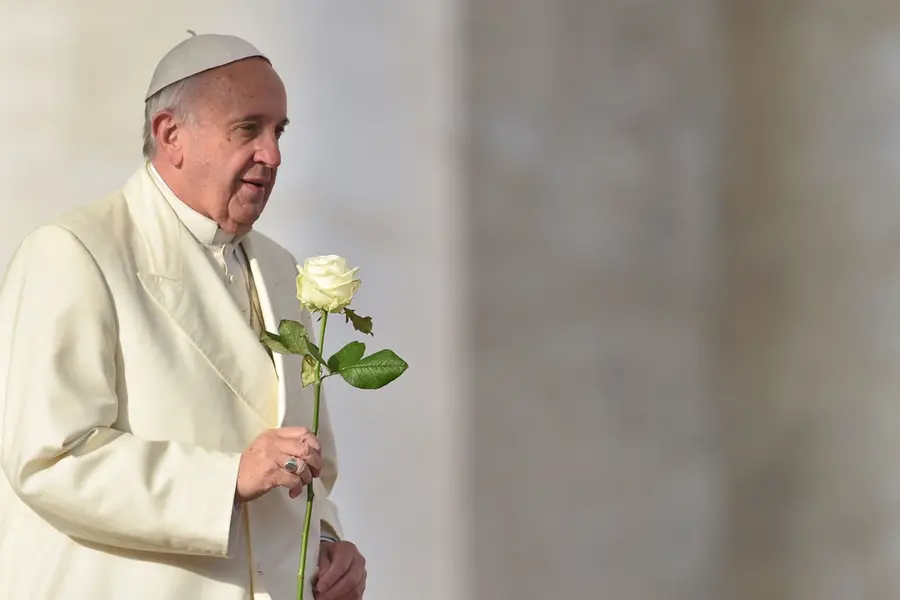
Vatican City: The life of Jorge Mario Bergoglio, who became Pope Francis and passed away on Monday, was marked by significant moments that shaped the modern Catholic Church. Here is a look at some of the most important dates from his remarkable journey.
Early life and entry into priesthood
Jorge Mario Bergoglio was born on 17 December 1936 in Buenos Aires, Argentina. He was the eldest of five children born to Mario Jose Bergoglio, an accountant from Italy, and Regina María Sívori, the daughter of Italian immigrants.
On 13 December 1969, he was ordained a priest within the Jesuit religious order. He would go on to lead the order in Argentina as provincial superior during the country's brutal dictatorship in the 1970s.
Rise through the church
Bergoglio was appointed auxiliary bishop of Buenos Aires on 20 May 1992. In 1998, he succeeded Cardinal Antonio Quarracino as the archbishop of the Argentine capital.
He was elevated to cardinal by St. John Paul II on 21 February 2001.
In May 2007, he played a key role in drafting the final document at the fifth Latin American bishops' conference in Aparecida, Brazil. The text reflected what would become core themes of his papacy: concern for the poor, Indigenous peoples, the environment, and the call for a missionary church.
Becoming pope
On 13 March 2013, Bergoglio was elected the 266th pope. He was the first from the Americas, the first Jesuit, and the first to take the name Francis—after St. Francis of Assisi.
Shortly after, on 13 April 2013, he formed a group of eight cardinals from across the globe to advise him and help reform the Church’s governance.
Public acts and global advocacy
On 12 May 2013, Pope Francis canonised the “Martyrs of Otranto”—813 Italians who were killed in 1480 for refusing to convert to Islam. This single act nearly doubled the number of saints created by St. John Paul II over 25 years.
His first journey outside Rome was on 8 July 2013 to the Sicilian island of Lampedusa, where he met newly arrived migrants and condemned the world’s “globalisation of indifference” toward refugees.
Later that month, on 30 July 2013, when asked about a gay priest, he said, “Who am I to judge?”—a phrase that came to symbolise his more welcoming approach to the LGBTQ+ community.
Vision for the church and the world
On 26 November 2013, he released Evangelii Gaudium (“The Joy of the Gospel”), which served as a mission statement for his papacy. In it, he criticised a financial system that excludes the poor and wrote that the Eucharist is “not a prize for the perfect but a powerful medicine and nourishment for the weak.”
He made an unscheduled stop on 25 May 2014 to pray at the wall separating Israel from Bethlehem, showing support for the Palestinian cause. Two weeks later, on 8 June, he hosted the Israeli and Palestinian presidents for prayers at the Vatican.
Addressing church scandals
On 20 March 2015, Pope Francis accepted the resignation of the “rights and privileges” of Scottish Cardinal Keith O’Brien following accusations of sexual misconduct by adult men.
On 18 June 2015, he issued his influential environmental encyclical Laudato Si’ (“Praised Be”), calling for a cultural shift to fix a “structurally perverse” global economic model and warning the Earth had become “an immense pile of filth.”
During a visit to Bolivia on 10 July 2015, he apologised for the “sins and crimes” of the Catholic Church against Indigenous peoples during the colonisation of the Americas.
Reforms and controversy
On 8 September 2015, he made the annulment process simpler, quicker and less expensive, allowing more divorced Catholics to remarry within the Church.
Later that month, on 24 September, he addressed the US Congress, urging leaders to renew America's ideals by acting on climate change, immigration, and poverty reduction—the first time a pope addressed Congress.
On 29 November 2015, he opened the Jubilee of Mercy at the cathedral in Bangui, Central African Republic, rather than at the Vatican—another symbolic move to highlight the periphery.
Historic meetings and bold declarations
On 12 February 2016, he met Russian Orthodox Patriarch Kirill in Havana—the first meeting of its kind in over a millennium—declaring, “We are brothers.”
Just days later, on 18 February, he prayed for dead migrants at the US-Mexico border and remarked that then-presidential candidate Donald Trump was “not a Christian” for wanting to build a wall.
On 8 April 2016, he opened the door for divorced and remarried Catholics to receive Communion through a footnote in his document Amoris Laetitia (“The Joy of Love”).
On 16 April 2016, he visited a refugee camp in Lesbos, Greece, and brought 12 Syrian Muslims back to Rome on his papal plane, urging solidarity with migrants.
Facing resistance and speaking out
On 19 September 2016, four conservative cardinals wrote to him asking for clarification on his stance regarding divorced and remarried Catholics.
On 1 December 2017, during a meeting in Bangladesh with Rohingya refugees from Myanmar, he said, “The presence of God today is also called Rohingya.”
On 19 January 2018, he accused sex abuse victims of slander during a visit to Chile, a comment that undermined Church credibility. He later ordered an investigation into the abuse crisis.
On 12 April 2018, he admitted to “grave errors” in his handling of the Chile scandal. He then summoned the country’s bishops to Rome and invited victims to the Vatican to offer his apology.
Shaping church doctrine
On 3 August 2018, he declared capital punishment “inadmissible” in all situations, updating official Church teaching.
On 28 July 2018, he accepted the resignation of Cardinal Theodore McCarrick amid allegations of sexual misconduct. On 26 August, retired Vatican ambassador Archbishop Carlo Maria Vigano accused Church leaders of covering up McCarrick’s abuse and called on Pope Francis to resign.
Global diplomacy and interfaith outreach
On 22 September 2018, the Vatican signed a groundbreaking agreement with China over the appointment of bishops.
On 14 October 2018, Pope Francis canonised slain Salvadoran Archbishop Óscar Romero after years of delay.
On 4 February 2019, he signed the “Human Fraternity” document with the imam of Al Azhar, strengthening ties between Catholics and Muslims.
Continued reform and challenges
On 16 February 2019, McCarrick was defrocked after a Vatican investigation confirmed he had abused both minors and adults.
On 21 February, Pope Francis opened the first Vatican summit on child protection, telling bishops that the faithful demand action, not just words.
On 9 May 2019, he issued a new law requiring in-house reporting of clergy sexual abuse, including investigations into bishops and religious superiors—but still not requiring reports to civil authorities.
Symbolic moments and health struggles
On 25 October 2019, he apologised to Amazonian bishops and tribal leaders after conservative protesters stole Indigenous statues from a Vatican-area church and threw them into the Tiber River.
During a visit to Hiroshima and Nagasaki on 24 November 2019, he declared that the use and possession of nuclear weapons is “immoral.”
On 17 December 2019, he abolished the use of the “pontifical secret” in abuse cases, allowing Church documents to be shared with law enforcement.
On 12 February 2020, he declined to allow married men to be ordained as priests, despite requests from Amazonian bishops, in the document Querida Amazonia (“Beloved Amazon”).
On 27 March 2020, as the world faced the COVID-19 pandemic, he delivered a solitary evening prayer from the steps of St. Peter’s Basilica.
Final years
On 4 October 2020, he released the encyclical Fratelli Tutti (“Brothers All”), stating the pandemic proved market capitalism had failed and calling for a new type of politics rooted in human fraternity.
A Vatican report released on 10 November 2020 found that Church officials, including previous popes, had ignored or downplayed misconduct by McCarrick—but it cleared Pope Francis of wrongdoing.
From 5 to 8 March 2021, he became the first pope to visit Iraq, where he met with the country’s top Shiite Muslim cleric.
On 4 July 2021, he underwent surgery to remove 33 centimetres of his colon at Gemelli hospital in Rome.
On 5 January 2023, he presided over the funeral Mass for Pope Benedict XVI.
On 24 January 2023, he told the Associated Press, “Being homosexual is not a crime.”
On 29 March 2023, he was hospitalised for a respiratory infection and discharged on 1 April.
On 7 June 2023, he had surgery to remove intestinal scar tissue and repair a hernia.
On 4 October 2023, he opened a synod that allowed women to vote alongside bishops for the first time.
On 28 November 2023, he cancelled his trip to the UN climate conference in Dubai due to acute bronchitis, missing the chance to present his new ecological document Laudate Deum (“Praise God”).
On 16 December 2023, a Vatican tribunal sentenced Cardinal Angelo Becciu to 5½ years in prison for embezzlement after a high-profile financial trial.
On 19 December 2023, he approved blessings for same-sex couples, so long as they did not resemble marriage—a move that faced strong resistance from conservative bishops in Africa, Asia, and other regions.
The final chapter
On 5 July 2024, the Vatican excommunicated Archbishop Carlo Maria Vigano for schism.
On 10 September 2024, approximately 600,000 people—half the population of East Timor—attended a Mass led by Pope Francis in Dili, believed to be the largest turnout for a papal event proportionally.
On 26 December 2024, he opened the holy door at Rome's Rebibbia prison, just two days after beginning the 2025 Jubilee.
On 16 January 2025, he appeared with his arm in a sling after a fall that injured him, following another fall that bruised his chin weeks earlier.
On 14 February 2025, he was hospitalised with bronchitis that progressed into a serious lung infection and double pneumonia.
On 28 February 2025, doctors briefly considered halting treatment after a breathing crisis but opted for an aggressive approach, risking organ damage.
He marked the 12th anniversary of his papacy on 13 March 2025 while still hospitalised. He was released on 23 March after 38 days of treatment but appeared frail during a public greeting.
On 17 April 2025, despite his condition, Pope Francis continued his Holy Thursday tradition by visiting inmates at Rome's Regina Caeli prison. Though unable to wash feet as in previous years, he said he came to “do what Jesus did on Holy Thursday.”
(agency inputs)
Published: 21 Apr 2025, 02:11 pm IST
Related Topics
Disclaimer: Kindly avoid objectionable, derogatory, unlawful and lewd comments, while responding to reports. Such comments are punishable under cyber laws. Please keep away from personal attacks. The opinions expressed here are the personal opinions of readers and not that of Mathrubhumi.
