
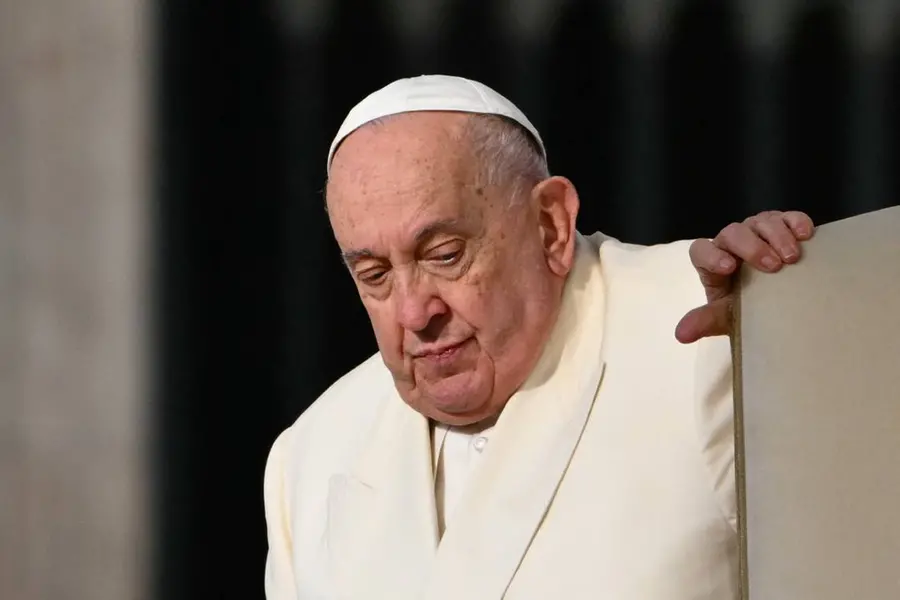
Rome: Pope Francis experienced two acute respiratory crises on Monday, prompting doctors to place him back on noninvasive mechanical ventilation as he continues his struggle against pneumonia, the Vatican announced.
During two bronchoscopies, doctors extracted "copious" amounts of mucus from the pope's lungs. A bronchoscope, which is a camera-tipped tube, was used to suction out the fluid. The Vatican clarified that the mucus was a result of his original pneumonia infection, not a new bacterial infection, as lab tests showed no signs of fresh bacteria.
Despite the episodes, Pope Francis remained alert, oriented, and cooperative with medical staff. However, the prognosis remains guarded. Although the Vatican did not specify whether his condition was stable, the reference to the crises in the past tense suggested that they had passed.
These new crises mark another setback in the 88-year-old pope's ongoing battle with a complex respiratory infection. Francis, who suffers from chronic lung disease and had part of one lung removed, has now been facing this challenge for over two weeks.
Dr. John Coleman, a pulmonary critical care doctor at Northwestern Medicine in Chicago, described the new episodes as more concerning than the previous one on Friday, which involved a coughing fit, inhaling vomit, and a temporary need for noninvasive mechanical ventilation.
"The use of bronchoscopies reflects a worrying level of mucus and phlegm in the lungs," said Dr. Coleman. “The fact that they had to go in there and remove it manually is concerning because it means he is not clearing the secretions on his own.”
Dr. Coleman added, “He’s taking little steps forward and then steps back,” although he clarified he is not involved in Francis’ care.
The Vatican later confirmed that the respiratory crises were caused by a "significant accumulation" of mucus in the pope's lungs, compounded by bronchial spasms. The mucus was extracted during the bronchoscopies, and the pope was again placed on noninvasive mechanical ventilation—a mask that pumps oxygen into his lungs.
Although Pope Francis has been undergoing respiratory physiotherapy to improve lung function, the accumulation of mucus suggests that he lacks the muscle strength to expel it effectively on his own.
Since Pope Francis entered the hospital on February 14 for treatment of a complex lung infection, the Vatican has not released any photos or videos of him, marking the longest period of absence from public view during his 12-year papacy. The Vatican has defended his decision to recover privately, but on Monday, Archbishop Vincenzo Paglia, one of the pope's closest friends, encouraged him to speak out.
While Pope Francis' 17-night hospitalization is significant, it does not approach the papal record set by St. John Paul II, who had multiple lengthy hospital stays over a 25-year period. The longest single hospitalization occurred in 1981, when John Paul spent 55 days at Gemelli Polyclinic following a minor surgery and subsequent infection. AP
Published: 04 Mar 2025, 06:24 am IST
Related Topics
Disclaimer: Kindly avoid objectionable, derogatory, unlawful and lewd comments, while responding to reports. Such comments are punishable under cyber laws. Please keep away from personal attacks. The opinions expressed here are the personal opinions of readers and not that of Mathrubhumi.
