
PM Modi held talks with Benjamin Netanyahu on rising West Asia tensions, emphasising civilian safety and early cessation of hostilities.
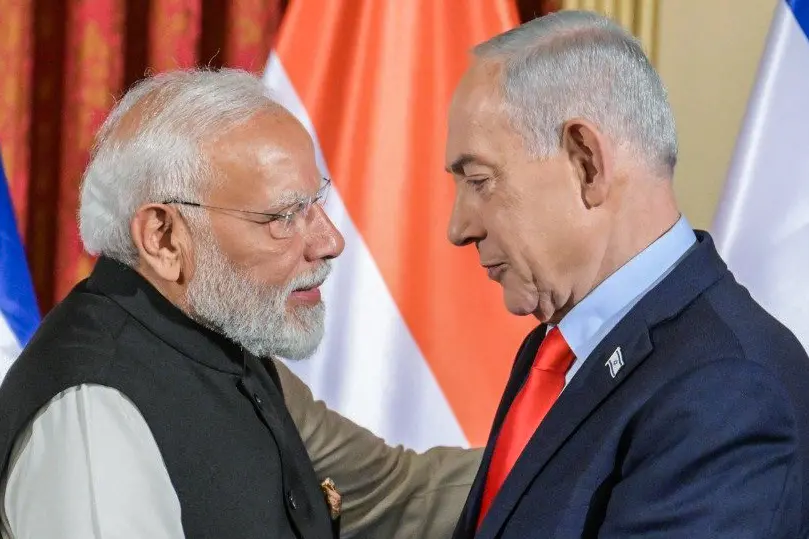
New Delhi: Prime Minister Narendra Modi held a telephonic conversation with Israeli Prime Minister Benjamin Netanyahu to review the evolving security situation in West Asia, as tensions continue to rise following recent developments in the Middle East crisis.
Sharing details on X, PM Modi said he discussed the “current regional situation” with Netanyahu, conveyed India’s concerns over the latest escalation, and stressed that the safety of civilians must remain a priority.
“Had a telephone call with PM Benjamin Netanyahu to discuss the current regional situation. Conveyed India’s concerns over recent developments and emphasised the safety of civilians as a priority. India reiterates the need for an early cessation of hostilities,” the Prime Minister said.
India calls for de-escalation in the Middle East crisis
The conversation comes amid heightened geopolitical tensions after coordinated US–Israel airstrikes on Iran intensified regional instability and triggered global security concerns. The escalation has raised fears of a broader conflict across West Asia.
India has consistently advocated restraint, dialogue and diplomacy to restore stability in the region. New Delhi has reiterated its position that de-escalation and the protection of civilian lives are essential to preventing further deterioration of the security environment.
Also Read| PM Modi meets UAE president, says India backs de-escalation and stands in solidarity
High-level security review in Delhi
Earlier on Sunday, PM Modi chaired a high-level security meeting in the national capital shortly after returning from a two-day tour of Rajasthan, Gujarat, Tamil Nadu and Puducherry. Government sources said the Prime Minister arrived in Delhi around 9.30 pm and immediately reviewed the prevailing security situation.
The meeting was attended by senior Cabinet ministers and top officials, including Defence Minister Rajnath Singh, Home Minister Amit Shah, External Affairs Minister S Jaishankar, Finance Minister Nirmala Sitharaman, National Security Adviser Ajit Doval and Foreign Secretary Vikram Misri.
The urgent convening of the Cabinet Committee on Security (CCS) is widely viewed as a response to the latest developments in West Asia, including US-Israel strikes on Iranian targets and subsequent retaliatory actions.
Rising regional uncertainty
Reports of the killing of Iranian Supreme Leader Ayatollah Ali Khamenei in the related escalations have further heightened fears of a wider regional conflict, adding to geopolitical uncertainty in the Middle East.
The telephonic discussion between PM Modi and Netanyahu also comes shortly after the Prime Minister concluded a two-day state visit to Israel on February 26. During that visit, both leaders agreed to elevate India–Israel relations to a Special Strategic Partnership and explored ways to deepen cooperation across key strategic sectors.
India is monitoring West Asia developments closely
India continues to closely monitor developments in the Middle East crisis, maintaining its call for an early cessation of hostilities, regional stability and the safeguarding of civilian lives.
As tensions escalate in West Asia, New Delhi’s diplomatic engagement underscores its commitment to peace, dialogue and strategic stability in a region critical to global security and energy markets.
IANS
Published: 02 Mar 2026, 07:46 am IST
Disclaimer: Kindly avoid objectionable, derogatory, unlawful and lewd comments, while responding to reports. Such comments are punishable under cyber laws. Please keep away from personal attacks. The opinions expressed here are the personal opinions of readers and not that of Mathrubhumi.
