
Prime Minister Narendra Modi met Iranian President Masoud Pezeshkian on the sidelines of the SCO Summit in Bishkek on Monday, with discussions focusing on bilateral ties and the situation in West Asia. Modi is also scheduled to meet Russian President Vladimir Putin later in the day.
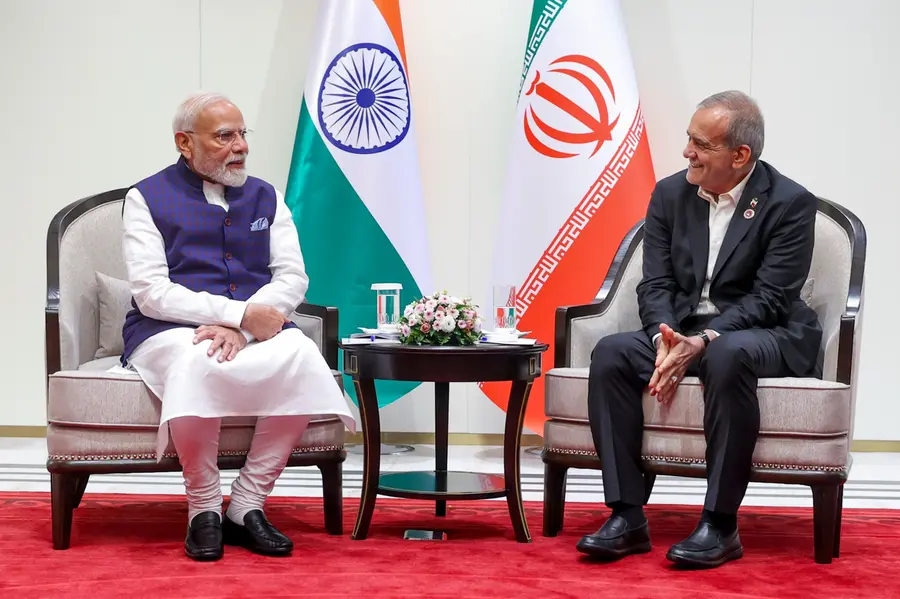
Prime Minister Narendra Modi held talks with Iranian President Masoud Pezeshkian in Bishkek, Kyrgyzstan, on Monday on the sidelines of the 26th Shanghai Cooperation Organisation (SCO) Summit.
The meeting was the first between Modi and Pezeshkian in two years. The two leaders discussed bilateral relations and recent developments in West Asia.
Also Read

Modi said India remained committed to strengthening its long-standing friendship with Iran and wanted to expand and diversify bilateral trade.
“We had a discussion on the prevailing situation in the region. India will continue to support all efforts aimed at ensuring lasting peace,” Modi said in a post on X.
West Asia situation discussed
Ministry of External Affairs spokesperson Randhir Jaiswal described the meeting as “fruitful”.
According to the MEA, the leaders reviewed developments in the West Asia region. Modi reiterated India's position that issues should be resolved through dialogue and diplomacy.
He also underlined the importance of continued efforts towards peace and stability in the region and the need to safeguard freedom of navigation and commerce.
The meeting came as tensions involving Iran and the United States remained a major regional concern.
Iran says it still wants a negotiated solution
Iranian President Pezeshkian told Modi that Tehran continued to seek a negotiated solution to its conflict with the United States, according to Iran's semi-official Tasnim news agency.
Pezeshkian reportedly said continued war was not in anyone's interest and that dialogue and cooperation were the way to address existing problems.
The Iranian foreign minister, Seyed Abbas Araghchi, and other senior Iranian officials were also present during the meeting.
Modi-Putin meeting in focus
Modi is scheduled to meet Russian President Vladimir Putin later on Monday, making the India-Russia engagement another major focus of his SCO visit.
The two leaders' meeting comes amid continuing global geopolitical shifts and the wider conflict-related tensions involving Russia and Ukraine.
Russian President Putin and Chinese President Xi Jinping are also expected to meet on the sidelines of the SCO Summit.
India seeks wider trade with Iran
Economic ties were another important element of the Modi-Pezeshkian meeting.
Modi said India wanted to expand and diversify its trade basket with Iran. The two countries have longstanding economic and strategic links, including cooperation involving connectivity and regional trade.
The discussions also come as India seeks to maintain engagement with Iran while navigating a rapidly changing West Asian security environment.
Modi's other meetings in Bishkek
Earlier on Monday, Modi held a bilateral meeting with Armenian Prime Minister Nikol Pashinyan.
The two leaders discussed cooperation in defence, economic relations, pharmaceuticals, science and technology, culture and education. They also exchanged views on regional and global developments, including the situation in West Asia.
Modi also met Kyrgyzstan President Sadyr Japarov during his visit.
He paid tribute to Mahatma Gandhi at his statue in Bishkek and interacted with members of the Indian community and people associated with yoga, academia, the Indian Technical and Economic Cooperation programme and research.
What is on Modi's SCO agenda?
Modi is in Kyrgyzstan to attend the 26th SCO Summit and the opening ceremony of the 6th World Nomad Games.
His meetings with the leaders of Iran, Russia, Armenia and Kyrgyzstan provide India an opportunity to discuss bilateral relations alongside broader issues involving regional security, trade, connectivity and diplomacy.
The Modi-Pezeshkian meeting is particularly significant because West Asian tensions remain an important concern for India, given the region's importance for energy supplies, trade routes and the large Indian community living and working across the Gulf.
Analysis
The Bishkek meetings underline India's attempt to maintain diplomatic engagement with multiple countries amid competing geopolitical pressures.
With Iran, India's focus is on maintaining bilateral ties, expanding trade and supporting dialogue on West Asian tensions. With Russia, the emphasis is likely to include the longstanding strategic relationship and wider international developments.
The reference to freedom of navigation and commerce is particularly relevant for India because instability in West Asia can affect shipping routes, energy supplies and trade costs.
The sequence of Modi's meetings — first with Pezeshkian and later with Putin — also puts India's balancing diplomacy in focus. New Delhi continues to engage with countries that have differing relationships with the United States and with each other, while publicly emphasising dialogue, diplomacy and regional stability.
Published: 31 Aug 2026, 04:53 pm IST
ABOUT THE AUTHOR
Disclaimer: Kindly avoid objectionable, derogatory, unlawful and lewd comments, while responding to reports. Such comments are punishable under cyber laws. Please keep away from personal attacks. The opinions expressed here are the personal opinions of readers and not that of Mathrubhumi.