
Pete Hegseth faces backlash after a Pentagon prayer resembling a Pulp Fiction monologue, raising questions over its link to Ezekiel 25:17.
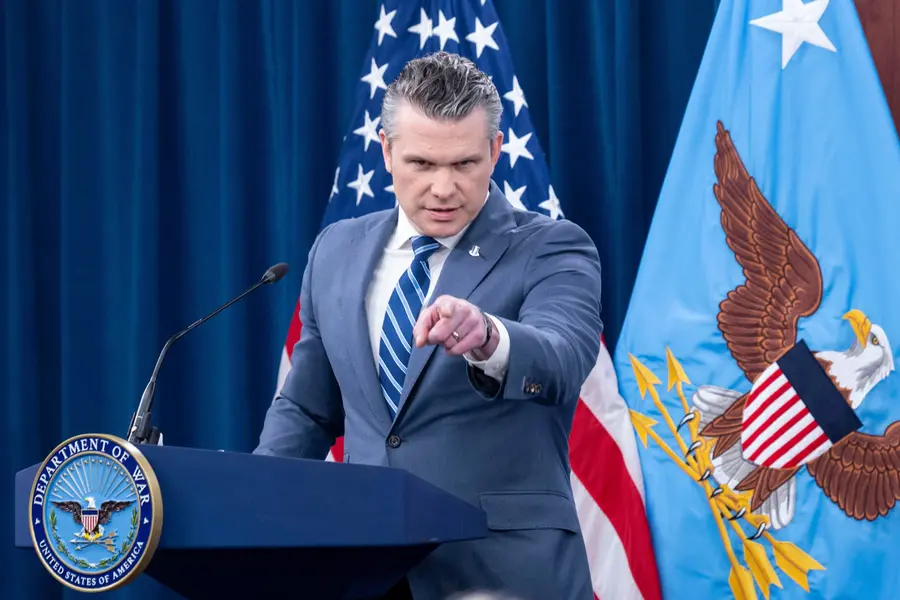
US Secretary of War Pete Hegseth is facing scrutiny after delivering a prayer at a Pentagon worship service that appeared to echo a famous monologue from Pulp Fiction rather than its claimed Biblical source. The passage, presented as “CSAR 25:17”, was introduced as a prayer used in combat search-and-rescue operations but bore striking similarities to the cinematic speech popularised by actor Samuel L Jackson.
Hegseth referenced the Old Testament verse Ezekiel 25:17 while omitting any mention of the film’s influence, prompting questions about whether a stylised Hollywood sermon had been repurposed as military scripture during a livestreamed Pentagon service.
A verse with three lives
The cultural touchpoint at the centre of the controversy traces back to director Quentin Tarantino’s reinterpretation of Ezekiel 25:17. In Pulp Fiction, the monologue delivered by Jackson’s character is theatrical and grandiose, a heavily embellished version of a sparse Biblical verse. Tarantino’s creation, long embedded in pop culture, is so recognisable that many fans can recite it without context.
Hegseth’s prayer appeared to be a third iteration: a military-themed adaptation that mirrors Tarantino’s cadence but replaces spiritual themes with operational language. In this version, the “righteous man” becomes a “downed aviator,” while “charity and goodwill” are swapped for “comradery and duty.” The concluding proclamation, “you will know my call sign is Sandy One”, substitutes divine authority with a tactical callsign.
- Ezekiel 25:17 (Original version): “And I will execute great vengeance upon them with furious rebukes; and they shall know that I am the Lord, when I shall lay my vengeance upon them.”
- Pulp Fiction (Film Version): The path of the righteous man is beset on all sides by the iniquities of the selfish and the tyranny of evil men. Blessed is he who, in the name of charity and good will, shepherds the weak through the valley of darkness, for he is truly his brother’s keeper and the finder of lost children. And I will strike down upon thee with great vengeance and furious anger those who attempt to poison and destroy my brothers. And you will know my name is the Lord when I lay my vengeance upon you.
- CSAR 25:17 (Hegseth's version): The path of the downed aviator is beset on all sides by the iniquities of the selfish and the tyranny of evil men. Blessed is he who, in the name of comradery and duty, shepherd the lost through the valley of darkness, for he is truly his brother’s keeper and the finder of lost children. And I will strike down upon thee with great vengeance and furious anger those who attempt to capture and destroy my brother. And you will know my call sign is Sandy One, when I lay my vengeance upon thee.
Delivered at a Pentagon worship service
The prayer was read during one of Hegseth’s newly instituted worship sessions inside the Pentagon, which he has framed as spiritual support for the ongoing conflict in Iran. He told attendees the prayer was traditionally read to A-10 crews ahead of combat search-and-rescue missions, including a recent operation involving downed US personnel over Iran.
Its delivery, formal, public and livestreamed, lent the moment institutional weight. Viewers quickly recognised the monologue’s familiar rhythm, and clips began circulating online, leading to widespread debate about its origins.
Public reaction and online confusion
The episode ignited immediate comparisons between the lines spoken by Hegseth, Jackson’s Pulp Fiction speech and the original Ezekiel verse. The only verbatim Biblical portion remains: “And I will execute great vengeance upon them with furious rebukes…”, a concise and austere statement lacking the cinematic flourish of Tarantino’s rendition.
News outlets laid the three texts side by side, highlighting the obvious overlaps between the film script and the military version Hegseth used. Critics noted that the prayer’s structure, cadence and vocabulary align almost entirely with the Tarantino–Jackson speech, not scripture.
Pentagon response and defence
Pentagon press secretary Sean Parnell later acknowledged on X that the prayer was “obviously inspired by dialogue in Pulp Fiction.” However, he rejected claims that Hegseth had misrepresented the Biblical verse, calling such accusations “fake news and ignorant of reality.”
He wrote on X, “Secretary Hegseth on Wednesday shared a custom prayer, referenced as the CSAR prayer, used by the brave warfighters of Sandy-1 who led the daylight rescue mission of Dude 44 Alpha out of Iran, which was obviously inspired by dialogue in Pulp Fiction. However, both the CSAR prayer and the dialogue in Pulp Fiction were reflections of the verse Ezekiel 25:17, as Secretary Hegseth clearly said in his remarks at the prayer service. Anyone saying the Secretary misquoted Ezekiel 25:17 is peddling fake news and ignorant of reality.”
Hegseth himself maintained during the service that the text was “meant to reflect Ezekiel 25:17,” offering no reference to Tarantino or Jackson.
The incident came amid a turbulent week for Hegseth, who has faced political pressure, including articles of impeachment filed by Democratic lawmakers. Critics argued that the episode fits into a larger pattern in which the secretary, a former television host, blends combative political messaging with religious rhetoric.
During a separate briefing on the Iran conflict, he compared the press to New Testament Pharisees, accusing journalists of “constant negativity” and questioning “what side some of you are actually on.”
Published: 17 Apr 2026, 09:17 am IST
Related Topics
Disclaimer: Kindly avoid objectionable, derogatory, unlawful and lewd comments, while responding to reports. Such comments are punishable under cyber laws. Please keep away from personal attacks. The opinions expressed here are the personal opinions of readers and not that of Mathrubhumi.
