
UN, EU react as US-Israel strikes on Iran spark crisis
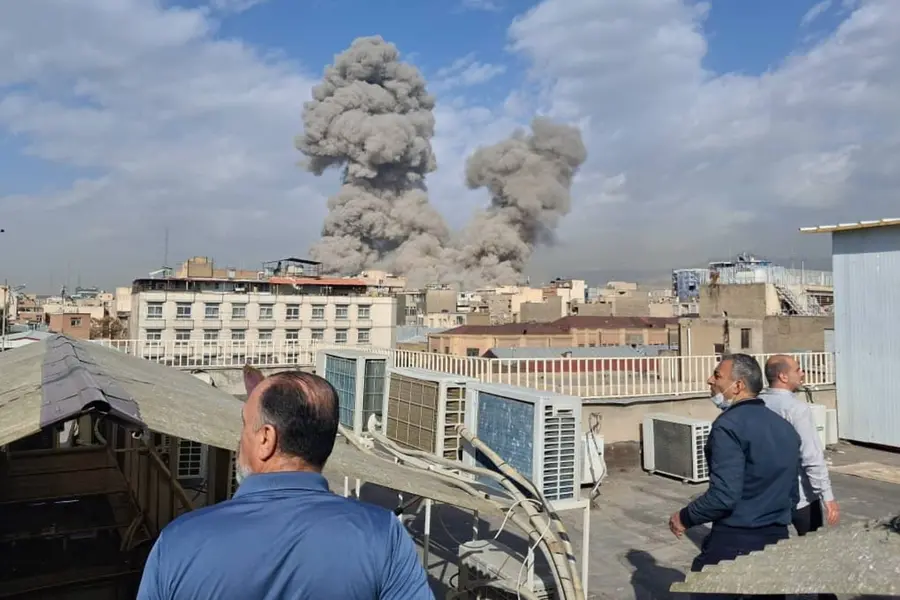
The UN and European Union leaders responded swiftly after the United States and Israel launched major strikes on targets across Iran on Saturday, triggering emergency meetings, evacuation plans and urgent diplomatic outreach across Europe.
With tensions escalating fast, governments moved to shield their citizens while warning of a widening regional crisis.
UN rights chief deplores strikes
The United Nations' rights chief deplored the Middle East strikes and urged “all parties to see reason”, as fears grew of further escalation across the region.
Volker Turk urged all parties to return to negotiations, saying attacks would only result in "death, destruction and human misery".
"I deplore the military strikes across Iran this morning by Israel and the United States of America, and the subsequent retaliatory strikes by Iran. As always, in any armed conflict, it is civilians who end up paying the ultimate price," Turk said in a statement.
"To avert these terrible consequences for civilians, I call for restraint and implore all parties to see reason, to de-escalate, and for a return to the negotiating table where they had been actively seeking a solution only hours earlier," he said.
The intervention came as the conflict intensified and diplomatic channels strained under mounting pressure.
EU calls situation ‘perilous’, begins evacuations
The European Union’s top diplomat described the conflict as “perilous” and said she was working with Israeli and Arab officials to pursue a negotiated peace.
"Iran's regime has killed thousands. Its ballistic missile and nuclear programmes, along with support for terror groups, pose a serious threat to global security," said Kaja Kallas, foreign policy chief of the 27-nation bloc, in a post on social media.
"The EU is also coordinating closely with Arab partners to explore diplomatic paths."
The EU is evacuating some staff from the region while keeping in place a maritime mission in the Red Sea. The bloc recently imposed fresh sanctions on Iran and its leading figures, prompting retaliatory sanctions by Tehran.
It remained unclear whether US allies were given advance warning of the attacks. The German government said it was informed only on Saturday morning. France’s junior defence minister said France knew something would happen, but did not know when.
Germany, France, Italy act to protect citizens
Germany is holding an emergency meeting to discuss the situation in Iran. The government’s crisis management team was scheduled to meet at noon.
Chancellor Friedrich Merz was consulting ministers responsible for security and European partners. Berlin urged German citizens in Iran, Israel and the wider region to register on the official system for citizens abroad and follow local authority instructions.
France, which maintains military bases and a regular presence in the Middle East, called on its citizens to exercise extreme caution.
"A military escalation is underway. ... It's not the time for negotiations, we are in a situation of war," junior Defence Minister Alice Rufo told France-2 television.
"Our priority is the protection of our citizens and the protection of our forces in the region," she said.
French military spokesperson Col. Guillaume Vernet said: "The French armed forces continuously adapt their posture to threats and implement measures to ensure the surveillance and protection of military installations where French soldiers are deployed."
"Our military presence guarantees France's independent assessment of the situation," he told the AP.
Italy urged Italians to exercise utmost caution and follow embassy instructions. Prime Minister Giorgia Meloni’s office said she would contact regional leaders to "support any initiative that may lead to a de-escalation of tensions."
"Italy reiterates its support to the Iranian civilian population, who courageously continue to demand respect for their civil and political rights," her office said.
Switzerland called for full respect of international law and urged "all parties to exercise maximum restraint, protect civilians and civilian infrastructure."
Published: 28 Feb 2026, 05:53 pm IST
Disclaimer: Kindly avoid objectionable, derogatory, unlawful and lewd comments, while responding to reports. Such comments are punishable under cyber laws. Please keep away from personal attacks. The opinions expressed here are the personal opinions of readers and not that of Mathrubhumi.
