
Viola Fletcher, who lived through the horror of the 1921 Tulsa race massacre and carried its memory for more than a century, has died at 111.
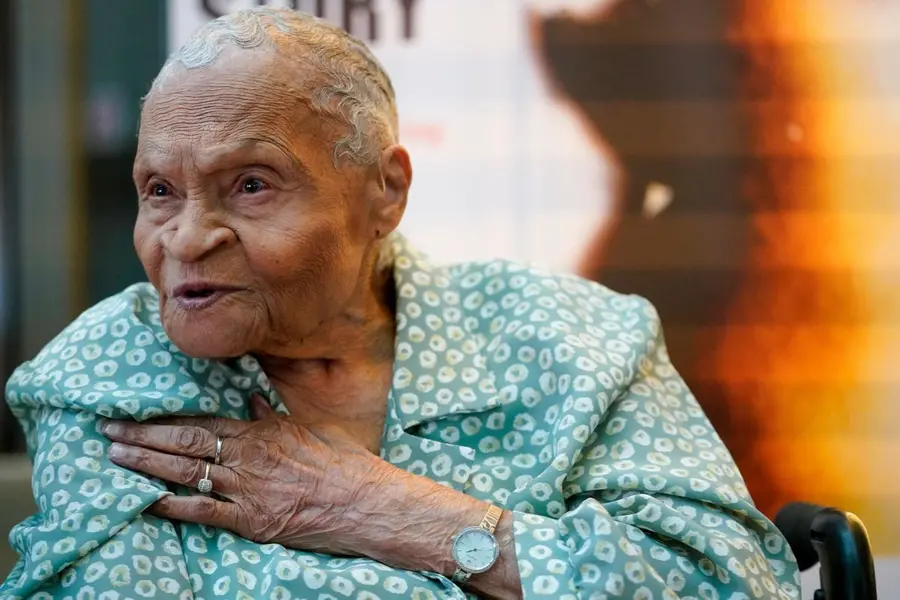
The oldest known survivor of the 1921 Tulsa race massacre – one of the most devastating incidents of racist violence in United States history – has died at the age of 111, a local official confirmed on Tuesday.
Viola Ford Fletcher, who was a young girl when white mobs burned down her predominantly Black neighbourhood in Greenwood, Oklahoma, spent more than a century carrying memories of destruction, terror and loss.
Tulsa Mayor Monroe Nichols said the city was mourning the death of a woman who symbolised both the tragedy of the past and the resilience of its survivors.
"Today, our city mourns the loss of Mother Viola Fletcher – a survivor of one of the darkest chapters in our city's history," Nichols said.
"Fletcher carried 111 years of truth, resilience, and grace and was a reminder of how far we've come and how far we must still go."
What was the Tulsa race massacre?
The massacre erupted on 31 May 1921 after a group of Black men went to the local courthouse to protect a young African American man accused of assaulting a white woman. Tensions flared when they encountered an enraged white crowd, and gunfire led them to withdraw into the Greenwood district.
What followed was a violent assault by white mobs who looted and set fire to Greenwood – then a prosperous Black community known as Black Wall Street. With businesses destroyed, homes reduced to ashes and thousands displaced, the neighbourhood was left in ruins. Historians estimate that up to 300 African Americans were killed.
Fletcher’s life after the massacre
Fletcher left school as a child and endured decades of hardship, often taking housekeeping jobs in white households. She later said the trauma of 1921 never left her, noting she had “lived through the massacre every day” for more than a century.
A century after the attack, she was among the survivors who appeared before Congress to share their experiences and demand justice.
"I still see Black men being shot, Black bodies lying in the street... I still see Black businesses being burned. I still hear the screams," Fletcher told the House Judiciary Committee in 2021.
"Our country may forget this history but I cannot. I will not, and other survivors do not, and our descendants do not," she said.
Calls for accountability and justice
A commission investigating the massacre concluded that Tulsa authorities had armed some of the white attackers. The panel recommended compensation for survivors and descendants, but the proposal ultimately stalled.
In 2021, President Joe Biden became the first US leader to formally honour the victims during a visit to Tulsa marking the massacre’s centenary. The city also began exhuming mass graves to identify victims and piece together a more complete picture of what happened.
A legacy that endures
Fletcher’s death leaves 111-year-old Lessie Evelyn Benningfield as the final known living survivor of the massacre. Benningfield, six months younger than Fletcher, also lived through the attack as a child.
The United States continues to confront its racial history, particularly in the wake of the 2020 killing of George Floyd, whose death under the knee of a Minneapolis police officer reignited nationwide debates about systemic racism and justice.
(With inputs from AFP)
Published: 25 Nov 2025, 02:43 pm IST
Related Topics
Disclaimer: Kindly avoid objectionable, derogatory, unlawful and lewd comments, while responding to reports. Such comments are punishable under cyber laws. Please keep away from personal attacks. The opinions expressed here are the personal opinions of readers and not that of Mathrubhumi.
