
Global oil prices slipped while financial markets remained largely steady after the United States captured Venezuelan President Nicolas Maduro
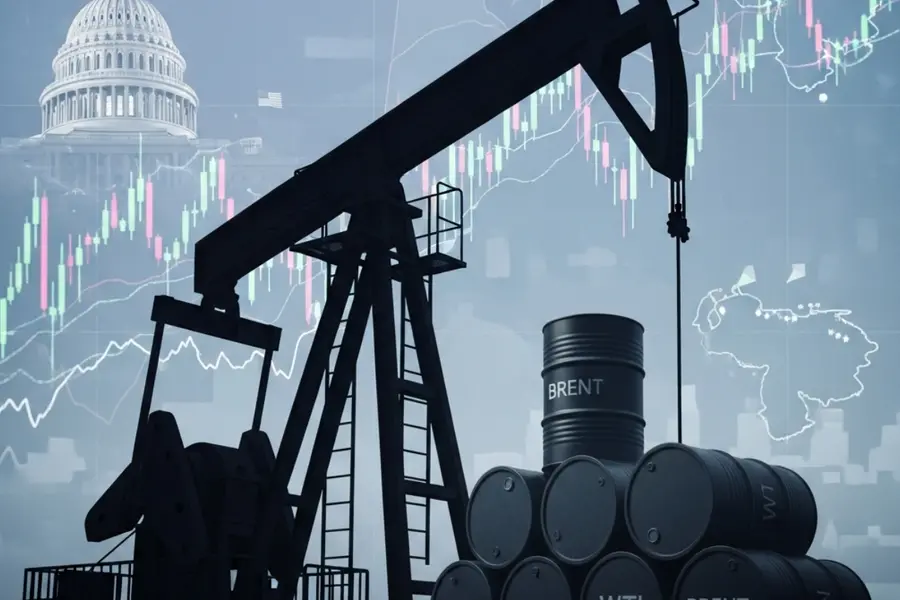
Bangkok: Oil prices edged lower while precious metals rallied as global financial markets reacted cautiously to the reported US capture of Venezuelan President Nicolas Maduro.
Why did oil prices fall despite major geopolitical developments?
Also Read

Oil prices slipped as markets assessed the near-term impact of the US operation in Venezuela as limited. US benchmark crude fell 36 cents to USD 56.96 per barrel, while Brent crude dropped 34 cents to USD 60.41 per barrel. Analysts noted that oil supplies remain ample globally, keeping prices near their lowest levels in about six months.
Venezuela’s oil sector, weakened by years of sanctions and underinvestment, is unlikely to see a rapid production surge despite political changes. Current output stands at around 1.1 million barrels per day, and any meaningful increase would require time and substantial investment.
How did global stock markets react to the news?
Asian markets rallied strongly, led by technology stocks. Japan’s Nikkei 225 surged 3 per cent to 51,832.80, its highest close since October, while South Korea’s Kospi jumped 3.4 per cent to a record 4,457.52. Taiwan’s benchmark index rose 2.6 per cent, while Australia’s S&P/ASX 200 ended flat.
European markets also opened higher, with Germany’s DAX rising 0.8 per cent, France’s CAC 40 gaining 0.3 per cent and Britain’s FTSE 100 edging up 0.2 per cent.
US futures pointed to a steady open, with S&P 500 futures up 0.2 per cent and Dow futures largely unchanged.
Why did gold and silver prices surge?
Gold climbed 2.7 per cent and silver jumped 6.6 per cent as investors sought traditional safe-haven assets amid geopolitical uncertainty. Analysts said investors remained willing to take risks in equities but preferred to hedge against potential shocks.
Market commentators described the move as cautious optimism rather than panic, with investors balancing confidence in growth assets with protection against global instability.
What impact could Venezuela’s oil industry have going forward?
Venezuela’s oil infrastructure has deteriorated significantly after years of neglect and sanctions. While some analysts believe production could eventually double or triple, any increase would take time and require major capital inflows. In the near term, Venezuela is unlikely to disrupt global oil supply dynamics.
This marks the first full trading week of the new year, with markets focused on upcoming US economic data. Reports on the services sector, consumer sentiment and the labour market are expected to offer insight into how the US economy ended 2025 and what may lie ahead in 2026.
These releases will also be among the final major indicators reviewed by the US Federal Reserve before its policy meeting at the end of January.
How did US markets close last week?
On Friday, US stocks posted modest gains. The S&P 500 rose 0.2 per cent and the Dow Jones Industrial Average climbed 0.7 per cent. The Nasdaq Composite slipped marginally, weighed down by losses in major technology stocks, including Microsoft and Tesla.
Despite the mixed performance, investor sentiment remained broadly positive heading into the new year.
Published: 05 Jan 2026, 05:56 pm IST
Related Topics
Disclaimer: Kindly avoid objectionable, derogatory, unlawful and lewd comments, while responding to reports. Such comments are punishable under cyber laws. Please keep away from personal attacks. The opinions expressed here are the personal opinions of readers and not that of Mathrubhumi.