
On October 9, Trump announced that Russia would release more than 300,000 tonnes of diesel into international markets, followed by another 500,000 tonnes in November and an additional one million tonnes “immediately thereafter.”
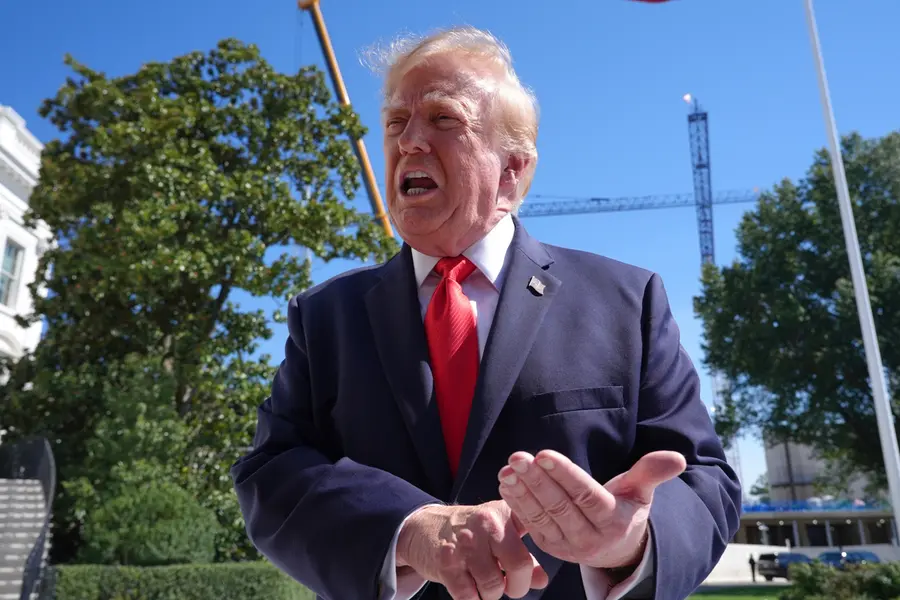
Washington: US President Donald Trump has defended his controversial agreement to allow Russian diesel into global markets, insisting that the arrangement is intended to ease soaring international fuel prices rather than supply the United States.
The clarification came amid mounting criticism from both Republicans and Democrats, who accused the administration of providing Moscow with a fresh source of revenue despite Washington’s efforts to pressure Russia over its continuing war in Ukraine.
Speaking to reporters on Tuesday, Trump maintained that the agreement, announced following discussions with Russian President Vladimir Putin last week, was aimed at addressing global diesel shortages caused by disruptions linked to the ongoing Iran war.
“That’s a diesel deal. Not for us. That’s being released into the world. That’s not being released to us,” Trump said.
On October 9, Trump announced that Russia would release more than 300,000 tonnes of diesel into international markets, followed by another 500,000 tonnes in November and an additional one million tonnes “immediately thereafter.”
To facilitate the shipments, the US Treasury Department issued a temporary licence relaxing sanctions on Russian diesel exports to global markets until April 7, 2027.
The decision comes just weeks before the US congressional midterm elections in November, with rising diesel prices emerging as a major concern amid disruptions to global energy supplies.
Trump argued that the international fuel market had been severely affected by high prices and damage to refining infrastructure.
“That’s a diesel deal that’s going to be released into the world for the world market, because the world market suffered with high prices. And when you knock out diesel refineries, that’s not a great thing. But they are not releasing it to us. They are releasing it to the entire world,” he said.
The agreement has triggered political controversy in Washington, particularly because it follows the passage of legislation granting Trump sweeping powers to impose sanctions on Russia and tariffs on countries maintaining significant trade relations with Moscow, including India and China.
The sanctions legislation, approved by Congress three weeks before the diesel announcement, was intended to increase economic pressure on Russia and strengthen Washington’s negotiating position over the Ukraine conflict.
However, lawmakers from both parties have questioned whether allowing additional Russian fuel exports undermines that strategy.
On Tuesday, a bipartisan group of 12 US senators sent a letter to Trump urging him to reverse the agreement.
The lawmakers described the arrangement as a “gift to our adversary and a betrayal of our allies”.
“The deal you struck with President Vladimir Putin on October 9 will not achieve just ends, nor will it benefit Americans,” the senators wrote.
The letter was signed by Democratic senators Richard Blumenthal, Chris Coons, Dick Durbin, Jack Reed, Jeanne Shaheen and Sheldon Whitehouse, along with Republicans Alan Armstrong, Susan Collins, John Cornyn, Mitch McConnell, Lisa Murkowski and Thom Tillis.
“This deal is a gift to our adversary and a betrayal of our allies; it should be rescinded,” the letter stated.
While acknowledging the need to bring down energy costs for American consumers, the senators argued that releasing Russian diesel into international markets would provide little meaningful relief to households and businesses in the United States.
Instead, they warned that the agreement could strengthen Russia’s ability to sustain its military operations in Ukraine.
The deal “only provides Putin with more fuel to finance his war machine and enables Russia to continue its brutal attacks on Ukrainian civilians,” the lawmakers said.
They also disputed the administration’s argument that the additional diesel supplies would significantly reduce global fuel prices.
“It will have a negligible impact on fuel prices, but the revenues the Kremlin will receive from this agreement will undoubtedly finance its desired war of attrition and advance its security cooperation with China, Iran, and North Korea,” the senators said.
The criticism comes against the backdrop of the Lindsey O. Graham Sanctioning Russia and Iran Act of 2026, which Congress passed last month and Trump subsequently signed into law.
The legislation authorised additional economic measures targeting Moscow and countries accused of enabling Russia’s military campaign.
Lawmakers pointed out that the legislation had received overwhelming support from both parties, reflecting a shared commitment to intensifying pressure on the Kremlin.
“Both chambers passed the legislation with resounding, bipartisan votes, clearly demonstrating our intent and granting you the authorities to broker a just and fair peace,” the senators said.
They argued that the powers granted under the law were intended to increase economic pressure on Russia and its principal trading partners, particularly China, rather than create new opportunities for Russian energy exports.
According to the senators, maintaining pressure on Moscow and countries supporting its war effort would strengthen the United States’ position in negotiations aimed at ending the conflict in Ukraine.
The dispute has exposed tensions between Trump’s efforts to contain rising global energy prices and the broader US strategy of restricting Russia’s access to international markets.
The controversy also carries implications for India and China, which have faced US trade pressure over their commercial ties with Moscow.
Published: 14 Oct 2026, 07:14 am IST
ABOUT THE AUTHOR

Related Topics
Disclaimer: Kindly avoid objectionable, derogatory, unlawful and lewd comments, while responding to reports. Such comments are punishable under cyber laws. Please keep away from personal attacks. The opinions expressed here are the personal opinions of readers and not that of Mathrubhumi.