
While UN resolutions don't ban cruise missile tests, their low-altitude, maneuverable flight poses a challenge to regional defenses.
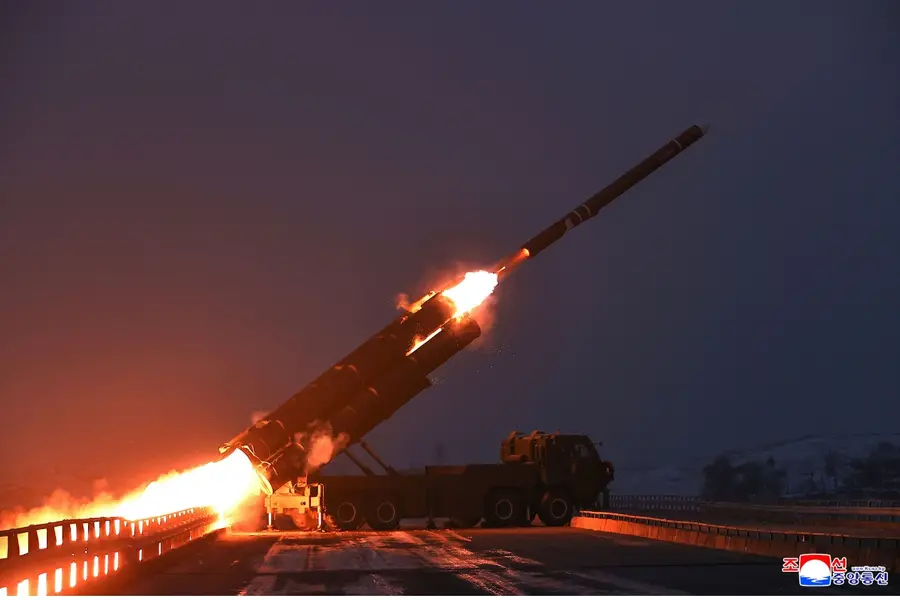
Seoul: North Korea test-fired long-range strategic cruise missiles into the sea on Sunday, state media reported Monday, a move intended to verify the nation’s nuclear capabilities just days after the country showcased significant milestones in its effort to build its first nuclear-powered submarine.
The official Korean Central News Agency (KCNA) stated that the launches took place off the western coast under the supervision of leader Kim Jong Un. Kim reportedly expressed "great satisfaction" with the results, asserting that the regular testing of North Korea's nuclear deterrence is "just a responsible exercise of the right to self-defence and war deterrence" amid escalating regional security concerns.
South Korea’s Joint Chiefs of Staff confirmed the detection of multiple cruise missiles launched from the Pyongyang capital region on Sunday morning. Military officials in Seoul emphasised that South Korean and U.S. forces maintain a high state of readiness to counter any North Korean provocations.
While United Nations Security Council resolutions prohibit North Korea from testing ballistic missiles, its cruise missile program is not technically banned. However, the weapons present a distinct challenge to regional defences because they fly at low altitudes and follow manoeuvrable paths to evade radar. Military analysts suggest these missiles would likely be used to target U.S. aircraft carriers and naval vessels in a conflict.
The cruise missile drill follows a flurry of military activity. Last week, Pyongyang tested new anti-aircraft missiles and released images of a nearly completed, 8,700-ton hull of a nuclear-powered submarine, a strategic asset Kim has long promised to deploy. North Korea has signalled that the vessel will eventually be equipped with nuclear-armed missiles.
Experts believe North Korea’s recent military advancements, including the submarine project, may be supported by technological transfers from Russia in exchange for North Korean troops and equipment sent to aid Moscow's campaign in Ukraine.
Observers warn that Pyongyang may ramp up its weapons demonstrations in the lead-up to a major Workers' Party congress scheduled for early next year. Since the collapse of nuclear diplomacy with U.S. President Donald Trump in 2019, Kim has focused on expanding his arsenal to gain leverage in future negotiations. In September, Kim hinted at a possible return to the bargaining table, provided the U.S. abandons what he termed its "delusional obsession" with North Korean denuclearisation.
With inputs from AP
Published: 29 Dec 2025, 06:50 am IST
Related Topics
Disclaimer: Kindly avoid objectionable, derogatory, unlawful and lewd comments, while responding to reports. Such comments are punishable under cyber laws. Please keep away from personal attacks. The opinions expressed here are the personal opinions of readers and not that of Mathrubhumi.
