
Gadi Eisenkot, Netanyahu’s main rival, has also vowed to form a new government as exit polls project Arab-led parties to win 17–18 seats in Israel’s parliament.
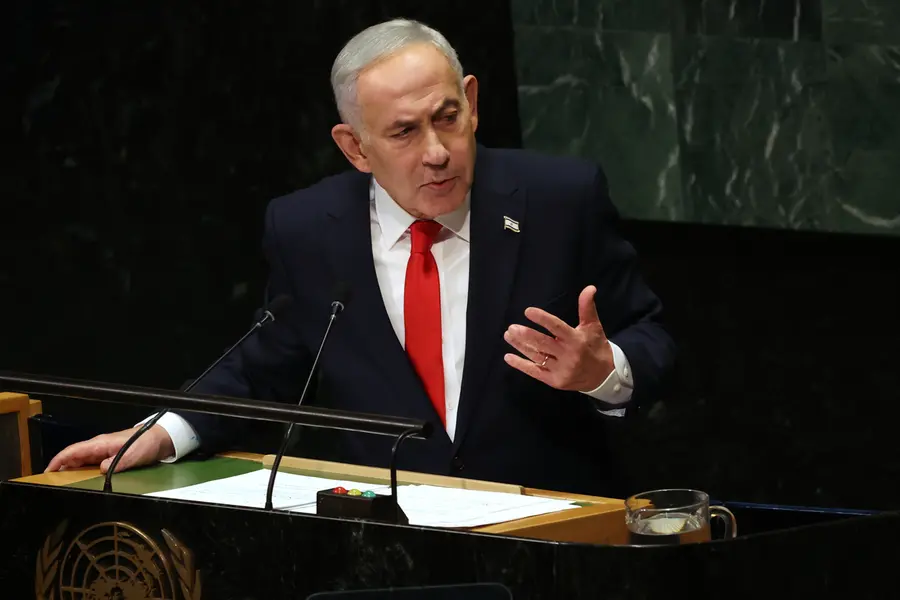
Jerusalem: Israeli Prime Minister Benjamin Netanyahu has vowed to push for a new right-wing government after exit polls showed no clear winner in the country’s closely contested parliamentary election, with rival Gadi Eisenkot’s bloc projected to hold a narrow edge and Arab parties emerging as potential kingmakers.
The election, Israel’s first national vote since the October 7, 2023 attack and the wars that followed, has left both major political camps short of the 61 seats needed for a majority in the 120-member Knesset. Preliminary exit polls put Netanyahu’s bloc and Eisenkot’s opposition bloc at roughly 50-53 seats, while Arab-led parties were projected to win around 17-18 seats.
The projections are not final results and could change as votes are counted.
Speaking to supporters early Wednesday, Netanyahu stopped short of declaring victory but said his Likud party was projected to emerge as the largest single party.
“We must put in place a strong government of the right,” Netanyahu said, while rejecting the possibility of forming a government dependent on Arab parties.
His remarks came as exit polls suggested that his Likud-led bloc may no longer have the parliamentary strength it held after the previous election. Likud itself, however, was projected to remain the largest individual party, with around 24-25 seats in several major exit polls.
Netanyahu's main rival, former military chief Gadi Eisenkot, said the projections showed a lack of confidence in the prime minister and pledged to form a new government.
“The people decided in favour of change,” Eisenkot said in a speech to supporters.
His bloc was projected to finish ahead of Netanyahu's bloc in several exit polls, but it also fell well short of the 61-seat threshold. That means Eisenkot would need support from smaller parties to form a government.
Also read | Trump urges Israelis to re-elect Netanyahu; says ‘we have to finish the job’ against Iran
Why Arab parties could decide who forms the government
The biggest surprise in the exit polls was the strong showing by Arab-led parties, which were projected to win about 17-18 seats.
Those parties are not formally part of Eisenkot’s anti-Netanyahu bloc, but their numbers could become crucial in coalition negotiations. Eisenkot has previously indicated that he would not form a government with Arab parties, creating a major obstacle to assembling a majority.
One possible route could involve Arab lawmakers supporting an opposition-led government from outside the coalition. If no workable majority emerges, Israel could face another election.
No clear winner despite record turnout
More than 77 per cent of eligible voters cast ballots, according to the Central Elections Committee, marking the highest turnout in more than two decades. Around 7 million people were eligible to vote.
The election was widely viewed as a referendum on Netanyahu’s long tenure, his alliance with far-right and religious parties, military-service exemptions for ultra-Orthodox Jews and his handling of the wars involving Gaza, Lebanon and Iran.
It was also held amid growing international criticism of Israel’s conduct of the war in Gaza and tensions over the country’s relations with key allies.
Also read | Lula reelected Brazil President over Flavio Bolsonaro despite voting extension row
What happens next in Israel?
Israel’s parliamentary system means that winning the most seats does not automatically make a party leader prime minister. The president must choose the candidate considered most capable of assembling a governing coalition.
With neither major bloc projected to reach 61 seats, coalition negotiations could take weeks. Smaller parties, particularly the Arab-led lists, could play a decisive role in determining whether Eisenkot can form a government or Netanyahu manages to retain power.
If no candidate succeeds in building a viable majority, Israel could eventually be forced into another election.
For now, the exit polls point to a political deadlock rather than a definitive change of government.
(With AFP inputs)
Published: 28 Oct 2026, 07:44 am IST
ABOUT THE AUTHOR

Disclaimer: Kindly avoid objectionable, derogatory, unlawful and lewd comments, while responding to reports. Such comments are punishable under cyber laws. Please keep away from personal attacks. The opinions expressed here are the personal opinions of readers and not that of Mathrubhumi.