
Setting a historic precedent since Brazil's 1985 return to democracy, Lula triumphed despite early challenges, likely marking the final campaign of his storied career.
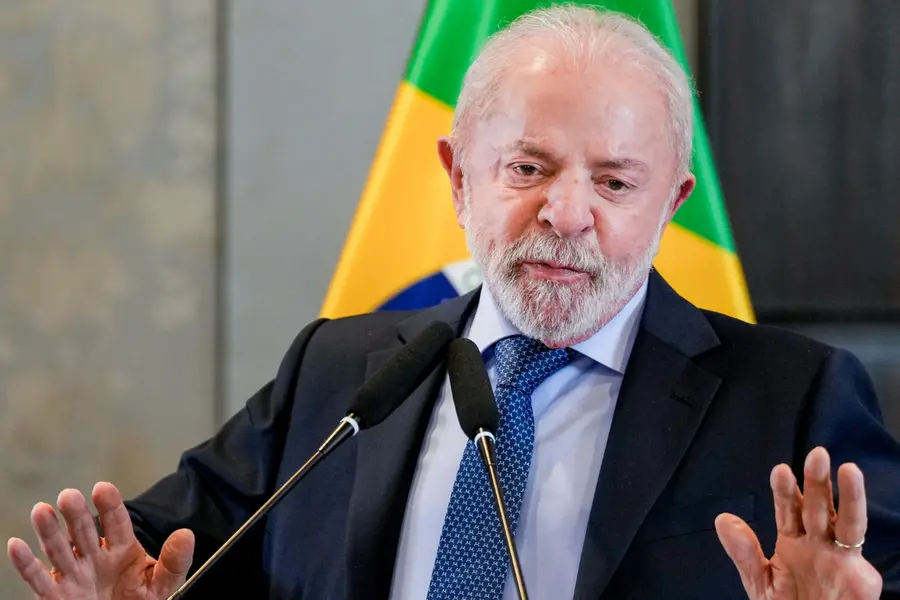
Rio de Janeiro: Brazilian President Luiz Inácio Lula da Silva, a prominent critic of U.S. President Donald Trump, secured reelection on Sunday in a contest that maintains strategic distance between Latin America’s largest economy and Washington.
With all votes counted, Brazil’s electoral court declared that the incoming 81-year-old leader held an unbeatable advantage. The declaration concluded a night marked by confusion at polling centres nationwide following a late directive extending voting by two hours, a judicial order from a Supreme Court justice that could spark legal challenges from challenger Flávio Bolsonaro.
His victory runs counter to a regional shift across Latin America where right-leaning presidential contenders aligned with Trump have gained ground, broadening American diplomatic reach in the Western Hemisphere. Lula’s reelection leaves Mexico and Brazil, the continent's two most populous states, governed by left-of-centre administrations while positioning Brazil’s 2.6 trillion-dollar economy to maintain policy independence despite pressure from heightened trade tariffs enacted by Trump.
The announcement sparked immediate celebrations among supporters gathered inside and outside the São Paulo hotel where Lula observed the vote tallies alongside First Lady Rosângela da Silva, key allies, and political associates.
Should electoral authorities formally certify the results, the victory grants Lula a non-consecutive fourth presidential mandate, scheduled to commence on Jan. 5, 2027.
The result marks the first instance since the end of Brazil’s military dictatorship in 1985 that the runner-up from the initial electoral round went on to win the presidency. Bolsonaro previously secured 47 per cent of the vote in the opening round compared to Lula’s 45 per cent, a gap of 2.2 million votes.
Neither Lula nor Sen. Bolsonaro has delivered a formal address to their supporters following the result.
Sunday’s win will likely mark the final electoral campaign of the veteran leader’s career. Lula launched his political trajectory during the 1970s as a trade union organiser before helping establish the Workers’ Party, which he represented in three unsuccessful presidential bids until winning office in 2002. He earned reelection four years later and was succeeded in 2010 by cabinet minister Dilma Rousseff, who won her own second term in 2014.
Rousseff was subsequently impeached in 2016 over budget manipulation allegations amid a wide-ranging anti-corruption investigation that also implicated Lula. His attempt to seek the presidency in 2018 was derailed when he was incarcerated following a conviction.
Lula was freed after serving 580 days, and his conviction was later thrown out by Brazil’s Supreme Court after police disclosures revealed judicial bias during his initial trial. He rapidly emerged as a leading critic of former President Jair Bolsonaro, whom he narrowly defeated in the 2022 election.
In 2024, two years into his current term, Lula publicly acknowledged that his administration had achieved limited progress toward satisfying its core voter base.
Following his second-place finish in the first round, Lula restructured his campaign apparatus, targeted younger demographics, mobilised millions of citizens to defend democratic institutions, highlighted risks associated with a potential second Bolsonaro administration, and expanded several state assistance programs.
He also framed the race around national sovereignty, asserting that a Bolsonaro victory would permit Washington to wield undue influence over domestic affairs.
Lula joins Trump and Nicaraguan President Daniel Ortega—all aged 80—among the oldest serving heads of state across the Americas.
AP
Published: 26 Oct 2026, 06:22 am IST
ABOUT THE AUTHOR

Related Topics
Disclaimer: Kindly avoid objectionable, derogatory, unlawful and lewd comments, while responding to reports. Such comments are punishable under cyber laws. Please keep away from personal attacks. The opinions expressed here are the personal opinions of readers and not that of Mathrubhumi.