
The X-59 is the centerpiece of NASA’s Quiet Supersonic Technology (QueSST) project, aimed at transforming the traditionally deafening sonic boom into a manageable “sonic thump.”
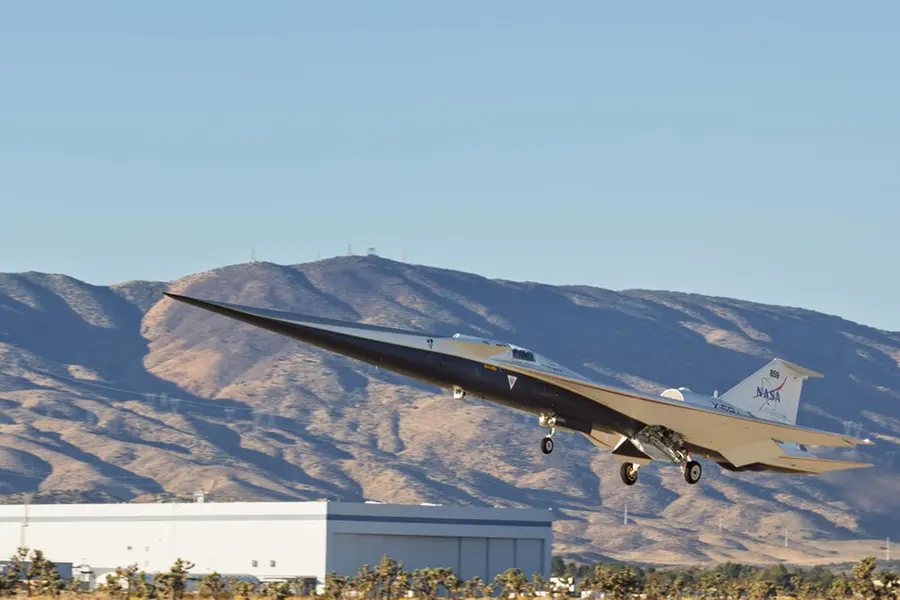
After two decades since the Concorde’s retirement, the dream of commercial supersonic flights may finally be taking off again. In October, NASA’s experimental X-59 aircraft took to the skies for its maiden flight from Lockheed Martin’s Skunk Works in California. The aircraft cruised for about an hour before landing at Edwards Air Force Base, 136 km away, marking a critical step in testing technology for quiet supersonic flight.
For decades, loud sonic booms kept supersonic aircraft grounded over land in the U.S., with a five-decade ban on non-military supersonic flights. That restriction was lifted this year through an executive order by then-President Donald Trump, opening the door for innovations like the X-59. In the UK, similar flights require approval from the Civil Aviation Authority.
What makes the X-59 different?
The X-59 is the centerpiece of NASA’s Quiet Supersonic Technology (QueSST) project, aimed at transforming the traditionally deafening sonic boom into a manageable “sonic thump.” Its unusual design is the key: a long, thin, tapered nose and reconfigured fuselage prevent shockwaves from merging, drastically reducing noise.
Unlike conventional planes, the cockpit is positioned halfway down the fuselage, meaning traditional windows aren’t feasible. Instead, high-resolution cameras feed the pilot live visuals from outside the aircraft. The X-59 is essentially a flying laboratory, collecting critical data that will inform future supersonic aircraft designs by companies like Boom Supersonic and Spike Aerospace.
Can supersonic flights become commercially viable?
Even with quiet-boom technology, significant challenges remain. Airlines and manufacturers must prove a strong business case, calculating customer demand, operating costs, and maintenance. Environmental considerations, particularly fuel efficiency under supersonic conditions, are also crucial.
Historically, supersonic travel has been an expensive endeavour. Concorde, the last commercial supersonic aircraft, was restricted in its routes and retired in 2003 after an accident and rising operational costs. NASA and Lockheed Martin hope the X-59 can overcome past hurdles, potentially ushering in a new era where cross-continental travel at supersonic speeds becomes a reality once again.
Published: 22 Nov 2025, 02:49 pm IST
Related Topics
Disclaimer: Kindly avoid objectionable, derogatory, unlawful and lewd comments, while responding to reports. Such comments are punishable under cyber laws. Please keep away from personal attacks. The opinions expressed here are the personal opinions of readers and not that of Mathrubhumi.
