
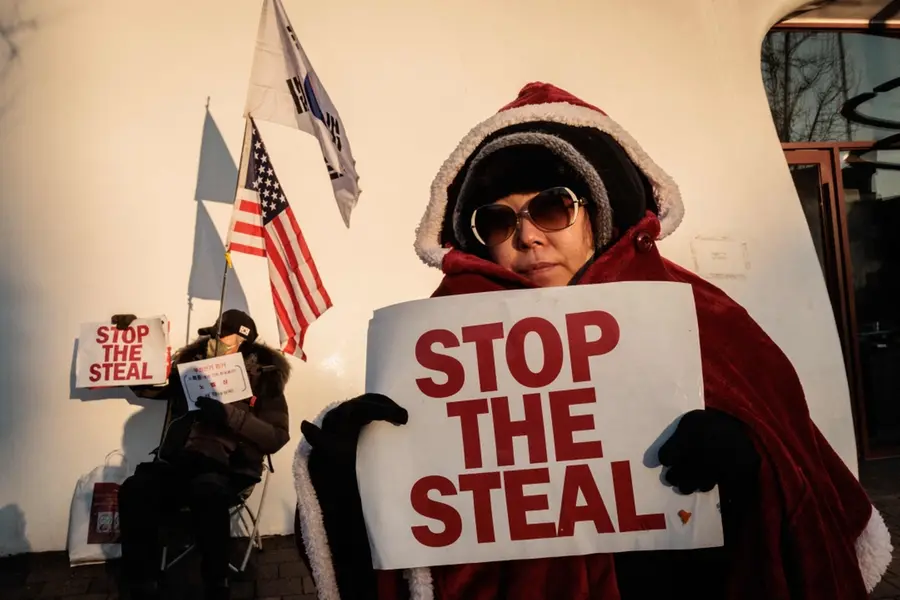
Seoul: The impeachment trial of South Korea's suspended President Yook Suk Yeol is set to begin on Tuesday. The country’s Constitutional Court will review whether to remove him from office over a failed martial law attempt that caused the worst political crisis in decades.
On December 3, Yoon ordered soldiers to storm parliament in an unsuccessful attempt to prevent lawmakers from voting to suspend his civil rule. This power grab led to his impeachment and suspension from presidential duties, but Yoon has remained in the presidential residence, refusing to cooperate with investigators looking into insurrection charges.
Also Read

Trial focuses on martial law, constitutional violations
The trial will examine two main issues: whether Yoon's martial law declaration was constitutional, and if found illegal, whether it amounted to insurrection. Legal experts believe the case is straightforward, as most of the facts have already been established. "Since most of the individuals involved have already been indicted and the facts have been somewhat established, it doesn't seem like it will take a long time," said lawyer Kim Nam-ju.
The trial will take place over five hearings, with the first one scheduled for January 14. Future hearings are set for January 16, 21, 23, and February 4. However, the court has up to 180 days to issue its final ruling.
Yoon’s legal team has announced that he will not attend the first hearing, citing safety concerns. “Concerns about safety and potential incidents have arisen,” said Yoon's lawyer, Yoon Kab-keun, in a statement. If Yoon does not appear, the trial will proceed in his absence. Former presidents Roh Moo-hyun and Park Geun-hye also skipped their impeachment hearings in 2004 and 2016-2017, respectively.
Fresh arrest attempt looms for Yoon
In addition to the impeachment trial, Yoon is under investigation for insurrection. A joint team of investigators from the Corruption Investigation Office (CIO) and police is preparing a new attempt to arrest Yoon. Their first attempt failed when Yoon’s guards blocked access to the investigators. If successful, Yoon would become the first sitting South Korean president to be arrested.
Should he be convicted, Yoon faces potential prison time or even the death penalty. The CIO has warned that anyone obstructing the arrest could face criminal charges.
Tensions rise as Yoon’s security tightens
Yoon's security team has reinforced his residence in Seoul with barbed wire and barricades. His legal team has also pressured the police to avoid participating in the arrest attempt, calling the warrant “illegal.” “We strongly urge the police... not to degrade themselves into mere enforcers of illegal actions,” his lawyers said.
The CIO has also issued a warning to the Ministry of Defense and the presidential security service, stating that anyone hindering Yoon’s arrest could face charges for obstruction and abuse of authority.
Agency
Published: 14 Jan 2025, 08:17 am IST
Related Topics
Disclaimer: Kindly avoid objectionable, derogatory, unlawful and lewd comments, while responding to reports. Such comments are punishable under cyber laws. Please keep away from personal attacks. The opinions expressed here are the personal opinions of readers and not that of Mathrubhumi.