
European leaders, facing ongoing Russian aggression, emphasized their readiness to increase defense contributions and bolster European security autonomy, though nuclear deterrence remains tied to the U.S. umbrella.
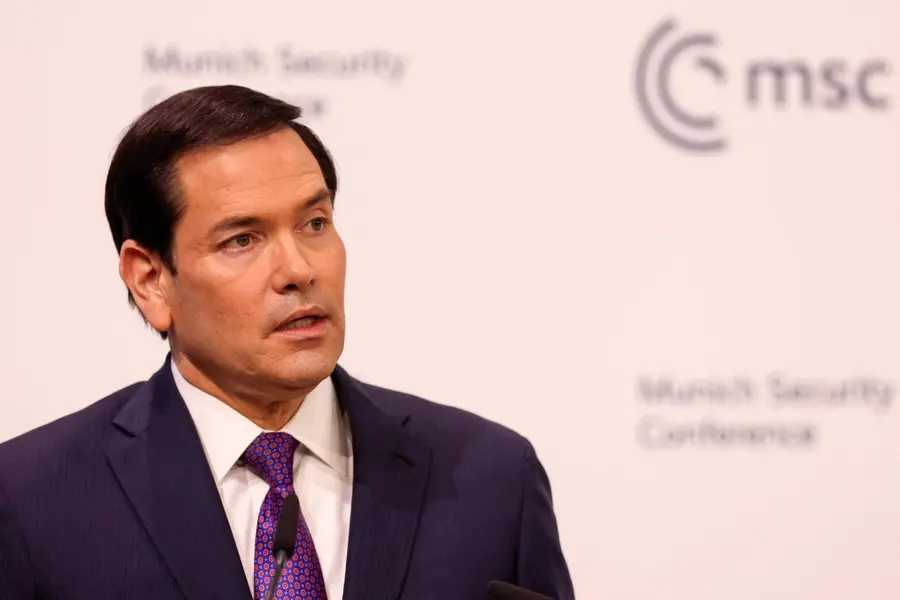
Munich: U.S. Secretary of State Marco Rubio sought to reassure a nervous Europe on Saturday, declaring that Washington wants to "recharge" the transatlantic alliance so a powerful Europe can assist the United States in a global mission of "renewal."
Speaking at the Munich Security Conference after months of friction fueled by President Donald Trump’s interest in annexing Greenland and his disparaging remarks toward allies, the top U.S. diplomat adopted a markedly conciliatory tone.
"We do not seek to separate, but to revitalise an old friendship and renew the greatest civilisation in human history," Rubio told the gathering, calling for "a reinvigorated alliance." He emphasised that the U.S. and Europe "belong together," adding, "We want Europe to be strong."
Rubio did, however, echo the administration’s hardline stance on immigration, characterising "mass migration" as a "crisis which is transforming and destabilising societies all across the West." He argued that as "heirs to the same great and noble civilisation," both sides must be "willing and able to defend it."
A Shift in Tone
The Secretary of State largely steered clear of the "MAGA" culture-war rhetoric that German Chancellor Friedrich Merz had warned was creating a "deep rift" between the allies. Rubio’s approach was a sharp departure from Vice President JD Vance’s appearance on the same stage a year ago, where he stunned leaders by attacking European policies on free speech and security.
Despite the softer delivery, the underlying "Trumpian" agenda remained clear. Ties had plunged just last month when Trump intensified threats to annexe Greenland, an autonomous Danish territory, forcing European nations into a unified protest. Rubio’s upcoming schedule includes stops in Slovakia and Hungary to visit nationalist leaders endorsed by the president.
Reactions to the speech were mixed. "It was needed to show that we are still allies and partners," said Estonian Defence Minister Hanno Pevkur. Others remained sceptical; former Lithuanian foreign minister Gabrielius Landsbergis remarked, "It was simply delivered in more polite terms. I am not sure the white paint will hold."
European Security Autonomy
European leaders at the summit signalled they are ready to shoulder more of the NATO defence burden, framing it as a necessity to counter Russian aggression.
- Ursula von der Leyen: The European Commission chief stated that "Europe needs to step up and has to take on its responsibility," advocating for closer security ties with post-Brexit Britain.
- Keir Starmer: The British Prime Minister called for building "hard power," which he described as the "currency of the age," and urged for a "shared industrial base" to boost defence production.
- Nuclear Deterrence: NATO chief Mark Rutte clarified that while France and Britain are discussing deeper nuclear cooperation, "nobody is arguing in Europe to do this as a sort of replacement of the nuclear umbrella of the United States."
Ukraine’s Desperate Plea
The conference convened as Russia’s full-scale invasion of Ukraine nears its fifth year. President Volodymyr Zelensky delivered an impassioned warning that diplomacy has so far failed to halt the slaughter.
"Weapons evolve faster than political decisions meant to stop them," Zelensky said, highlighting that every single power plant in Ukraine has been damaged by recent Russian strikes during the war's most severe cold snap. He warned that Vladimir Putin "cannot let go of the very idea of war" and will not stop at Ukraine's borders.
While President Trump recently urged Kyiv to "get moving" on a deal, claiming "Russia wants to make a deal," Rubio was more cautious after meeting with Zelensky. "We don't know if the Russians are serious about ending the war," the Secretary of State admitted.
With inputs from AFP
Published: 14 Feb 2026, 11:44 pm IST
Related Topics
Disclaimer: Kindly avoid objectionable, derogatory, unlawful and lewd comments, while responding to reports. Such comments are punishable under cyber laws. Please keep away from personal attacks. The opinions expressed here are the personal opinions of readers and not that of Mathrubhumi.
