
CSIS report confirms Khalistani extremists use Canada to plan violence against India.
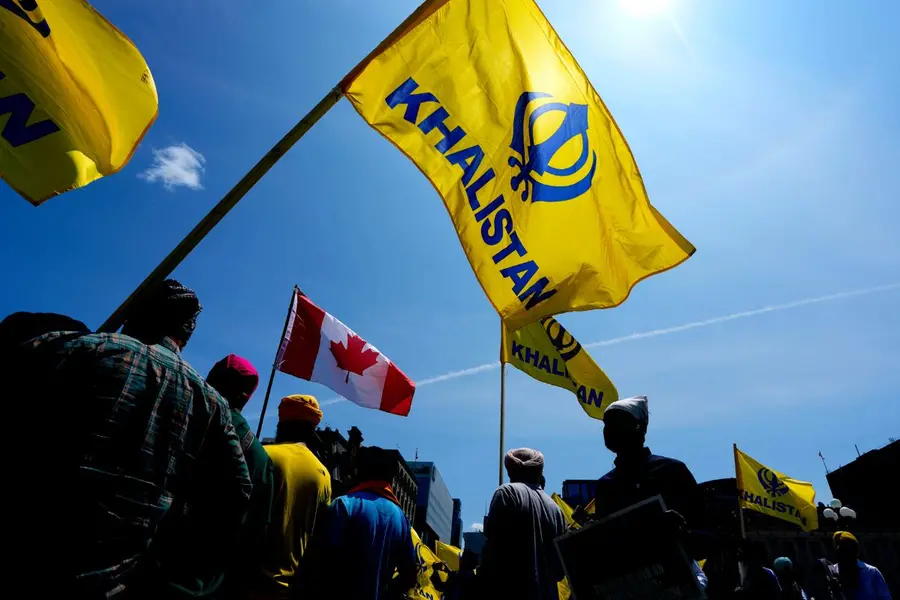
Ottawa: Canada’s top intelligence agency has for the first time publicly acknowledged that Khalistani extremists are using Canadian territory to promote, fundraise and plan acts of violence primarily targeting India, a claim long made by New Delhi.
In its latest annual report, the Canadian Security Intelligence Service (CSIS) stated, “Khalistani extremists continue to use Canada as a base for the promotion, fundraising or planning of violence primarily in India.”
The admission, seen as a rare and direct statement from Canada’s intelligence apparatus, has reignited concerns over extremist activity and foreign interference operating from within Canada’s borders, particularly at a time when diplomatic ties with India remain strained.
India has, for several years, raised concerns about pro-Khalistan elements operating freely in Canada, alleging the country has become a hub for anti-India activism. Until now, those warnings had largely been dismissed or downplayed by Canadian authorities.
But the CSIS disclosure confirms what Indian officials have repeatedly alleged- that Canada has effectively become a safe haven for anti-India actors. This marks the first time the Canadian government has used the term “extremism” in connection with the Khalistan movement in an official public document.
Since the mid-1980s, the threat of politically motivated violent extremism (PMVE) in Canada has been most visible through the actions of Canada-based Khalistani extremists (CBKEs), who seek to carve out an independent nation state called Khalistan from the Indian state of Punjab through violent means.
PMVE broadly refers to the use or facilitation of violence to restructure existing political systems or to establish new ones. The report notes that PMVE actors engage in activities such as planning, financing and facilitating attacks around the world to advance their political agendas.
Although there were no CBKE-linked attacks reported within Canada in 2024, CSIS cautioned that such groups still pose a serious national security threat to both Canada and Canadian interests.
The intelligence agency reiterated that it investigates all activities that fall under the legal definition of threats to Canada’s security, as specified in the CSIS Act.
The CSIS report comes at a particularly sensitive juncture in Indo-Canadian relations. Indian Prime Minister Narendra Modi and newly appointed Canadian Prime Minister Mark Carney met in person for the first time during the G7 summit held in Canada. The meeting was seen as a critical step toward restoring diplomatic dialogue after ties soured following the assassination of pro-Khalistan figure Hardeep Singh Nijjar in British Columbia in June 2023.
Although Nijjar was a Canadian citizen, India had long labelled him a terrorist due to his alleged connections with Khalistani extremist networks. The ongoing investigation into his murder took a major step forward in May 2024, when four individuals were arrested and charged with first-degree murder and conspiracy to commit murder.
Meanwhile, the latest CSIS report is not the only document raising concerns. In June 2024, the National Security and Intelligence Committee of Parliamentarians (NSICOP) released a special report alongside a May 2024 initial report from the Public Inquiry into Foreign Interference (PIFI), both of which identified Pakistan as a state actor that had attempted to influence Canada’s democratic processes.
These reports highlight growing unease about the reach of foreign actors, both state-sponsored and extremist, within Canadian borders.
Following the Modi-Carney meeting, both sides agreed to appoint new High Commissioners and to resume trade negotiations that had stalled in recent years. According to India’s official statement, the talks reflected a “constructive and balanced partnership grounded in mutual respect for concerns and sensitivities.” IANS
Published: 19 Jun 2025, 07:39 am IST
Disclaimer: Kindly avoid objectionable, derogatory, unlawful and lewd comments, while responding to reports. Such comments are punishable under cyber laws. Please keep away from personal attacks. The opinions expressed here are the personal opinions of readers and not that of Mathrubhumi.
