
More than four decades after the Air India Flight 182 Kanishka bombing killed 329 people, victims’ families are opposing a reported plan to reduce the Royal Canadian Mounted Police task force investigating the case and potentially place the investigation in inactive status.
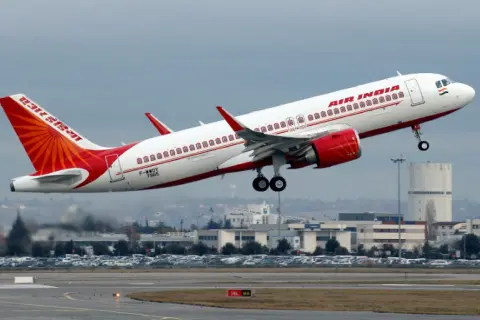
The Royal Canadian Mounted Police (RCMP) is reportedly considering reducing the task force investigating the 1985 Air India Flight 182 bombing, citing a lack of new leads, according to reports based on a recent briefing with victims’ families.
The development emerged after a September 12 meeting in Toronto involving relatives of victims and senior RCMP officials. Sanjay Lazar, chairman of the Kanishka Foundation and a family member of victims, subsequently wrote to Canadian Prime Minister Mark Carney opposing any move to wind down the investigation.
Lazar said he was informed that there was a possibility of reducing the size of the task force and moving the case towards an “inactive” status. He urged the Canadian government to maintain the investigation and consider a renewed effort to identify those responsible.
The RCMP had not publicly announced a formal closure of the investigation in the material available at the time of reporting. The reported change therefore remains a possible reduction in investigative resources rather than a confirmed termination of the case.
What happened to Air India Flight 182?
Air India Flight 182, known as Kanishka, was destroyed by a bomb over the Atlantic Ocean on June 23, 1985, while flying from Montreal towards London.
All 329 people aboard were killed, including 268 Canadian citizens. Canadian authorities describe the bombing as the deadliest terrorist attack in the country’s history.
The attack was linked to Khalistani extremists, and the investigation became one of the largest and most complex criminal investigations undertaken by Canadian authorities.
Why families are objecting
For victims’ relatives, the possibility of reducing the investigation has revived long-standing concerns about whether all avenues for identifying those responsible have been exhausted.
Lazar, who lost his parents and infant sister in the bombing, appealed directly to Carney to ensure the investigation continues. His letter also called for a renewed public appeal, stronger investigative efforts and an enhanced reward for information.
The letter was also sent to Indian Prime Minister Narendra Modi, the foreign ministers of India and Canada and senior Canadian officials, including the RCMP commissioner.
Families seek a fresh push
The families have proposed increasing the financial reward for information about the perpetrators and renewing efforts by Canadian policing and intelligence agencies.
Lazar has also argued that if the existing investigative structure cannot make further progress, Canada should consider another investigative approach or bring in additional expertise.
The original Canadian reward for information was announced in 1995 and remains unclaimed, according to the account cited by NDTV.
A case spanning four decades
The Kanishka investigation has continued through several decades and involved hundreds of officers, international investigative work and extensive examination of evidence.
In a 2025 retrospective marking the 40th anniversary, the RCMP described the investigation as one of the largest and most complex in Canadian history.
The latest development is therefore not a new finding about the 1985 bombing itself, but a dispute over the future resources and status of the investigation.
The immediate question is whether the RCMP will formally reduce the task force or place the case into inactive status. The reported proposal has prompted victims’ families to appeal to the Canadian government for the investigation to continue.
For the families, the issue remains tied to the unresolved search for those responsible for the bombing. Their latest appeal seeks continued investigative work, a renewed search for information and greater resources.
The reported development comes more than 41 years after the bombing and highlights the difficulty of pursuing a complex terrorism investigation decades after the event. Evidence, witnesses and investigative leads can become harder to pursue over time, while victims’ families
Published: 18 Sept 2026, 11:43 am IST
ABOUT THE AUTHOR

Related Topics
Disclaimer: Kindly avoid objectionable, derogatory, unlawful and lewd comments, while responding to reports. Such comments are punishable under cyber laws. Please keep away from personal attacks. The opinions expressed here are the personal opinions of readers and not that of Mathrubhumi.