
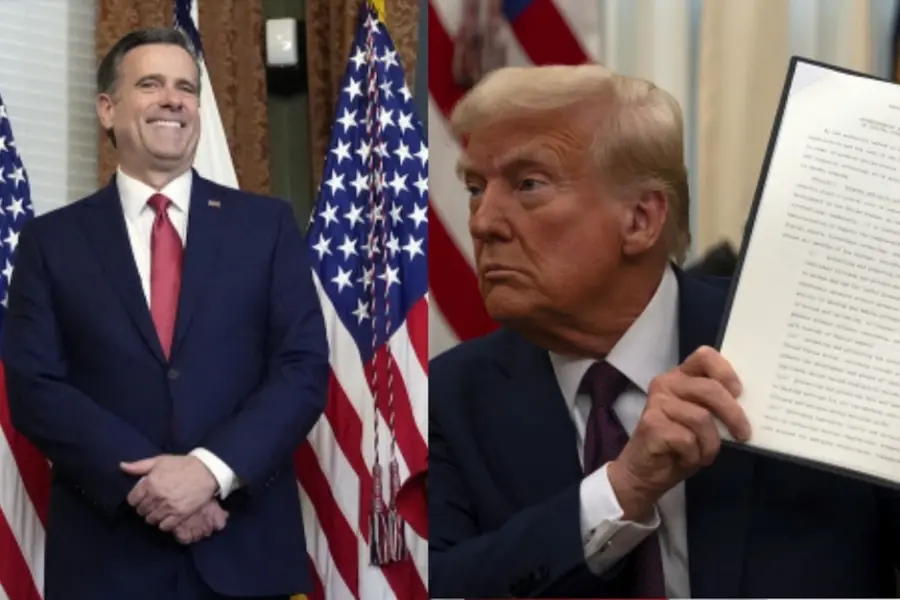
Washington, DC: John Ratcliffe, a former U.S. Congressman and Director of National Intelligence (DNI) under President Donald Trump, has been nominated to lead the Central Intelligence Agency (CIA). His appointment has sparked both support and opposition, with critics and defenders alike raising concerns about his qualifications and impartiality.
Notably, this is the second major appointment under the second Trump administration after Marco Rubio was appointed the US Secretary of State, earlier this week.
Confirming the news, the White House shared a post on X and wrote, "@JohnRatcliffe 's confirmation as Director of the CIA marks a significant step in advancing President Trump's vision to restore America's strength on the world stage."
Background and Political Career
John Ratcliffe is an American lawyer and politician with a career that spans law enforcement, Congress, and intelligence leadership. He began his professional journey as a federal prosecutor in Texas, appointed by President George W Bush to lead anti-terrorism efforts in the Eastern District. However, his claims of prosecuting terrorism cases were later scrutinised, with no substantial evidence supporting his involvement in high-profile cases.
After a brief stint as interim US Attorney in 2007, Ratcliffe returned to private practice, aligning with notable figures like former Attorney General John Ashcroft. His political career began in 2014 when he defeated long-serving Congressman Ralph Hall in Texas' 4th District. Ratcliffe’s time in Congress was marked by staunch conservatism, active committee roles, and vocal support for President Trump.
Controversial Nomination as DNI
In 2019, Ratcliffe was nominated by President Trump to be Director of National Intelligence. His nomination faced significant opposition, with critics questioning his qualifications and his close ties to Trump. Ratcliffe’s confirmation hearings were dominated by concerns about his ability to oversee the intelligence community impartially, given his strong partisan views.
Despite the criticism, Ratcliffe was confirmed as DNI in 2020. His tenure was marked by further controversy, particularly over his handling of intelligence matters and his perceived politicisation of intelligence reporting.

Tenure as DNI
As DNI, Ratcliffe’s actions raised concerns about his impartiality and respect for the law. One of the most significant controversies was his handling of the murder of journalist Jamal Khashoggi. In 2019, Congress passed a law requiring the DNI to release an unclassified report on who was responsible for Khashoggi’s death. However, Ratcliffe refused to comply with the law, arguing that nothing more could be declassified. Critics accused him of protecting Saudi leadership and of failing to uphold transparency.
Ratcliffe’s release of unverified intelligence regarding the 2016 US Presidential election further fueled the debate over his politicisation of intelligence. Critics argued that his actions were driven by partisan interests rather than national security priorities.
Support for His Nomination as CIA Director
Despite the controversies surrounding his tenure as DNI, Ratcliffe has garnered support from those who believe his experience in intelligence and his political acumen make him well-suited for the role of CIA Director. Supporters argue that his background in national security and his understanding of the intelligence community will allow him to lead the CIA effectively. They also highlight his commitment to strengthening US national security and his ability to navigate complex geopolitical challenges.
Opposition and Concerns
Opponents of Ratcliffe’s nomination remain concerned about his partisanship and his history of aligning closely with President Trump. They argue that his tenure as DNI demonstrated a lack of independence, with some citing his handling of sensitive intelligence matters as evidence of his inability to separate politics from national security. Additionally, critics have raised questions about his truthfulness and transparency, particularly regarding his interactions with Congress during his time as DNI.
John Ratcliffe’s nomination as CIA Director is a pivotal moment for the agency and U.S. intelligence. His career has been marked by both strong support and significant controversy, and his leadership of the CIA will undoubtedly be closely scrutinised. Whether he can lead the agency impartially and effectively, and bring the necessary reforms and transparency to the CIA, remains to be seen. As he prepares to take on this crucial role, the debate over his nomination is likely to continue.
Published: 24 Jan 2025, 08:07 am IST
Related Topics
Disclaimer: Kindly avoid objectionable, derogatory, unlawful and lewd comments, while responding to reports. Such comments are punishable under cyber laws. Please keep away from personal attacks. The opinions expressed here are the personal opinions of readers and not that of Mathrubhumi.