
Two Mumbai Parsi doctors who kept Jinnah’s terminal illness confidential are set to receive Pakistan’s highest civilian honour.
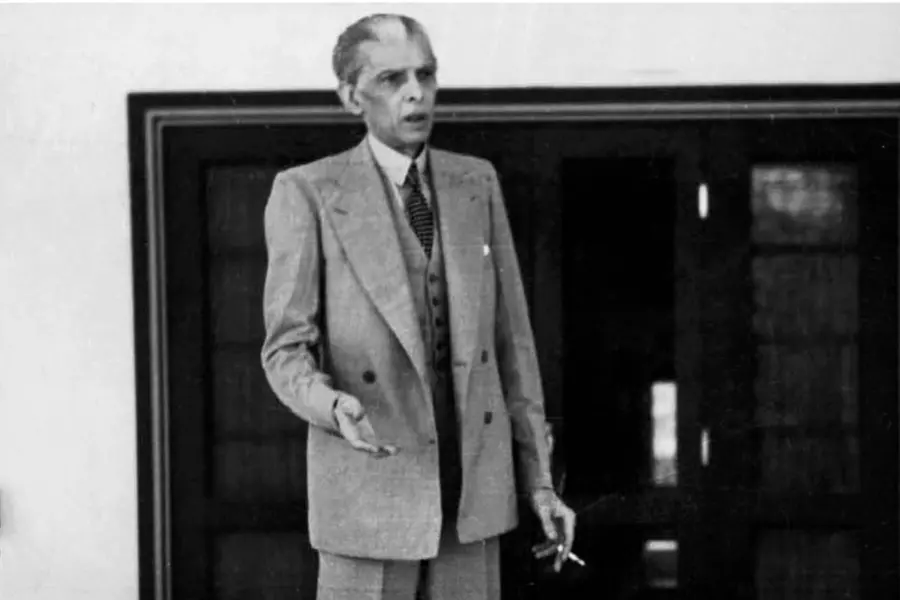
New Delhi: Two Parsi doctors from Mumbai (Bombay then) are set to receive Pakistan’s highest civilian honour decades after they treated Muhammad Ali Jinnah and kept the severity of his illness confidential during one of the most consequential periods in South Asian history.
Physician Dr Jal Ratanji Patel and radiologist Dr Jal Dhaybho-Koo have been nominated for the Nishan-e-Imtiaz for maintaining professional confidentiality over Jinnah’s terminal tuberculosis diagnosis in the years leading up to the Partition of India.
Also Read

The award is drawing attention not only because it honours two Indian doctors, but also because of the historical question surrounding the secret they kept: Could wider knowledge of Jinnah’s failing health have changed the timing- or even the course- of Partition?
The diagnosis that remained a secret
Jinnah had reportedly been suffering from tuberculosis since the 1930s, but the seriousness of his condition was known only to a small circle of people close to him.
In 1946, Patel and Dhaybho-Koo examined Jinnah’s X-rays and concluded that his tuberculosis was at an advanced stage. He was believed to have only a year or two to live.
Despite the potentially enormous political implications of Jinnah’s health, the doctors did not disclose the seriousness of his condition outside his inner circle.
Their decision was consistent with medical confidentiality, but historians have since examined whether that silence had consequences far beyond the doctor-patient relationship.
Also read | Military veterans tear apart Pakistan's DG ISPR over Operation Sindoor truth bomb
Why Jinnah’s health mattered during Partition
Jinnah was a central figure in negotiations over India’s independence and the creation of Pakistan. At the time, political leaders involved in the process were not widely aware of how seriously ill he was.
Historian Akbar Ahmed has written that Jinnah’s tuberculosis was kept secret partly because public knowledge of his condition could have weakened his political position and leadership.
Jinnah himself continued to work intensely despite his deteriorating health.
According to accounts cited in Freedom at Midnight, written by
Dominique Lapierre and Larry Collins, knowledge of Jinnah’s limited life expectancy could have influenced the calculations of British and Indian leaders during the final stages of negotiations.
Could Partition have taken a different course?
One of the most debated aspects of the story concerns Lord Louis Mountbatten, the last Viceroy of British India.
Accounts in Freedom at Midnight describe Mountbatten as later saying that, had he known the extent of Jinnah’s illness at the time, he might have delayed the transfer of power.
This has fuelled a long-running historical debate over whether Jinnah’s health could have affected the timing of Partition or the creation of Pakistan.
However, the claim remains a matter of historical interpretation rather than an established fact. Partition was the result of a complex series of political, communal and constitutional developments, and it cannot be attributed to any single factor.
Why Pakistan is honouring the doctors
Pakistan’s Planning Minister Ahsan Iqbal, who chairs the country’s Awards Committee, announced the nomination of Patel and Dhaybho-Koo for the Nishan-e-Imtiaz.
Iqbal described their decision to maintain confidentiality as a “quiet but extraordinary service”, arguing that their adherence to professional ethics inadvertently became significant to the circumstances surrounding Pakistan’s creation.
The doctors are being honoured posthumously, nearly eight decades after Jinnah’s death.
Also read | ‘Every drop is a red line’: Pakistan PM Shehbaz Sharif warns India ahead of Independence Day
Jinnah died a year after Partition
Jinnah’s health deteriorated rapidly after Partition. He died of pulmonary tuberculosis on September 11, 1948, just over a year after Pakistan became independent.
The Nishan-e-Imtiaz award for Patel and Dhaybho-Koo is scheduled to be formally conferred at a ceremony in March 2027.
The honour has brought renewed attention to a little-known chapter of Partition history – one in which two doctors in Bombay kept a patient's diagnosis private, while that diagnosis may have carried consequences far beyond the hospital and into the making of a new nation.
Published: 18 Aug 2026, 01:36 pm IST
ABOUT THE AUTHOR
Disclaimer: Kindly avoid objectionable, derogatory, unlawful and lewd comments, while responding to reports. Such comments are punishable under cyber laws. Please keep away from personal attacks. The opinions expressed here are the personal opinions of readers and not that of Mathrubhumi.