
Japan will begin releasing part of its strategic oil reserves from March 16 as tensions in West Asia disrupt global energy supplies. The move comes after Iran and its allies blocked the Strait of Hormuz following US-Israeli strikes on Iran, triggering fears of a major global oil supply shock.
Japan will begin releasing a portion of its strategic oil reserves from March 16 as global energy markets reel from supply disruptions triggered by the ongoing conflict in West Asia.
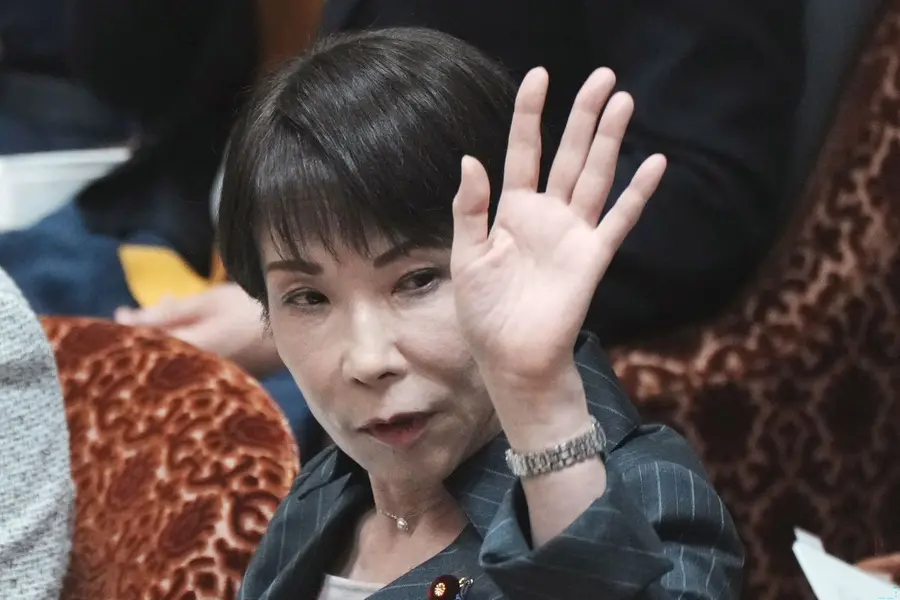
Japanese Prime Minister Sanae Takaichi announced the move on Wednesday, saying the decision was prompted by the blockade of the Strait of Hormuz, a key global shipping route for oil and gas.
The disruption comes amid escalating tensions following US–Israeli strikes on Iran on February 28, which triggered a wave of retaliatory drone and missile exchanges between the two sides.
In response, Iran and its allied forces have effectively choked off traffic through the Strait of Hormuz, warning that any vessel attempting to pass through the strategic waterway could be targeted.
Strait of Hormuz chokehold
Tehran has intensified retaliatory actions across the oil-rich Gulf region, targeting infrastructure and strategic locations in Saudi Arabia, Qatar, Kuwait, and the United Arab Emirates. These developments have significantly raised fears about global energy supply disruptions.
The Strait of Hormuz, which lies along Iran’s southern coast, is one of the world’s most critical oil transit routes. Roughly one-fifth of the world’s oil supply passes through the narrow waterway.
With the passage currently blocked, there has been no indication that shipping traffic will resume anytime soon, marking the most severe disruption to global oil flows since the energy shocks of the 1970s.
Global response to the energy crisis
Japan’s announcement comes as Group of Seven (G7) economies are moving closer to tapping strategic oil reserves to stabilise markets and curb surging crude prices triggered by the conflict.
The issue is expected to be a major focus when G7 leaders hold a video conference chaired by French President Emmanuel Macron, where they will discuss the broader economic consequences of the escalating war between the United States, Israel, and Iran.
Earlier this week, member states of the International Energy Agency (IEA) held emergency talks in Paris to assess supply security and consider coordinated releases of emergency oil stocks if market instability worsens.
Energy ministers from G7 countries said they support proactive steps to manage the crisis. “In principle, we support the implementation of proactive measures to address the situation, including the use of strategic reserves,” the ministers said in a joint statement.
The G7, an intergovernmental forum of leading advanced economies, includes Canada, France, Germany, Italy, Japan, the United Kingdom, and the United States.
Published: 11 Mar 2026, 04:51 pm IST
Related Topics
Disclaimer: Kindly avoid objectionable, derogatory, unlawful and lewd comments, while responding to reports. Such comments are punishable under cyber laws. Please keep away from personal attacks. The opinions expressed here are the personal opinions of readers and not that of Mathrubhumi.
