
A moderate earthquake that struck southern Israel at the exact moment of a nationwide school emergency drill has fuelled intense speculation online, with some questioning whether the tremors near the Dimona nuclear facility were more than just a natural seismic event.
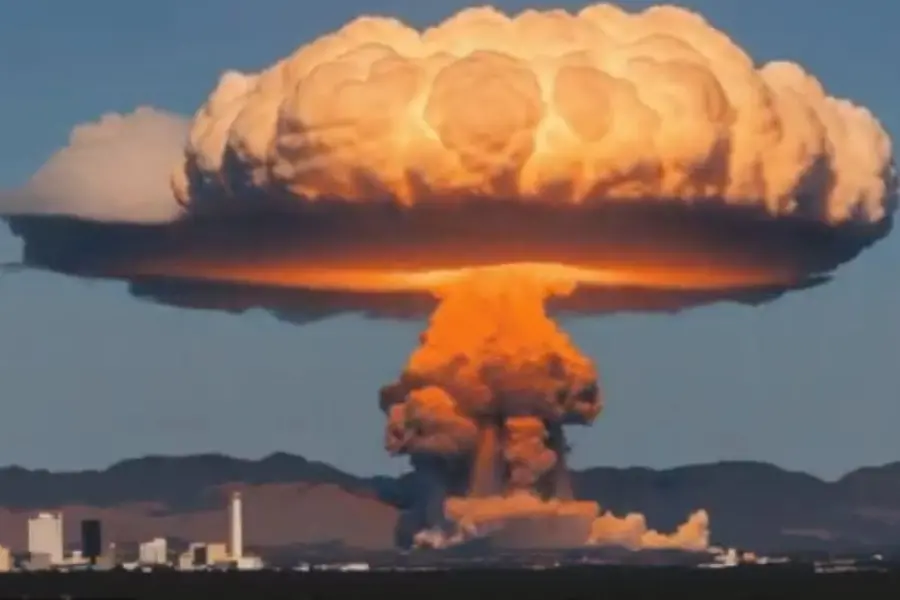
At precisely 9 am on Thursday, residents across southern Israel felt the earth move beneath their feet. In the Negev Desert, daily routines came to a halt as sirens blared and buildings briefly trembled.
The earthquake, measured at 4.2 on the Richter scale, struck at a moment of extraordinary sensitivity for the region, instantly amplifying fear and speculation. Watch the clipping below:
Also Read

What made the tremor especially unsettling was its timing. The quake coincided exactly with a pre-planned nationwide emergency preparedness drill in Israeli schools. For several minutes, many were unsure whether the alarms signalled a simulation or a real emergency, adding to the confusion and panic.
Though the epicentre was located in the south, the tremors were felt far beyond the Negev. Reports emerged from central Israel and even areas north of Jerusalem, suggesting the quake’s impact was wider than initially expected.
Seismological agencies described the event as shallow, with the European-Mediterranean Seismological Centre estimating a depth of around 10 kilometres and placing the epicentre near Dimona.
The location quickly became the focus of online chatter. Dimona is home to Israel’s most secretive strategic installation—the Shimon Peres Negev Nuclear Research Center.
While the Dead Sea region lies along the Syrian-African Rift and is known for periodic seismic activity, the proximity of the quake to Israel’s undeclared nuclear hub raised eyebrows.
Social media platforms were flooded with conjecture. Users questioned whether the tremor could be linked to underground activity, with some openly wondering if Israel had conducted a covert nuclear test.
High-profile voices joined the speculation, further fuelling the buzz, even as no evidence emerged to support such claims.
Also read: Who is Erfan Soltani? 26‑year‑old Iranian at centre of first reported protest-linked hanging
The regional backdrop added fuel to the fire. Tensions between Israel and Iran have been escalating, with sharp exchanges over Tehran’s nuclear ambitions and ongoing unrest inside Iran.
The quake was felt just hours after Donald Trump appeared to dial back threats of military action against Iran, following days of heated rhetoric.
Iran has accused Israel and the United States of fomenting internal protests, while Israel maintains a high state of military readiness amid fears of retaliation. In this charged atmosphere, even a natural earthquake was enough to trigger suspicions of strategic signalling.
Israeli authorities and seismologists, however, have treated the event as a genuine seismic occurrence, noting that the region has a history of similar quakes. Still, the coincidence of timing, location, and geopolitical tension ensured that the tremor left behind more questions than answers.
Published: 16 Jan 2026, 08:19 am IST
Related Topics
Disclaimer: Kindly avoid objectionable, derogatory, unlawful and lewd comments, while responding to reports. Such comments are punishable under cyber laws. Please keep away from personal attacks. The opinions expressed here are the personal opinions of readers and not that of Mathrubhumi.