
An Israeli official says IRGC Navy commander Tangsiri was killed in a strike on Bandar Abbas, though Iran has issued no confirmation.
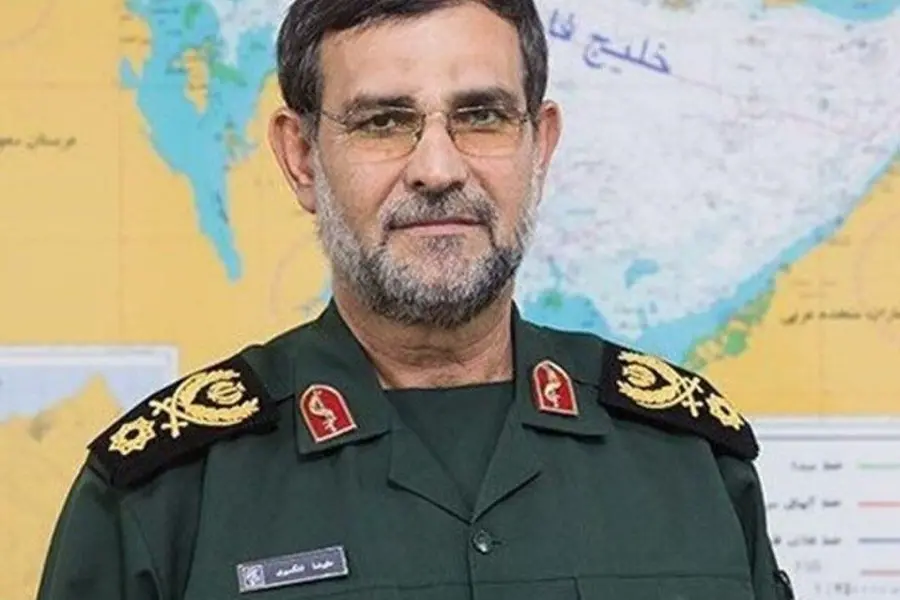
An Israeli official has claimed that Alireza Tangsiri, the commander of the naval branch of the Islamic Revolutionary Guard Corps, was killed in an airstrike on the southern Iranian port city of Bandar Abbas, near the strategic Strait of Hormuz.
The claim, reported by the The Jerusalem Post on Thursday, has not been verified by Iran, and the Israel Defense Forces declined to issue a comment.
Senior IRGC Naval Commander reportedly targeted
According to the Israeli official, Tangsiri was killed in a targeted strike in Bandar Abbas, a key naval hub for Iran and home to the IRGC Navy’s headquarters. He was one of the most senior military figures overseeing Iranian maritime operations, including activities in and around the Strait of Hormuz, a vital chokepoint for global oil shipments.
The official also claimed that Tangsiri had played a central role in past Iranian efforts to restrict access to the waterway, though no additional operational details were provided.
Bandar Abbas sits next to the Strait of Hormuz, a crucial waterway that connects the Persian Gulf to international shipping lanes and handles about 20% of the world’s seaborne oil and natural gas during normal times.
No confirmation from Tehran
Iranian authorities have not publicly acknowledged the strike or the reported death of the IRGC Navy chief. State media has remained silent, and no official statements have been released by military spokespeople in Tehran.
Who was Alireza Tangsiri?
Born in Iran’s southern Bushehr Province, Alireza Tangsiri rose through the ranks of the Islamic Revolutionary Guard Corps after serving in the Iran-Iraq War and during the so-called Tanker Wars, the United States’ first major confrontation with Iran in the 1980s.
Tangsiri later took charge of the IRGC Navy’s 1st Naval District, based in Bandar Abbas, and went on to become deputy naval commander from 2010 to 2018. He assumed leadership of the IRGC Navy the same year.
His reported killing adds to a growing list of high-ranking Iranian figures assassinated since the conflict erupted on 28 February, when the United States and Israel launched coordinated strikes on Iran.
One of the earliest and most significant casualties was Ayatollah Ali Khamenei, and subsequent attacks have targeted a wide tier of the Islamic Republic’s political and military hierarchy.
Iran imposing toll system in Strait of Hormuz
Iran has tightened its hold on the Strait of Hormuz, moving to formalise its authority over the key maritime corridor as ceasefire diplomacy shows little progress.
Industry analysts cited by the AP say Tehran has effectively introduced a “toll booth” system, requiring certain vessels to hand over cargo manifests, crew information and destination details to the Islamic Revolutionary Guard Corps for geopolitical screening.
The shipping intelligence group Lloyd’s List Intelligence described the practice as a de facto toll arrangement, noting that at least two ships have reportedly paid fees in Chinese yuan to transit the strait.
According to lawmaker Mohammadreza Rezaei Kouchi, quoted by the Fars and Tasnim news agencies, Iran’s parliament is preparing legislation that would formalise the fee system. “We provide its security, and it is natural that ships and oil tankers should pay such fees,” he said.
Iran’s tightening control over the strait has raised renewed concerns about global energy supplies. Brent crude traded at $104 on Thursday, more than 40 per cent higher since the conflict began.
Earlier Israel's Air Force said that under intelligence guidance, it had completed a wave of strikes overnight targeting production sites for weaponry of the Iranian terror regime in the Tehran area. In these strikes, several production sites for air and sea weaponry were attacked, and in parallel, defence systems and a missile launcher position against aircraft were attacked.
Admiral Brad Cooper, head of Central Command, also estimated that Iran's drone and missile launch rates were down by 90 percent, and "we've also removed the regime's ability to rebuild them."
Tehran's Foreign Minister Abbas Araghchi rejected Wednesday any diplomatic efforts to wind down the conflict.
"At present, our policy is the continuation of resistance," Araghchi said on Iranian state TV. "We do not intend to negotiate, so far, no negotiations have taken place, and I believe our position is completely principled."
"Speaking of negotiations now is an admission of defeat," he said.
Published: 26 Mar 2026, 02:04 pm IST
Related Topics
Disclaimer: Kindly avoid objectionable, derogatory, unlawful and lewd comments, while responding to reports. Such comments are punishable under cyber laws. Please keep away from personal attacks. The opinions expressed here are the personal opinions of readers and not that of Mathrubhumi.
