
Furthermore, Iran reaffirmed its control over the Strait of Hormuz, vowing to deny passage to vessels linked to "hostile entities."
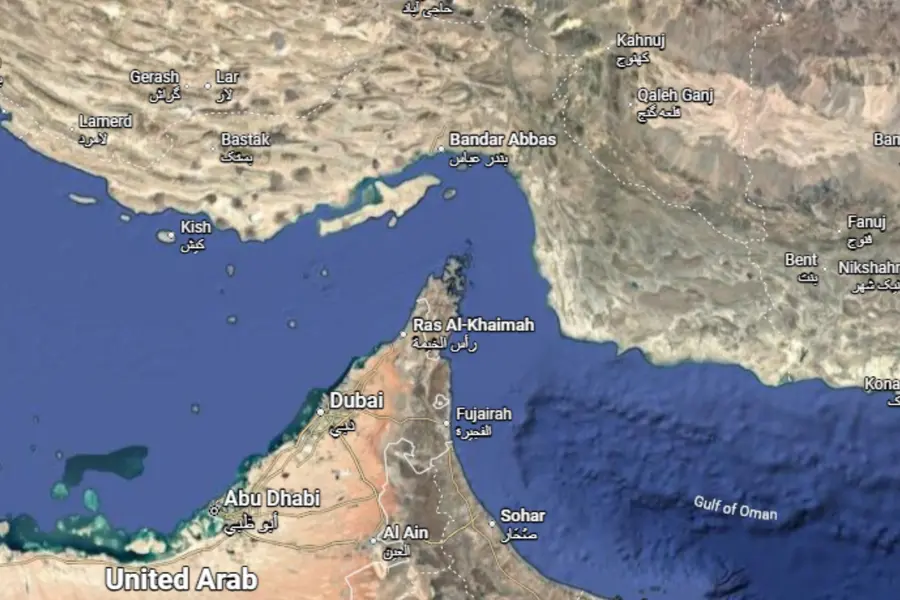
Tehran: Iranian officials on Monday issued a sharp condemnation of American plans to blockade the nation’s ports, warning that maritime stability throughout the Persian Gulf would be compromised if Tehran’s own security is undermined.
According to the state-run Islamic Republic of Iran Broadcasting (IRIB), the Khatam al-Anbiya Central Headquarters—the supreme operational command coordinating the Iranian Army and the Islamic Revolutionary Guard Corps—asserted that the protection of regional waters must be a collective endeavour. The statement underscored that safeguarding national sovereignty within territorial waters remains a "natural and legal duty."
A Doctrine of Collective Insecurity
In a firm declaration of its defensive posture, the Iranian military warned that any disruption to its own maritime commerce would trigger a wider regional crisis.
"The Armed Forces of the Islamic Republic of Iran consider defending the legal rights of our country a natural and legal duty, and accordingly, exercising the sovereignty of the Islamic Republic of Iran in the territorial waters of our country is the natural right of the Iranian nation," the headquarters stated.
The command further clarified its position on regional stability: "The Armed Forces of the Islamic Republic of Iran clearly and firmly declare that the security of ports in the Persian Gulf and the Sea of Oman is either for everyone or for no one. If the security of the ports of the Islamic Republic of Iran in the waters of the Persian Gulf and the Sea of Oman is threatened, no port in the Persian Gulf and the Sea of Oman will be safe."
Control of the Strait of Hormuz
Tehran reaffirmed its intention to regulate the strategic Strait of Hormuz, noting that while standard transit would be permitted under Iranian regulations, vessels associated with "hostile entities" would be denied passage.
"Ensuring security in the territorial waters of the Islamic Republic of Iran by the armed forces will continue with determination, and as has been repeatedly announced, enemy-affiliated vessels do not and will not have the right to pass through the Strait of Hormuz, and other vessels will continue to be allowed to pass through the Strait, subject to the regulations of the Islamic Republic of Iran's armed forces," the military command noted.
Characterising the U.S. intervention as "piracy" and an infringement of international norms, the spokesperson warned of a permanent shift in Tehran’s maritime policy. Citing persistent threats to national security that endure beyond the current conflict, the headquarters announced the implementation of a long-term mechanism to maintain control over the Strait.
The American Mandate
The warnings from Tehran follow an announcement by U.S. Central Command (CENTCOM) that it would begin enforcing a total blockade on maritime traffic at Iranian ports starting April 13 at 10 a.m. ET. The operation follows a direct mandate from President Donald Trump.
CENTCOM clarified via social media that the restrictions would apply to vessels of all nationalities attempting to enter or exit Iranian facilities in the Persian Gulf and the Gulf of Oman. However, U.S. officials emphasised that the blockade is not intended to disrupt the freedom of navigation for ships travelling to or from non-Iranian destinations.
Mariners in the region have been advised by U.S. naval forces to monitor official broadcasts and maintain open communication channels as the blockade takes effect. The move signals a return to high-stakes naval brinkmanship in one of the world's most critical energy corridors.
With inputs from ANI
Published: 13 Apr 2026, 02:53 pm IST
Related Topics
Disclaimer: Kindly avoid objectionable, derogatory, unlawful and lewd comments, while responding to reports. Such comments are punishable under cyber laws. Please keep away from personal attacks. The opinions expressed here are the personal opinions of readers and not that of Mathrubhumi.
