
Iran claims downing of second US F-35, names 8 key Gulf bridges as targets after Karaj strike.
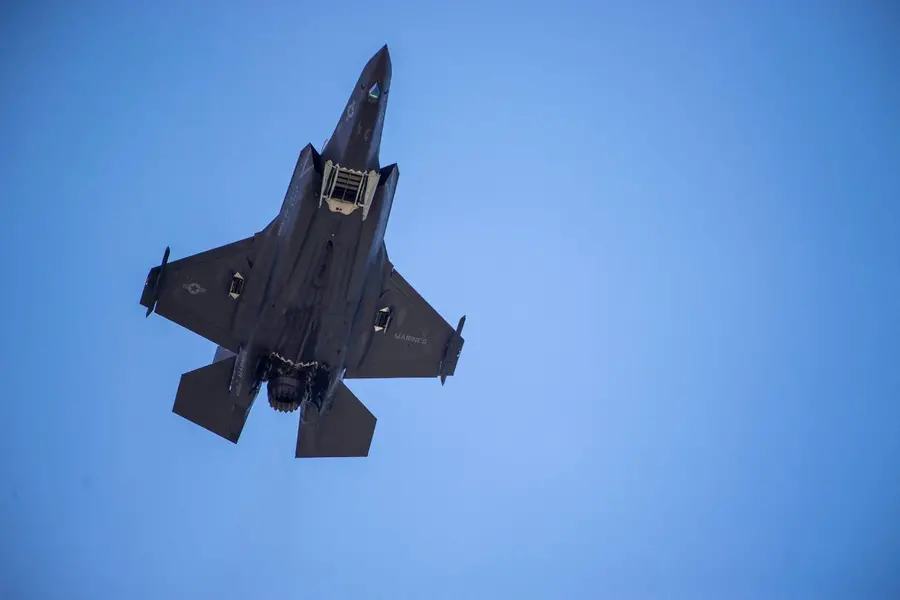
In a sharp escalation of tensions in the Middle East, Iran has claimed that a second US F-35 fighter jet was shot down in central Iran, even as it identified eight major bridges across the Gulf region and Jordan as potential targets following a deadly US strike on its B1 bridge near Karaj.
The claim, reported by Iran’s semi-official Mehr News Agency, stated that the jet was brought down during ongoing hostilities and that the pilot likely did not survive due to severe injuries. There has been no confirmation from US Central Command so far.
If verified, the downing of an F-35 would mark a significant moment in the conflict, as the aircraft is among the most advanced stealth fighter jets in the US arsenal, designed to evade radar and operate deep inside heavily defended airspace.
Even damage to such a platform could challenge the perception of US air superiority.
B1 bridge strike triggers escalation
The development comes hours after US forces targeted the B1 bridge, one of Iran’s tallest infrastructure projects, located west of Tehran. The 136 metre high structure was nearing completion and was designed to connect Tehran with Karaj, easing congestion and improving regional connectivity.
According to Iranian state media, at least eight people were killed and 95 others injured in the strike. Visuals circulating online showed large sections of the bridge collapsing, with plumes of smoke rising from the site.
US officials claimed the bridge was part of a strategic route used for transporting military equipment, including missile and drone components. Iran has rejected the claim, insisting the structure was civilian and incomplete.
US President Donald Trump shared footage of the strike and warned of further action, stating that more destruction could follow if Iran does not agree to negotiations.
Iran flags 8 key bridges
In response, Iran has highlighted eight prominent bridges across the region as potential targets, indicating a shift towards economic and symbolic infrastructure.
Check out the list:
- Sheikh Jaber Al Ahmad Al Sabah Sea Bridge, Kuwait
- Sheikh Zayed Bridge, UAE
- Al Maqta Bridge, UAE
- Sheikh Khalifa Bridge, UAE
- King Fahd Causeway, Saudi Arabia and Bahrain
- King Hussein Bridge, Jordan
- Damia Bridge, Jordan
- Abdoun Bridge, Jordan
These structures serve as critical transport links and economic lifelines, connecting major cities, trade routes, and border crossings across the Middle East.
Security analysts believe that naming such high-profile infrastructure is intended to raise the stakes and deter further attacks by threatening wider regional disruption.
Conflict risks widening
The strike on the B1 bridge marks a significant shift in the ongoing conflict, with large-scale civilian infrastructure now directly in the crosshairs.
The broader confrontation involving the United States, Israel, and Iran has already seen repeated exchanges targeting military facilities, energy sites, and logistical networks.
The inclusion of bridges now suggests a potential expansion into economic warfare.
Iran’s Islamic Revolutionary Guard Corps is expected to play a key role in any retaliatory action, although there has been no official confirmation of specific plans.
Iran condemns strike
Iranian Foreign Minister Abbas Araghchi condemned the attack, calling it an assault on civilian infrastructure and accusing its adversaries of moral failure.
He stated that such actions would not force Iran to back down, but would instead strengthen its resolve.
Global concern is rising as tensions intensify, with fears that further escalation could destabilise the wider region, disrupt trade routes, and impact global energy supplies.
With both sides signalling more action, the situation appears to be entering a more dangerous phase, with infrastructure and regional connectivity increasingly at risk.
Published: 03 Apr 2026, 11:37 am IST
Related Topics
Disclaimer: Kindly avoid objectionable, derogatory, unlawful and lewd comments, while responding to reports. Such comments are punishable under cyber laws. Please keep away from personal attacks. The opinions expressed here are the personal opinions of readers and not that of Mathrubhumi.
